Jailhouse snitches not believed
For once
After a three-day trial, a Newport News man was acquitted on a murder charge Wednesday in the slaying of a man last July at the Newsome Park apartment complex in the city's Southeast section.
The 12-member jury reached its verdict at about 7:30 p.m., after about two and a half hours of deliberations. They found Ryan Frink, 20, not guilty of first-degree murder and a gun charge in the shooting death of Derron Richardson, 23, of Newport News.
Be the first to know! Text NEWPORTNEWS to 71593 to receive alerts about Newport News. Click here for other text alert options.
Members of the Frink family jumped up in jubilation as a court clerk read the verdict, hugging each other and drowning out the clerk's words. Some in the group supporting Richardson — including his girlfriend and mother of his children and a key prosecution witness — left the courtroom upset.
"This is no justice at all!" said the woman, Shantae Howard. "No justice at all!"
Circuit Judge David F. Pugh's courtroom had been tense before the verdict was read, with about 26 friends and family members supporting one side or the other. But there were nine police officers gathered at the courtroom — called in by a police detective to provide extra security — as well as at least six sheriff's deputies.
Throughout the trial, Frink's attorney, Sam Roots, tried to expose weaknesses in the prosecution's case, particularly that two of its key witnesses were jailhouse informants now serving nearly 100 years between them for murder and robbery charges.
Roots termed the inmates "sharks" trying to "feed their own bellies" by testifying in hopes of reductions in their own sentences. He said it defied credulity to think that Frink would arrive at the jail and "spin this whole story to a complete stranger."
"These witnesses are responsible for the deaths of people, and putting guns in front of the faces of other people," Roots told the jury. "Now they're coming here looking for you all to help them out."
The prosecution's theory tied the shooting to a burglary the day before the shooting. That is, Frink and another man were accused of burglarizing an apartment that Richardson and Howard shared, stealing a TV and video game system and video.
The theory was that burglary led to a later armed confrontation between Richardson and Frink in which Richardson was killed.
A spate of bullets was found in front of Frink's mother's home on Baughman Court — several blocks from where Richardson was found dead. One key connection, prosecutors said, was that a bullet casing not far from Richardson's body matched some of the 23 casings found in front of the Baughman Court address.
Howard was among the first witnesses in the case, saying she got a call from Frink not long after the shooting, with Frink telling her where to find Richardson.
A jailhouse informant testified that Frink told him that he and Richardson had a gun battle and that Richardson ran out of bullets and fled, with Frink running after him and shooting him to death. Another inmate testified he heard some of that conversation.
Frink also took the stand, testifying he was with others when he heard his mother's home had been shot up, and when Richardson was shot. He denied ever meeting the inmates at the jail.
Roots also pointed out that a gun residue test found no gun powder residue on Frink's hand, that a video system of a nearby school was never checked, and that Richardson's car was never searched.
He also honed in on the fact that the location of the shooting was never established, with some witnesses saying Richardson's body appeared to have been moved and was cold to the touch by the time he was found.
"There's nothing here," Roots said. "This case hasn't been proven whatsoever. It hasn't been well investigated."
Assistant Commonwealth's Attorney Melissa Iotti pointed out that because the jailhouse witnesses had experience with rough crime, it only makes sense that Frink confide in them. "You're going to tell the most violent people inside the jail," she said.
She said that the video system wasn't checked because there was no indication that the gun battle took place near the school field.
Original report here
(And don't forget your ration of Wicked Thoughts for today. Now hosted on Wordpress. If you cannot access it, go to the MIRROR SITE, where posts appear as well as on the primary site. I have reposted the archives (past posts) for Wicked Thoughts HERE or HERE or here
Friday, February 11, 2011

Thursday, February 10, 2011
About that “war on cops”
Every week — actually, every day — innocent people across the country are harassed, abused, brutalized, tortured, and murdered by armed strangers in government-issued costumes. Most of the assailants are never held accountable. Often, they are placed on paid vacation (commonly called “administrative leave”) while their colleagues devise an official rationalization for their crimes.
According to one very conservative estimate, at least thirty citizens are killed in police shootings every month, many of which occur during paramilitary raids conducted, Soviet-style, at daybreak or nighttime. Innocent people are frequently found among those killed, wounded, or brutalized in those raids; one recent example is 76-year-old New York resident Jose Colon, who was shot in the stomach by a SWAT operator who pulled the trigger trying to operate a flashlight on his tricked-out pistol.
The grim but statistically inescapable fact is that the average American is much more likely to be killed by a cop than by a terrorist.
Those who publicize police abuses are routinely accused by apologists for government enforcement agencies of exaggerating the problem by focusing on a vanishingly small number of “exceptional” cases. When police are on the receiving end of criminal violence, however, those same apologists demand that we allow such exceptions to define the rule.
On the basis of recent trends, we can assume that two dozen or more Americans have been shot by police since January 1, 2011. In the same period, roughly half that many police have been shot, 11 of them either injured or killed during one unusually bloody twenty-four-hour period. This unconnected series of shootings has led many police officers to believe that they are targets in a “war on cops,” and that alarmist impression has been diligently propagated by police union officials who are always eager to exaggerate the very modest dangers of their profession.
“It’s not a fluke,” insists Richard Roberts, spokesman for the International Union of Police Associations. “There’s a perception among officers in the field that there’s a war on cops going on.” Craig W. Floyd of the National Law Enforcement Officers Memorial Fund described a "very troubling trend" of "officers ... being put at greater risk than ever before."
"I think it's a hundred times more likely today that an officer will be assaulted compared to twenty, thirty years ago," agreed J.B. Smith, Sheriff of Smith, County, Texas, in an interview with Tyler's NBC affiliate KETK. "It has become one of the most hazardous jobs in the United States, undoubtedly -- in the top five."
Actually, where the risk of death on the job is concerned, law enforcement doesn't crack the top ten list of most dangerous occupations, as designated by the Bureau of Labor Statistics. In fact, none of the jobs on that list involves people employed in the coercive sector. Commercial fishermen, loggers, commercial pilots, farmers, and roofers all face a higher risk of work-related death than that confronted by the State's armed enforcers, for whom "officer safety" is job one.
Sheriff Smith, like others retailing the "war on cops" meme, recited the durable canard that police "work" is more dangerous today because they confront a more violent breed of street criminal. Five years ago, Joseph McNamara of Stanford's Hoover Institution, a former NYPD Deputy Inspector (and, unfortunately, an advocate of civilian disarmament), pointed out that police "work" may be safer now than ever before.
In 2005, McNamara noted, fifty-one officers died in the line of duty "out of some 700,000 to 800,000 American cops. That is far fewer than the police fatalities occurring when I patrolled New York’s highest crime precincts, when the total number of cops in the country was half that of today."
Yes, there is a war on the streets of America, McNamara allowed, but it is one waged by the cops, not on them:
"Simply put, the police culture in our country has changed. An emphasis on `officer safety' and paramilitary training pervades today’s policing, in contrast to the older culture, which held that cops didn’t shoot until they were about to be shot or stabbed. Police in large cities formerly carried revolvers holding six .38-caliber rounds. Nowadays, police carry semi-automatic pistols with 16 high-caliber rounds, shotguns and military assault rifles, weapons once relegated to SWAT teams facing extraordinary circumstances. Concern about such firepower in densely populated areas hitting innocent citizens has given way to an attitude that the police are fighting a war against drugs and crime and must be heavily armed."
Government police agencies were always designed to control the public, rather than to "protect and serve" it. As sociologist David Bayley memorably put it, "The police are to the government as the edge is to the knife." Thanks in no small measure to the proliferation of independent media, the public is coming to understand that fact.
A large and growing segment of the public likewise has become palpably disgusted with the casual elitism of the armed tax-feeders among us, who see themselves as a caste apart from, and superior to, those from whom they extract their livelihood. The police unions and media organs that take dictation from them insist that the purported "war on cops" is being fueled by a growing public "disrespect" for the "authority" of police.
"The palm-sized shield worn on a police officer’s chest should be viewed as a badge of honor, not a bull’s-eye," sobbed the editorial collective of the Wilkes-Barre Times-Leader in a lachrymose house editorial that typifies media treatment of the supposed "war" on police. "Sadly, recent deadly shootings around the nation and alleged threats directed at Luzerne County law enforcers reveal a troubling lack of respect for officers’ authority and responsibilities, as well as their lives."
The "threats" in question were allegedly made by 45-year-old Scanton resident Ray Mazzarella, who was arrested and charged with several counts of making "terroristic threats" for inflammatory comments he had posted about the local police chief on his Facebook page. Were the rationale for Mazzarella's pre-emptive arrest applied consistently, scores or hundreds of police officers would have to be locked up and put on trial for equally inflammatory statements posted on chat boards frequented by LEOs. Of course, by even making that point I'm undermining public "respect" for police "authority" -- thereby, one supposes, abetting violence against our sanctified protectors.
Although Steve Groeninger, spokesman for the D.C.-based National Law Enforcement Officers Memorial Fund, admits that “we don’t have any data,” he told MSNBC that “there seems to be a type of criminal out there looking to thwart authority” (by which he means any directive issued by an armed government functionary) and warns that “cuts in police budgets could exacerbate the danger,” according to MSNBC.
This is an interesting variation on a familiar police union theme. As previously noted in this space, as municipal budgets shrink amid the ever-deepening depression, some police unions are literally trying to terrorize the public into supporting their budget demands. Oakland Police Chief Anthony Batts announced several months ago that because of budget cuts citizens shouldn’t expect police to respond to calls involving 44 kinds of crime, including burglary, grand theft, and other serious offenses. The hideously corrupt Camden, New Jersey Police Department adopted a similar policy after half the force was laid off. In Sacramento County, the Sheriff’s Office published an ad depicting what appeared to be a sexual assault on a child. “Don’t let them cut deputies and put your family at risk!” screamed the ad copy.
Reduced to its essence, the message here is this: Give us what we want, or people will get hurt. Those of us who oppose the demands of police unions can now expect to be told that we’re morally indistinguishable from cop-killers.
Every traffic stop, we are told, is pregnant with potentially lethal danger -- for the one party in that confrontation we know to be armed and invested with the supposed authority to kill another human being. In fact, encounters of this kind are freighted with peril for the member of the productive population who has come under the unwanted scrutiny of an armed emissary of the State. This is true of any interaction between the police and the private citizens on whom they subsist.
One likely product of the ongoing panic over a "war on cops" is the increased likelihood that police will resort to potentially lethal force in such routine encounters. After all, isn't it better to have the taxpayers absorb the cost of settling with the family of a murdered Mundane than to suffer the uniquely poignant anguish of burying one of the State's Anointed Ones?
Most of the potentially dangerous encounters between police and the public grow out of their roles as enforcers of drug prohibition and armed revenue collectors (those roles overlap, of course). Those dangers will grow more acute as the economy continues to sicken and people who have done no harm to others start to lose patience with the demands of the wealth-devouring class.
Rather than abating their demands and ratcheting down the conflict, however, those in charge of the State clearly intend to escalate it, making whatever use they deem necessary of all of the charming instruments of regimentation and mass violence originally developed for use overseas. One particularly unsettling illustration of this principle is the expanding domestic use of unmanned surveillance drones, which were originally developed for battlefield applications but will probably become as commonplace as SWAT teams within the next several years.
If they have it, they will use it; if it's been deployed by the military abroad, it will be employed by the paramilitary police at home; once it's been tested against criminal suspects, it will become part of the standard arsenal of social regimentation. At this point it appears that the only thing that will cause the machinery of repression to grind to a stop would be a fully realized economic collapse. Another grim possibility is that the State's relentless persecution of harmless people will grow so vicious that the "war on cops" being spoken of now becomes a self-fulfilling prophecy -- thereby creating a personnel shortage of the kind Solzhenitsyn described.
Anybody who takes the life of any human being through aggressive violence is a murderer and should be treated as such. That being said, this should be also: If the wildly exaggerated fear of being killed on the job results in increased attrition from the ranks of the State’s armed enforcers, one happy result will be a net decrease in the amount of criminal violence afflicting our society.
Original report here
(And don't forget your ration of Wicked Thoughts for today. Now hosted on Wordpress. If you cannot access it, go to the MIRROR SITE, where posts appear as well as on the primary site. I have reposted the archives (past posts) for Wicked Thoughts HERE or HERE or here
Every week — actually, every day — innocent people across the country are harassed, abused, brutalized, tortured, and murdered by armed strangers in government-issued costumes. Most of the assailants are never held accountable. Often, they are placed on paid vacation (commonly called “administrative leave”) while their colleagues devise an official rationalization for their crimes.
According to one very conservative estimate, at least thirty citizens are killed in police shootings every month, many of which occur during paramilitary raids conducted, Soviet-style, at daybreak or nighttime. Innocent people are frequently found among those killed, wounded, or brutalized in those raids; one recent example is 76-year-old New York resident Jose Colon, who was shot in the stomach by a SWAT operator who pulled the trigger trying to operate a flashlight on his tricked-out pistol.
The grim but statistically inescapable fact is that the average American is much more likely to be killed by a cop than by a terrorist.
Those who publicize police abuses are routinely accused by apologists for government enforcement agencies of exaggerating the problem by focusing on a vanishingly small number of “exceptional” cases. When police are on the receiving end of criminal violence, however, those same apologists demand that we allow such exceptions to define the rule.
On the basis of recent trends, we can assume that two dozen or more Americans have been shot by police since January 1, 2011. In the same period, roughly half that many police have been shot, 11 of them either injured or killed during one unusually bloody twenty-four-hour period. This unconnected series of shootings has led many police officers to believe that they are targets in a “war on cops,” and that alarmist impression has been diligently propagated by police union officials who are always eager to exaggerate the very modest dangers of their profession.
“It’s not a fluke,” insists Richard Roberts, spokesman for the International Union of Police Associations. “There’s a perception among officers in the field that there’s a war on cops going on.” Craig W. Floyd of the National Law Enforcement Officers Memorial Fund described a "very troubling trend" of "officers ... being put at greater risk than ever before."
"I think it's a hundred times more likely today that an officer will be assaulted compared to twenty, thirty years ago," agreed J.B. Smith, Sheriff of Smith, County, Texas, in an interview with Tyler's NBC affiliate KETK. "It has become one of the most hazardous jobs in the United States, undoubtedly -- in the top five."
Actually, where the risk of death on the job is concerned, law enforcement doesn't crack the top ten list of most dangerous occupations, as designated by the Bureau of Labor Statistics. In fact, none of the jobs on that list involves people employed in the coercive sector. Commercial fishermen, loggers, commercial pilots, farmers, and roofers all face a higher risk of work-related death than that confronted by the State's armed enforcers, for whom "officer safety" is job one.
Sheriff Smith, like others retailing the "war on cops" meme, recited the durable canard that police "work" is more dangerous today because they confront a more violent breed of street criminal. Five years ago, Joseph McNamara of Stanford's Hoover Institution, a former NYPD Deputy Inspector (and, unfortunately, an advocate of civilian disarmament), pointed out that police "work" may be safer now than ever before.
In 2005, McNamara noted, fifty-one officers died in the line of duty "out of some 700,000 to 800,000 American cops. That is far fewer than the police fatalities occurring when I patrolled New York’s highest crime precincts, when the total number of cops in the country was half that of today."
Yes, there is a war on the streets of America, McNamara allowed, but it is one waged by the cops, not on them:
"Simply put, the police culture in our country has changed. An emphasis on `officer safety' and paramilitary training pervades today’s policing, in contrast to the older culture, which held that cops didn’t shoot until they were about to be shot or stabbed. Police in large cities formerly carried revolvers holding six .38-caliber rounds. Nowadays, police carry semi-automatic pistols with 16 high-caliber rounds, shotguns and military assault rifles, weapons once relegated to SWAT teams facing extraordinary circumstances. Concern about such firepower in densely populated areas hitting innocent citizens has given way to an attitude that the police are fighting a war against drugs and crime and must be heavily armed."
Government police agencies were always designed to control the public, rather than to "protect and serve" it. As sociologist David Bayley memorably put it, "The police are to the government as the edge is to the knife." Thanks in no small measure to the proliferation of independent media, the public is coming to understand that fact.
A large and growing segment of the public likewise has become palpably disgusted with the casual elitism of the armed tax-feeders among us, who see themselves as a caste apart from, and superior to, those from whom they extract their livelihood. The police unions and media organs that take dictation from them insist that the purported "war on cops" is being fueled by a growing public "disrespect" for the "authority" of police.
"The palm-sized shield worn on a police officer’s chest should be viewed as a badge of honor, not a bull’s-eye," sobbed the editorial collective of the Wilkes-Barre Times-Leader in a lachrymose house editorial that typifies media treatment of the supposed "war" on police. "Sadly, recent deadly shootings around the nation and alleged threats directed at Luzerne County law enforcers reveal a troubling lack of respect for officers’ authority and responsibilities, as well as their lives."
The "threats" in question were allegedly made by 45-year-old Scanton resident Ray Mazzarella, who was arrested and charged with several counts of making "terroristic threats" for inflammatory comments he had posted about the local police chief on his Facebook page. Were the rationale for Mazzarella's pre-emptive arrest applied consistently, scores or hundreds of police officers would have to be locked up and put on trial for equally inflammatory statements posted on chat boards frequented by LEOs. Of course, by even making that point I'm undermining public "respect" for police "authority" -- thereby, one supposes, abetting violence against our sanctified protectors.
Although Steve Groeninger, spokesman for the D.C.-based National Law Enforcement Officers Memorial Fund, admits that “we don’t have any data,” he told MSNBC that “there seems to be a type of criminal out there looking to thwart authority” (by which he means any directive issued by an armed government functionary) and warns that “cuts in police budgets could exacerbate the danger,” according to MSNBC.
This is an interesting variation on a familiar police union theme. As previously noted in this space, as municipal budgets shrink amid the ever-deepening depression, some police unions are literally trying to terrorize the public into supporting their budget demands. Oakland Police Chief Anthony Batts announced several months ago that because of budget cuts citizens shouldn’t expect police to respond to calls involving 44 kinds of crime, including burglary, grand theft, and other serious offenses. The hideously corrupt Camden, New Jersey Police Department adopted a similar policy after half the force was laid off. In Sacramento County, the Sheriff’s Office published an ad depicting what appeared to be a sexual assault on a child. “Don’t let them cut deputies and put your family at risk!” screamed the ad copy.
Reduced to its essence, the message here is this: Give us what we want, or people will get hurt. Those of us who oppose the demands of police unions can now expect to be told that we’re morally indistinguishable from cop-killers.
Every traffic stop, we are told, is pregnant with potentially lethal danger -- for the one party in that confrontation we know to be armed and invested with the supposed authority to kill another human being. In fact, encounters of this kind are freighted with peril for the member of the productive population who has come under the unwanted scrutiny of an armed emissary of the State. This is true of any interaction between the police and the private citizens on whom they subsist.
One likely product of the ongoing panic over a "war on cops" is the increased likelihood that police will resort to potentially lethal force in such routine encounters. After all, isn't it better to have the taxpayers absorb the cost of settling with the family of a murdered Mundane than to suffer the uniquely poignant anguish of burying one of the State's Anointed Ones?
Most of the potentially dangerous encounters between police and the public grow out of their roles as enforcers of drug prohibition and armed revenue collectors (those roles overlap, of course). Those dangers will grow more acute as the economy continues to sicken and people who have done no harm to others start to lose patience with the demands of the wealth-devouring class.
Rather than abating their demands and ratcheting down the conflict, however, those in charge of the State clearly intend to escalate it, making whatever use they deem necessary of all of the charming instruments of regimentation and mass violence originally developed for use overseas. One particularly unsettling illustration of this principle is the expanding domestic use of unmanned surveillance drones, which were originally developed for battlefield applications but will probably become as commonplace as SWAT teams within the next several years.
If they have it, they will use it; if it's been deployed by the military abroad, it will be employed by the paramilitary police at home; once it's been tested against criminal suspects, it will become part of the standard arsenal of social regimentation. At this point it appears that the only thing that will cause the machinery of repression to grind to a stop would be a fully realized economic collapse. Another grim possibility is that the State's relentless persecution of harmless people will grow so vicious that the "war on cops" being spoken of now becomes a self-fulfilling prophecy -- thereby creating a personnel shortage of the kind Solzhenitsyn described.
Anybody who takes the life of any human being through aggressive violence is a murderer and should be treated as such. That being said, this should be also: If the wildly exaggerated fear of being killed on the job results in increased attrition from the ranks of the State’s armed enforcers, one happy result will be a net decrease in the amount of criminal violence afflicting our society.
Original report here
(And don't forget your ration of Wicked Thoughts for today. Now hosted on Wordpress. If you cannot access it, go to the MIRROR SITE, where posts appear as well as on the primary site. I have reposted the archives (past posts) for Wicked Thoughts HERE or HERE or here
Wednesday, February 09, 2011
Florida Bar vs. Free Press
You would think that The Florida Bar and its member attorneys and judges who swore to uphold the U.S. Constitution would support a free press as provided for in the First Amendment, right?
Wrong! According to Mark A. Adams, writing for The Daily Censored, a news blog affiliated with Project Censored, “The Florida Bar has proposed a new rule to eliminate coverage of court proceedings by citizen journalists.” Outstanding investigative journalism by Adams has uncovered this proposed rule which would allow only an employee of a “traditional media outlet” or an official court reporter to bring audio or video recording equipment into a court room. Not even a laptop computer would escape this infringement of free speech.
Unfortunately, since the objection to this rule (Fl Rule Jud. Admin. 2.451) had to be filed by February 1, 2011, we can only give them an “unofficial earful” at this point! The Florida Bar, in its stealth attack on the U.S. Constitution and the free press, acted quietly and quickly. What is even worse is the fact that numerous Florida attorneys, who swore to uphold the Constitution, supported this outrageous attack. Perhaps the members of the Florida Bar who proposed and wrote this rule were at a bar when they did it! It would be preferable to hear that they wrote it while drunk, as opposed to being what they believed.
The really disgusting part of all of this is that this rule was proposed in the face of judicial precedent to the contrary. Although Mr. Adams quotes this decision in his article, it is worth quoting the Florida Supreme Court again for emphasis:
“Freedom of the Press is not, and has never been, a private property right granted to those who own the news media. It is a cherished and almost sacred right of each citizen to be informed about current events, on a timely basis, so each can exercise his discretion in determining the destiny and security of himself, other people, and the Nation. News delayed is news denied. To be useful to the public, news events must be reported when they occur. Whatever happens in any courtroom, directly or indirectly, affects all the public. To prevent star-chamber injustice, the public should generally have unrestricted access to all proceedings.” Miami Herald Publishing Co. v. McIntosh, 340 SO. 2d 904.910 (Fla. 1977)
This arrogance and utter disregard for the Court decision and the U.S. Constitution is what is threatening the very fabric of our nation. This is not a bunch of law school students that proposed to ignore this basic constitutional tenet laid out in the First Amendment, it is the Florida Bar! Every freedom loving, patriotic American citizen should ask him or herself this basic question. What is next? Will there be a 21st century Constitutional Convention where liberal activists can throw out the parts of the Constitution that they do not like by packing the convention with their ilk? Don’t laugh; it is being proposed even as I write this column. They are already pushing hard for the Fairness Doctrine to get conservatives off the air or to give equal time to liberals.
The so called “mainstream media” are losing their hold on power in part due to blogs and websites that get the truth out. Talk radio has millions of listeners who hear the “other side” of the liberal media slant, and media watchdog organizations, like Accuracy in Media and The Daily Censored, keep up the pressure to get at the truth. The real truth is that these “sorry excuses” for fairness are no longer the mainstream. Websites, blogs, talk radio and watchdog groups have taken the fight to them and we are beginning to turn the tide!
The Florida Bar uses the words “traditional media outlets” in their proposed rule to determine who has access to court proceedings and who does not. Who does that leave out? Would a journalism student ever get access? How about a student newspaper? Will conservatives be shut out? Who has the right to define the “traditional media outlet?”
Every single American reading these words should write to the Florida Bar right now and tell them to put the rule in the garbage where it belongs. Freedom of the press is not a privilege. It is a First Amendment right. If this rule stands, it is one more nail in the coffin for the free press. If you still have doubts, ask yourself this question. Which side would our Founding Fathers be on?
Original report here
(And don't forget your ration of Wicked Thoughts for today. Now hosted on Wordpress. If you cannot access it, go to the MIRROR SITE, where posts appear as well as on the primary site. I have reposted the archives (past posts) for Wicked Thoughts HERE or HERE or here
You would think that The Florida Bar and its member attorneys and judges who swore to uphold the U.S. Constitution would support a free press as provided for in the First Amendment, right?
Wrong! According to Mark A. Adams, writing for The Daily Censored, a news blog affiliated with Project Censored, “The Florida Bar has proposed a new rule to eliminate coverage of court proceedings by citizen journalists.” Outstanding investigative journalism by Adams has uncovered this proposed rule which would allow only an employee of a “traditional media outlet” or an official court reporter to bring audio or video recording equipment into a court room. Not even a laptop computer would escape this infringement of free speech.
Unfortunately, since the objection to this rule (Fl Rule Jud. Admin. 2.451) had to be filed by February 1, 2011, we can only give them an “unofficial earful” at this point! The Florida Bar, in its stealth attack on the U.S. Constitution and the free press, acted quietly and quickly. What is even worse is the fact that numerous Florida attorneys, who swore to uphold the Constitution, supported this outrageous attack. Perhaps the members of the Florida Bar who proposed and wrote this rule were at a bar when they did it! It would be preferable to hear that they wrote it while drunk, as opposed to being what they believed.
The really disgusting part of all of this is that this rule was proposed in the face of judicial precedent to the contrary. Although Mr. Adams quotes this decision in his article, it is worth quoting the Florida Supreme Court again for emphasis:
“Freedom of the Press is not, and has never been, a private property right granted to those who own the news media. It is a cherished and almost sacred right of each citizen to be informed about current events, on a timely basis, so each can exercise his discretion in determining the destiny and security of himself, other people, and the Nation. News delayed is news denied. To be useful to the public, news events must be reported when they occur. Whatever happens in any courtroom, directly or indirectly, affects all the public. To prevent star-chamber injustice, the public should generally have unrestricted access to all proceedings.” Miami Herald Publishing Co. v. McIntosh, 340 SO. 2d 904.910 (Fla. 1977)
This arrogance and utter disregard for the Court decision and the U.S. Constitution is what is threatening the very fabric of our nation. This is not a bunch of law school students that proposed to ignore this basic constitutional tenet laid out in the First Amendment, it is the Florida Bar! Every freedom loving, patriotic American citizen should ask him or herself this basic question. What is next? Will there be a 21st century Constitutional Convention where liberal activists can throw out the parts of the Constitution that they do not like by packing the convention with their ilk? Don’t laugh; it is being proposed even as I write this column. They are already pushing hard for the Fairness Doctrine to get conservatives off the air or to give equal time to liberals.
The so called “mainstream media” are losing their hold on power in part due to blogs and websites that get the truth out. Talk radio has millions of listeners who hear the “other side” of the liberal media slant, and media watchdog organizations, like Accuracy in Media and The Daily Censored, keep up the pressure to get at the truth. The real truth is that these “sorry excuses” for fairness are no longer the mainstream. Websites, blogs, talk radio and watchdog groups have taken the fight to them and we are beginning to turn the tide!
The Florida Bar uses the words “traditional media outlets” in their proposed rule to determine who has access to court proceedings and who does not. Who does that leave out? Would a journalism student ever get access? How about a student newspaper? Will conservatives be shut out? Who has the right to define the “traditional media outlet?”
Every single American reading these words should write to the Florida Bar right now and tell them to put the rule in the garbage where it belongs. Freedom of the press is not a privilege. It is a First Amendment right. If this rule stands, it is one more nail in the coffin for the free press. If you still have doubts, ask yourself this question. Which side would our Founding Fathers be on?
Original report here
(And don't forget your ration of Wicked Thoughts for today. Now hosted on Wordpress. If you cannot access it, go to the MIRROR SITE, where posts appear as well as on the primary site. I have reposted the archives (past posts) for Wicked Thoughts HERE or HERE or here
Tuesday, February 08, 2011
Florida judge bans free speech, assembly, jury rights
Bill St. Clair of End the War on Freedom reported Wednesday that a Florida judge has taken it upon himself to rewrite the Bill of Rights to suit his own prerogatives. Chief Judge Belvin Perry, Jr. has issued an order prohibiting "The dissemination of all leaflets and other materials" on the Orange County Courthouse complex grounds that might influence summoned jurors.
Displaying a sign or engaging in oral protest, education or counseling that might influence summoned jurors is also prohibited.
There is no mention of how anyone can distinguish a "summoned juror" from a "passer-by." At any rate, this judge is certainly abusing his power in an effort to muzzle Fully Informed Jury Association (FIJA) activists by threatening to hold them in contempt of court.
The Orlando Sentinel refers to this Judge as "a no-nonsense jurist." This would apparently mean that Judge Perry finds such activities as freedom of speech and assembly in a public place and helping fellow citizens to fully understand their historical rights and responsibilities to judge the law as well as the facts of a case to be acts of "nonsense."
But without the knowledge that jurors have both a right and a responsibility to nullify unconstitutional and inappropriately applied laws there can be no "right to trial by jury" since a mindless, neutered jury is not a jury but merely a dozen sock puppets.
FIJA's "man in Florida," James Cox, reported, "This appears to be an intimidation tactic by a bully issued under color of law to circumvent the First, Fifth, and Seventh Amendments to the United States Constitution."
FIJA reports on its website that Advisory Board member Roger Roots is "reviewing the document and our legal options for challenging this unlawful order." They have also launched fundraising efforts to support the legal challenge and are advising their Florida activists, "for their safety in the face of this bullying," to cease distributing FIJA literature "within two blocks of any courthouse in the state of Florida."
Original report here
(And don't forget your ration of Wicked Thoughts for today. Now hosted on Wordpress. If you cannot access it, go to the MIRROR SITE, where posts appear as well as on the primary site. I have reposted the archives (past posts) for Wicked Thoughts HERE or HERE or here
Bill St. Clair of End the War on Freedom reported Wednesday that a Florida judge has taken it upon himself to rewrite the Bill of Rights to suit his own prerogatives. Chief Judge Belvin Perry, Jr. has issued an order prohibiting "The dissemination of all leaflets and other materials" on the Orange County Courthouse complex grounds that might influence summoned jurors.
Displaying a sign or engaging in oral protest, education or counseling that might influence summoned jurors is also prohibited.
There is no mention of how anyone can distinguish a "summoned juror" from a "passer-by." At any rate, this judge is certainly abusing his power in an effort to muzzle Fully Informed Jury Association (FIJA) activists by threatening to hold them in contempt of court.
The Orlando Sentinel refers to this Judge as "a no-nonsense jurist." This would apparently mean that Judge Perry finds such activities as freedom of speech and assembly in a public place and helping fellow citizens to fully understand their historical rights and responsibilities to judge the law as well as the facts of a case to be acts of "nonsense."
But without the knowledge that jurors have both a right and a responsibility to nullify unconstitutional and inappropriately applied laws there can be no "right to trial by jury" since a mindless, neutered jury is not a jury but merely a dozen sock puppets.
FIJA's "man in Florida," James Cox, reported, "This appears to be an intimidation tactic by a bully issued under color of law to circumvent the First, Fifth, and Seventh Amendments to the United States Constitution."
FIJA reports on its website that Advisory Board member Roger Roots is "reviewing the document and our legal options for challenging this unlawful order." They have also launched fundraising efforts to support the legal challenge and are advising their Florida activists, "for their safety in the face of this bullying," to cease distributing FIJA literature "within two blocks of any courthouse in the state of Florida."
Original report here
(And don't forget your ration of Wicked Thoughts for today. Now hosted on Wordpress. If you cannot access it, go to the MIRROR SITE, where posts appear as well as on the primary site. I have reposted the archives (past posts) for Wicked Thoughts HERE or HERE or here
Monday, February 07, 2011
Canada: Man faces jail after protecting home from masked attackers
Ian Thomson moved to a rural homestead in Southwestern Ontario to lead a quiet life investing in a little fixer-upper. Then his neighbour’s chickens began showing up on his property. He warned his neighbour, then killed one of the birds.
The incident began six years of trouble for Mr. Thomson that culminated early one Sunday morning last August when the 53-year-old former mobile-crane operator woke up to the sound of three masked men firebombing his Port Colborne, Ont., home. “I was horrified,” he said. “I couldn’t believe it. I didn’t know what was happening. I had no idea what was going on.”
So Mr. Thomson, a former firearms instructor, grabbed one of his Smith & Wesson revolvers from his safe, loaded it and headed outside dressed in only his underwear. “He exited his house and fired his revolver two, maybe three times, we’re not sure. Then these firebombing culprits, they ran off,” said his lawyer, Edward Burlew.
His surveillance cameras caught the attackers lobbing at least six Molotov cocktails at his house and bombing his doghouse, singeing one of his Siberian Huskies. But when Mr. Thomson handed the video footage to Niagara Regional Police, he found himself charged with careless use of a firearm.
The local Crown attorney’s office later laid a charge of pointing a firearm, along with two counts of careless storage of a firearm. The Crown has recommended Mr. Thomson go to jail, his lawyer said.
His collection of seven guns, five pistols and two rifles was seized, along with his firearms licence. Mr. Thomson said he lives in fear that his attackers will return and has taken to arming himself with a fire extinguisher.
“I don’t have enemies,” said the soft-spoken man, who now studies environmental geosciences full-time at Brock University after being injured in a workplace accident. “I don’t know that many people. I’m a quiet man. I just want to go back to my life and be able to live out my days in relative peace.”
Mr. Thomson’s is the latest in a series of high-profile cases in which people have been charged after defending their homes and businesses against criminals. Central Alberta farmer Brian Knight became a local hero after shooting a thief who was trying to steal his ATV. He pleaded guilty to criminal negligence earlier this month. In October, Toronto shopkeeper David Chen was acquitted of forcible confinement charges after he tied up a repeat shoplifter and demanded he stop raiding his grocery store.
Their cases are renewing calls for Canada to introduce a version of the “Castle Doctrine” found in many U.S. states, which allows citizens to defend their property with force.
“I hear some people, some being police officers, some being Crown attorneys, some being ordinary people, say we don’t want vigilantism, to which I can only give an emphatic pardon me?” Mr. Burlew said. “When you’re under attack, it’s not a vigilante act. Vigilantism talks about vengeance and retribution. This is about saving your life and saving your property.
“I’m sure that will be recognized at trial, but why would a citizen, where it’s so obvious that what he was doing was protecting himself during a continued attack, be put to the expense of a trial? It’s demeaning.”
Canada allows people to claim self-defence for using force, including guns, to protect their life as long as the force is reasonable and they believe they have no other options.
“If the public are wondering can you run out of your house and [fire a handgun at an intruder], the bottom line is, according to the laws of Canada, no, you can’t,” said Constable Nilan Dave of the Niagara Regional Police Service, which charged Mr. Thomson. “That’s why the courts are there, to give a person an opportunity to explain their actions.”
Mr. Burlew, a Toronto-area lawyer whose practice mainly consists of firearms-related charges, said he is trying to hire a psychiatrist to prove that Mr. Thomson feared for his life when he grabbed his revolver. A target shooter and hunting-safety instructor, Mr. Thomson had the skill to shoot his attackers if he’d wanted to, Mr. Burlew said, but missed on purpose.
Police said no one was injured in the shooting and the attackers got into a car and sped off. They charged Randy Weaver, 48, of Port Colborne, and Justin Lee, 19, of Welland, with arson in December, alleging the men and a third suspect “intentionally set the home on fire while the homeowner was inside.”
Mr. Thomson’s neighbour, who had received a suspended sentence for uttering threats against Mr. Thomson in 2007, has not been charged in connection with the attack on his house.
Mr. Thomson said he has added extra security to his home after the firebombing and hardly sleeps anymore. The charges, he said, have destroyed him. “This is just an absolute nightmare, this whole thing,” he said. “People need to know that this is what can happen to you and which side of the victim line do you want to stand on? Lying down dead or in court? That’s the way it seems it has to go.”
Original report here
(And don't forget your ration of Wicked Thoughts for today. Now hosted on Wordpress. If you cannot access it, go to the MIRROR SITE, where posts appear as well as on the primary site. I have reposted the archives (past posts) for Wicked Thoughts HERE or HERE or here
Ian Thomson moved to a rural homestead in Southwestern Ontario to lead a quiet life investing in a little fixer-upper. Then his neighbour’s chickens began showing up on his property. He warned his neighbour, then killed one of the birds.
The incident began six years of trouble for Mr. Thomson that culminated early one Sunday morning last August when the 53-year-old former mobile-crane operator woke up to the sound of three masked men firebombing his Port Colborne, Ont., home. “I was horrified,” he said. “I couldn’t believe it. I didn’t know what was happening. I had no idea what was going on.”
So Mr. Thomson, a former firearms instructor, grabbed one of his Smith & Wesson revolvers from his safe, loaded it and headed outside dressed in only his underwear. “He exited his house and fired his revolver two, maybe three times, we’re not sure. Then these firebombing culprits, they ran off,” said his lawyer, Edward Burlew.
His surveillance cameras caught the attackers lobbing at least six Molotov cocktails at his house and bombing his doghouse, singeing one of his Siberian Huskies. But when Mr. Thomson handed the video footage to Niagara Regional Police, he found himself charged with careless use of a firearm.
The local Crown attorney’s office later laid a charge of pointing a firearm, along with two counts of careless storage of a firearm. The Crown has recommended Mr. Thomson go to jail, his lawyer said.
His collection of seven guns, five pistols and two rifles was seized, along with his firearms licence. Mr. Thomson said he lives in fear that his attackers will return and has taken to arming himself with a fire extinguisher.
“I don’t have enemies,” said the soft-spoken man, who now studies environmental geosciences full-time at Brock University after being injured in a workplace accident. “I don’t know that many people. I’m a quiet man. I just want to go back to my life and be able to live out my days in relative peace.”
Mr. Thomson’s is the latest in a series of high-profile cases in which people have been charged after defending their homes and businesses against criminals. Central Alberta farmer Brian Knight became a local hero after shooting a thief who was trying to steal his ATV. He pleaded guilty to criminal negligence earlier this month. In October, Toronto shopkeeper David Chen was acquitted of forcible confinement charges after he tied up a repeat shoplifter and demanded he stop raiding his grocery store.
Their cases are renewing calls for Canada to introduce a version of the “Castle Doctrine” found in many U.S. states, which allows citizens to defend their property with force.
“I hear some people, some being police officers, some being Crown attorneys, some being ordinary people, say we don’t want vigilantism, to which I can only give an emphatic pardon me?” Mr. Burlew said. “When you’re under attack, it’s not a vigilante act. Vigilantism talks about vengeance and retribution. This is about saving your life and saving your property.
“I’m sure that will be recognized at trial, but why would a citizen, where it’s so obvious that what he was doing was protecting himself during a continued attack, be put to the expense of a trial? It’s demeaning.”
Canada allows people to claim self-defence for using force, including guns, to protect their life as long as the force is reasonable and they believe they have no other options.
“If the public are wondering can you run out of your house and [fire a handgun at an intruder], the bottom line is, according to the laws of Canada, no, you can’t,” said Constable Nilan Dave of the Niagara Regional Police Service, which charged Mr. Thomson. “That’s why the courts are there, to give a person an opportunity to explain their actions.”
Mr. Burlew, a Toronto-area lawyer whose practice mainly consists of firearms-related charges, said he is trying to hire a psychiatrist to prove that Mr. Thomson feared for his life when he grabbed his revolver. A target shooter and hunting-safety instructor, Mr. Thomson had the skill to shoot his attackers if he’d wanted to, Mr. Burlew said, but missed on purpose.
Police said no one was injured in the shooting and the attackers got into a car and sped off. They charged Randy Weaver, 48, of Port Colborne, and Justin Lee, 19, of Welland, with arson in December, alleging the men and a third suspect “intentionally set the home on fire while the homeowner was inside.”
Mr. Thomson’s neighbour, who had received a suspended sentence for uttering threats against Mr. Thomson in 2007, has not been charged in connection with the attack on his house.
Mr. Thomson said he has added extra security to his home after the firebombing and hardly sleeps anymore. The charges, he said, have destroyed him. “This is just an absolute nightmare, this whole thing,” he said. “People need to know that this is what can happen to you and which side of the victim line do you want to stand on? Lying down dead or in court? That’s the way it seems it has to go.”
Original report here
(And don't forget your ration of Wicked Thoughts for today. Now hosted on Wordpress. If you cannot access it, go to the MIRROR SITE, where posts appear as well as on the primary site. I have reposted the archives (past posts) for Wicked Thoughts HERE or HERE or here
Saturday, February 05, 2011
Ga. deputy found guilty in pimp's death
Ex-officer faces sentencing Feb. 28 for 2006 shooting
A jury convicted a former Fulton County deputy sheriff of manslaughter on Wednesday for the shooting death of a pimp in a confrontation nearly five years ago.
Richard M. Jackson, 44, was found guilty of fatally shooting Alan Griffin, 22, after he was confronted by an armed Griffin. The other man sought out Jackson after he was told by one of his prostitutes that Jackson had refused to pay, tried to rape her and shot at her when she fled.
The July 15, 2006, killing took place off Cleveland Avenue near East Point at apartments known to facilitate the sale of drugs and sex. Jackson resigned from the sheriff's office in 2008 after he was indicted for murder that year.
Evidence presented at trial indicated that Jackson fired his .40-caliber Glock three times, once at the prostitute, and Griffin discharged his 9 mm pistol once. Jackson claimed self-defense. The jury deliberated for 16 hours over three days. It was the second trial in the Jackson case, with a jury in November unable to decide whether to convict or acquit.
Superior Court Judge Kimberly Esmond Adams set Jackson's sentencing on Feb. 28 for manslaughter, aggravated assault and violation of oath of office convictions.
Jackson faces from one to 20 years for the manslaughter conviction. Adams revoked his bond and ordered him taken into custody after the verdict.
Jackson denied shooting at the prostitute, who was 17 and uninjured, and said he had stopped by the apartment complex to counsel a former jail inmate against selling drugs. He claimed the prostitute left to fetch her pimp for payback after she had propositioned Jackson and he insulted her. Prosecutor Sheila Ross, however, contended Jackson ambushed Griffin after he attacked the prostitute.
Atlanta Police found Jackson in hiding and his gun on the ground, and arrested him.
Jackson acknowledged he never called 911 on his cell phone, an action taken by several residents and a prostitute. In hiding, Jackson said he didn't call out to officers who searched for him because he didn't want to risk getting shot by mistake and was confident the officers would find him.
Original report here
(And don't forget your ration of Wicked Thoughts for today. Now hosted on Wordpress. If you cannot access it, go to the MIRROR SITE, where posts appear as well as on the primary site. I have reposted the archives (past posts) for Wicked Thoughts HERE or HERE or here
Ex-officer faces sentencing Feb. 28 for 2006 shooting
A jury convicted a former Fulton County deputy sheriff of manslaughter on Wednesday for the shooting death of a pimp in a confrontation nearly five years ago.
Richard M. Jackson, 44, was found guilty of fatally shooting Alan Griffin, 22, after he was confronted by an armed Griffin. The other man sought out Jackson after he was told by one of his prostitutes that Jackson had refused to pay, tried to rape her and shot at her when she fled.
The July 15, 2006, killing took place off Cleveland Avenue near East Point at apartments known to facilitate the sale of drugs and sex. Jackson resigned from the sheriff's office in 2008 after he was indicted for murder that year.
Evidence presented at trial indicated that Jackson fired his .40-caliber Glock three times, once at the prostitute, and Griffin discharged his 9 mm pistol once. Jackson claimed self-defense. The jury deliberated for 16 hours over three days. It was the second trial in the Jackson case, with a jury in November unable to decide whether to convict or acquit.
Superior Court Judge Kimberly Esmond Adams set Jackson's sentencing on Feb. 28 for manslaughter, aggravated assault and violation of oath of office convictions.
Jackson faces from one to 20 years for the manslaughter conviction. Adams revoked his bond and ordered him taken into custody after the verdict.
Jackson denied shooting at the prostitute, who was 17 and uninjured, and said he had stopped by the apartment complex to counsel a former jail inmate against selling drugs. He claimed the prostitute left to fetch her pimp for payback after she had propositioned Jackson and he insulted her. Prosecutor Sheila Ross, however, contended Jackson ambushed Griffin after he attacked the prostitute.
Atlanta Police found Jackson in hiding and his gun on the ground, and arrested him.
Jackson acknowledged he never called 911 on his cell phone, an action taken by several residents and a prostitute. In hiding, Jackson said he didn't call out to officers who searched for him because he didn't want to risk getting shot by mistake and was confident the officers would find him.
Original report here
(And don't forget your ration of Wicked Thoughts for today. Now hosted on Wordpress. If you cannot access it, go to the MIRROR SITE, where posts appear as well as on the primary site. I have reposted the archives (past posts) for Wicked Thoughts HERE or HERE or here
Friday, February 04, 2011
Medical Examiners In America: A Dysfunctional System
In detective novels and television crime dramas like "CSI," the nation's morgues are staffed by highly trained medical professionals equipped with the most sophisticated tools of 21st-century science. Operating at the nexus of medicine and criminal justice, these death detectives thoroughly investigate each and every suspicious fatality.
The reality, though, is far different. In a joint reporting effort, ProPublica, PBS "Frontline" and NPR spent a year looking at the nation's 2,300 coroner and medical examiner offices and found a deeply dysfunctional system that quite literally buries its mistakes.
Blunders by doctors in America's morgues have put innocent people in prison cells, allowed the guilty to go free, and left some cases so muddled that prosecutors could do nothing.
In Mississippi, a physician's errors in two autopsies helped convict a pair of innocent men, sending them to prison for more than a decade.
The Massachusetts medical examiner's office has cremated a corpse before police could determine if the person had been murdered; misplaced bones; and lost track of at least five bodies.
Late last year, a doctor in a suburb of Detroit autopsied the body of a bank executive pulled from a lake -- and managed to miss the bullet hole in his neck and the bullet lodged in his jaw.
"I thought it was a superficial autopsy," said Dr. David Balash, a forensic science consultant and former Michigan state trooper hired by the Macomb County Sheriff's Department to evaluate the case. "You see a lot of these kinds of things, unfortunately."
More than 1 in 5 physicians working in the country's busiest morgues -- including the chief medical examiner of Washington, D.C. -- are not board certified in forensic pathology, the branch of medicine focused on the mechanics of death, our investigation found. Experts say such certification ensures that doctors have at least a basic understanding of the science, and it should be required for practitioners employed by coroner and medical examiner offices.
Yet, because of an extreme shortage of forensic pathologists -- the country has fewer than half the specialists it needs, a 2009 report by the National Academy of Sciences concluded -- even physicians who flunk their board exams find jobs in the field. Uncertified doctors who have failed the exam are employed by county offices in Florida, Michigan, Pennsylvania and California, officials in those states acknowledged. Two of the six doctors in Arkansas' state medical examiner's office have failed the test, according to the agency's top doctor.
In many places, the person tasked with making the official ruling on how people die isn't a doctor at all. In nearly 1,600 counties across the country, elected or appointed coroners who may have no qualifications beyond a high-school degree have the final say on whether fatalities are homicides, suicides, accidents or the result of natural or undetermined causes.
For 26 years, Tim Brown, a construction manager, has served as the coroner of rural Marlboro County in South Carolina, a $14,000-per-year part-time post. "It's been kind of on-the-job training, assisted by the sheriffs," he said.
Long before the current economic crisis began shrinking state and county government budgets, many coroner and medical examiner offices suffered from underfunding and neglect. Because of financial constraints, Massachusetts has slashed the number of autopsies it performs by almost one quarter since 2006. Oklahoma has gone further still, declining to autopsy apparent suicides and most people age 40 and over who die without an obvious cause.
Some death investigation units do a commendable job. While many coroners and medical examiners don't even have X-ray machines, New Mexico has a new facility equipped with a full-body CT scanner to help detect hidden injuries. Virginia has an efficient, thorough system, staffed by more than a dozen highly trained doctors. The autopsy suite in its Richmond headquarters is as sophisticated and sanitary as a top hospital.
Still, the National Academy of Sciences' study found far-reaching and acute problems. Across the country, the academy said, coroners and medical examiner offices are struggling with inadequate resources, poor scientific training and substandard facilities and technology.
Their limitations can have devastating consequences.
"You call a death an accident or miss a homicide altogether, a murderer goes free," said Dr. Marcella Fierro, Virginia's former chief medical examiner and one of the report's authors. "Lots of very bad things happen if death investigation isn't carried out competently."
A Series Of Errors And Oversights
After Cayne Miceli died in January 2009, her body was brought to the New Orleans morgue, a dingy, makeshift facility in a converted funeral home, for Dr. Paul McGarry to autopsy.
An autopsy, the dissection and evaluation of a corpse, generally begins with a physician scrutinizing the body, noting visible injuries. With a scalpel, a doctor then slices a long, Y-shaped incision in the torso and studies the innards, removing and weighing each organ, and using a small rotary saw to remove the top the skull. An autopsy can trace the path of a bullet through a body, or reveal microscopic damage to blood vessels in the brain, or identify a lethal clog in an artery.
By the time Miceli's body was laid on the stainless-steel examination table, McGarry had performed such work for three decades in Louisiana and Mississippi. In New Orleans, he was one of several forensic pathologists overseen by the parish coroner, Frank Minyard, a trumpet-playing local legend who has held his elected office for more than 35 years.
Miceli, 43, had died after being held in a cell in the parish jail, bound to a metal bed by five-point leather restraints. During the autopsy, McGarry observed "multiple fresh and recent injection sites" on Miceli's forearms. He determined that drugs -- he didn't specify the variety -- had killed her, according to his report.
But doctors who had treated Miceli the day she died encouraged her father, Mike Miceli, to look more closely into his daughter's death. He had her body flown to Montgomery, Ala., for a second autopsy by Dr. James Lauridson, the retired chief medical examiner for the Alabama Department of Forensic Sciences.
Lauridson concluded that McGarry had misconstrued the needle marks on Miceli's arms. "In fact, all of the needle puncture marks were therapeutic -- drawing blood, IV's, that sort of thing," Lauridson said.
McGarry's finding also was contradicted by a central piece of evidence: a screen for drugs and alcohol didn't turn up either in Miceli's blood. McGarry had reached his conclusion days before he got the test results, records show.
Lauridson soon pinpointed the real reason for Miceli's demise. On the day of her death, Miceli had gone to the hospital to be treated for an asthma attack. She was arrested after an altercation with hospital staffers; Miceli thought they were trying to discharge her too soon, court records show. Peering at Miceli's lung tissue under a microscope, Lauridson was certain that severe asthma, combined with the way she was restrained at the jail, had caused her death.
"As I examined her lungs, it was very clear right away that her lungs and all of the airways were completely filled with mucous," he said. "To put an asthmatic flat and then tie them down during an acute asthma attack is nearly the same as giving them a death sentence."
McGarry had been wrong, and not for the first time. In fact, a review of medical records, court documents and legal transcripts shows McGarry has made errors and oversights in autopsy after autopsy.
In three instances since 2005, his findings in cases in which people died in the custody of police officers have been challenged by doctors brought in to perform second autopsies. In each case, McGarry's findings cleared officers of wrongdoing. The other specialists concluded the deaths were homicides.
Contacted by phone, mail and in person, McGarry repeatedly declined to comment for this article or related radio and television stories.
Much more here
(And don't forget your ration of Wicked Thoughts for today. Now hosted on Wordpress. If you cannot access it, go to the MIRROR SITE, where posts appear as well as on the primary site. I have reposted the archives (past posts) for Wicked Thoughts HERE or HERE or here
In detective novels and television crime dramas like "CSI," the nation's morgues are staffed by highly trained medical professionals equipped with the most sophisticated tools of 21st-century science. Operating at the nexus of medicine and criminal justice, these death detectives thoroughly investigate each and every suspicious fatality.
The reality, though, is far different. In a joint reporting effort, ProPublica, PBS "Frontline" and NPR spent a year looking at the nation's 2,300 coroner and medical examiner offices and found a deeply dysfunctional system that quite literally buries its mistakes.
Blunders by doctors in America's morgues have put innocent people in prison cells, allowed the guilty to go free, and left some cases so muddled that prosecutors could do nothing.
In Mississippi, a physician's errors in two autopsies helped convict a pair of innocent men, sending them to prison for more than a decade.
The Massachusetts medical examiner's office has cremated a corpse before police could determine if the person had been murdered; misplaced bones; and lost track of at least five bodies.
Late last year, a doctor in a suburb of Detroit autopsied the body of a bank executive pulled from a lake -- and managed to miss the bullet hole in his neck and the bullet lodged in his jaw.
"I thought it was a superficial autopsy," said Dr. David Balash, a forensic science consultant and former Michigan state trooper hired by the Macomb County Sheriff's Department to evaluate the case. "You see a lot of these kinds of things, unfortunately."
More than 1 in 5 physicians working in the country's busiest morgues -- including the chief medical examiner of Washington, D.C. -- are not board certified in forensic pathology, the branch of medicine focused on the mechanics of death, our investigation found. Experts say such certification ensures that doctors have at least a basic understanding of the science, and it should be required for practitioners employed by coroner and medical examiner offices.
Yet, because of an extreme shortage of forensic pathologists -- the country has fewer than half the specialists it needs, a 2009 report by the National Academy of Sciences concluded -- even physicians who flunk their board exams find jobs in the field. Uncertified doctors who have failed the exam are employed by county offices in Florida, Michigan, Pennsylvania and California, officials in those states acknowledged. Two of the six doctors in Arkansas' state medical examiner's office have failed the test, according to the agency's top doctor.
In many places, the person tasked with making the official ruling on how people die isn't a doctor at all. In nearly 1,600 counties across the country, elected or appointed coroners who may have no qualifications beyond a high-school degree have the final say on whether fatalities are homicides, suicides, accidents or the result of natural or undetermined causes.
For 26 years, Tim Brown, a construction manager, has served as the coroner of rural Marlboro County in South Carolina, a $14,000-per-year part-time post. "It's been kind of on-the-job training, assisted by the sheriffs," he said.
Long before the current economic crisis began shrinking state and county government budgets, many coroner and medical examiner offices suffered from underfunding and neglect. Because of financial constraints, Massachusetts has slashed the number of autopsies it performs by almost one quarter since 2006. Oklahoma has gone further still, declining to autopsy apparent suicides and most people age 40 and over who die without an obvious cause.
Some death investigation units do a commendable job. While many coroners and medical examiners don't even have X-ray machines, New Mexico has a new facility equipped with a full-body CT scanner to help detect hidden injuries. Virginia has an efficient, thorough system, staffed by more than a dozen highly trained doctors. The autopsy suite in its Richmond headquarters is as sophisticated and sanitary as a top hospital.
Still, the National Academy of Sciences' study found far-reaching and acute problems. Across the country, the academy said, coroners and medical examiner offices are struggling with inadequate resources, poor scientific training and substandard facilities and technology.
Their limitations can have devastating consequences.
"You call a death an accident or miss a homicide altogether, a murderer goes free," said Dr. Marcella Fierro, Virginia's former chief medical examiner and one of the report's authors. "Lots of very bad things happen if death investigation isn't carried out competently."
A Series Of Errors And Oversights
After Cayne Miceli died in January 2009, her body was brought to the New Orleans morgue, a dingy, makeshift facility in a converted funeral home, for Dr. Paul McGarry to autopsy.
An autopsy, the dissection and evaluation of a corpse, generally begins with a physician scrutinizing the body, noting visible injuries. With a scalpel, a doctor then slices a long, Y-shaped incision in the torso and studies the innards, removing and weighing each organ, and using a small rotary saw to remove the top the skull. An autopsy can trace the path of a bullet through a body, or reveal microscopic damage to blood vessels in the brain, or identify a lethal clog in an artery.
By the time Miceli's body was laid on the stainless-steel examination table, McGarry had performed such work for three decades in Louisiana and Mississippi. In New Orleans, he was one of several forensic pathologists overseen by the parish coroner, Frank Minyard, a trumpet-playing local legend who has held his elected office for more than 35 years.
Miceli, 43, had died after being held in a cell in the parish jail, bound to a metal bed by five-point leather restraints. During the autopsy, McGarry observed "multiple fresh and recent injection sites" on Miceli's forearms. He determined that drugs -- he didn't specify the variety -- had killed her, according to his report.
But doctors who had treated Miceli the day she died encouraged her father, Mike Miceli, to look more closely into his daughter's death. He had her body flown to Montgomery, Ala., for a second autopsy by Dr. James Lauridson, the retired chief medical examiner for the Alabama Department of Forensic Sciences.
Lauridson concluded that McGarry had misconstrued the needle marks on Miceli's arms. "In fact, all of the needle puncture marks were therapeutic -- drawing blood, IV's, that sort of thing," Lauridson said.
McGarry's finding also was contradicted by a central piece of evidence: a screen for drugs and alcohol didn't turn up either in Miceli's blood. McGarry had reached his conclusion days before he got the test results, records show.
Lauridson soon pinpointed the real reason for Miceli's demise. On the day of her death, Miceli had gone to the hospital to be treated for an asthma attack. She was arrested after an altercation with hospital staffers; Miceli thought they were trying to discharge her too soon, court records show. Peering at Miceli's lung tissue under a microscope, Lauridson was certain that severe asthma, combined with the way she was restrained at the jail, had caused her death.
"As I examined her lungs, it was very clear right away that her lungs and all of the airways were completely filled with mucous," he said. "To put an asthmatic flat and then tie them down during an acute asthma attack is nearly the same as giving them a death sentence."
McGarry had been wrong, and not for the first time. In fact, a review of medical records, court documents and legal transcripts shows McGarry has made errors and oversights in autopsy after autopsy.
In three instances since 2005, his findings in cases in which people died in the custody of police officers have been challenged by doctors brought in to perform second autopsies. In each case, McGarry's findings cleared officers of wrongdoing. The other specialists concluded the deaths were homicides.
Contacted by phone, mail and in person, McGarry repeatedly declined to comment for this article or related radio and television stories.
Much more here
(And don't forget your ration of Wicked Thoughts for today. Now hosted on Wordpress. If you cannot access it, go to the MIRROR SITE, where posts appear as well as on the primary site. I have reposted the archives (past posts) for Wicked Thoughts HERE or HERE or here
Thursday, February 03, 2011
Why cops aren’t whistleblowers
The shameful stop snitchin’ campaign among the men in blue
While awarding Barron Bowling $830,000 last September for the beating he suffered at the hands of a Drug Enforcement Administration agent in Kansas City, Kansas, U.S. District Judge Julie Robinson went out of her way to acknowledge another victim in the disgraceful affair: Kansas City police detective Max Seifert.
In January 2003, Bowling was on his way to fill a prescription when Timothy McCue, an on-duty DEA agent, tried to pass him illegally on the right side of a wide one-lane street. Bowling accelerated to prevent McCue from passing, and the two cars collided. After the collision, McCue and another agent got out of their car. McCue drew his gun, threw Bowling to the ground, and beat him to the point of inflicting brain damage. McCue later justified the violence by saying Bowling “resisted arrest” when he lifted his head from the pavement. According to witnesses, McCue threatened to kill Bowling, whom he called “white trash” and a “system-dodging inbred hillbilly.”
McCue, the DEA, and officers of the Kansas City Police Department then conspired to cover up the beating. Bowling was charged with leaving the scene of an accident and assaulting McCue with his car during the collision. He was later acquitted on those charges but convicted of possessing drug paraphernalia—a marijuana pipe police found in his car. Witness statements incriminating McCue for both the accident and the beating were lost or destroyed, as were photos of the damage McCue inflicted on Bowling’s face.
Only one of the officers at the accident scene that day had any integrity. That would be Seifert, a cop with an exemplary record. Seifert took the witness statements that implicated McCue. He documented Bowling’s injuries and testified for Bowling in his lawsuit. He actively fought the cover-up.
As Judge Robinson pointed out, Seifert was forced into early retirement because of his actions. He lost part of his pension and his retirement health insurance. He was “shunned, subjected to gossip and defamation by his police colleagues, and treated as a pariah,” Robinson said. “The way Seifert was treated was shameful.”
So what happened to the cops involved in the cover-up? Ronald Miller, then Kansas City’s police chief, is now the police chief in Topeka. Steven Culp, then Kansas City’s deputy police chief, is now, incredibly, executive director of the Kansas Commission on Peace Officers’ Standards and Training. Officer Robert Lane went on to become a councilman for the town of Edwardsville, where he was later convicted of participating in a ticket-fixing scheme. And McCue is still with the DEA.
It may be true that abusive cops are few and far between, as police organizations typically claim. The problem is that other cops rarely hold them accountable. Perhaps that’s because they know they will be treated the way Max Seifert was. For all the concern about the “Stop Snitchin’ ” message within the hip-hop community, police have engaged in a far more impactful and pernicious Stop Snitchin’ campaign of their own. It’s called the Blue Wall of Silence.
Consider New York City police officer Adrian Schoolcraft. Schoolcraft was concerned about quotas for stops and arrests imposed by his commanding officers. Worse, some officers had been instructed to downgrade offenses, or even talk victims out of pressing charges, to make the city’s crime statistics look better. NYPD officials publicly denied there was any quota system or data fudging, but that didn’t jibe with what Schoolcraft was hearing in the station house. So he surreptitiously recorded commanding officers giving the instructions. According to The Village Voice, he brought his complaints to “a duty captain, a district surgeon, an NYPD psychologist, three Internal Affairs officers, and five department crime statistics auditors.” None of them took action against the officers imposing the quotas.
But the department did take action against Schoolcraft. Last October a SWAT team appeared at Schoolcraft’s Queens apartment, threw him to the floor, handcuffed him, and had him forcibly admitted to the psychiatric ward at Jamaica Hospital. NYPD officials lied to hospital staff about Schoolcraft’s condition, causing him to be held for six days against his will. Officially, the visit to Schoolcraft’s apartment was prompted by an unapproved sick day. But that does not explain the show of force or the removal of documents related to the quotas from Schoolcraft’s home.
In October The Village Voice reported another troubling incident, in which 10 rookie New York cops viciously beat a cabbie outside an Upper East Side bar in 2008. None of the cops were charged, although a few faced administrative discipline. Their captain was promoted. The only cop to suffer any serious repercussions was Sgt. Anthony Acosta—the one who tried to stop the beating. He was stripped of his gun and badge and assigned to desk duty.
There are more stories like these. Last year a former Albuquerque cop named Sam Costales was awarded $662,000 in a lawsuit against his own department. In 2006 Costales testified against fellow officers after an incident that resulted in the arrest of the retired race car driver Al Unser. Costales said Unser did not assault or threaten officers from the Bernalillo Sheriff’s Department, as claimed in police reports, and his testimony helped Unser win an acquittal.
None of the Bernalillo deputies were disciplined. But by now you probably can guess who was: Sam Costales. His own chief opened an internal affairs investigation of Costales for wearing his police uniform when he testified in Unser’s case. Albuquerque cops apparently are permitted to wear the uniform when they’re testifying for the prosecution, but not when they’re testifying for the defense.
As is often the case when an officer is investigated, the police union got involved—but not to protect Costales. James Badway, secretary of the Albuquerque Police Officers Association, sent an email message to the Bernalillo sheriff stating that the union was “embarrassed” and “ashamed” that Costales would testify against fellow officers.
In his 2005 book Breaking Rank: A Top Cop’s Exposé of the Dark Side of American Policing, former Seattle Police Chief Norm Stamper explains the implicit threats that make the Blue Wall so successful: “You have to rely on your fellow officers to back you. A cop with a reputation as a snitch is one vulnerable police officer, likely to find his peers slow to respond to requests for backup—if they show up at all. A snitch is subject to social snubbing. Or malicious mischief, or sabotage.…The peer pressure is childish and churlish, but it’s real. Few cops can stand up to it.”
That makes it all the more important that police administrators and political leaders support and protect the cops who do. The most disturbing aspect of these stories is not that there are bad cops in Kansas City, New York, and Albuquerque. It’s not even that other cops covered for them, or that unions have institutionalized the protection of bad apples. It’s that the cover-up and retaliation extend all the way to the top of the chain of command—and that there has been no action, or even condemnation, from the elected officials who are supposed to hold police leaders accountable.
Original report here
(And don't forget your ration of Wicked Thoughts for today. Now hosted on Wordpress. If you cannot access it, go to the MIRROR SITE, where posts appear as well as on the primary site. I have reposted the archives (past posts) for Wicked Thoughts HERE or HERE or here
The shameful stop snitchin’ campaign among the men in blue
While awarding Barron Bowling $830,000 last September for the beating he suffered at the hands of a Drug Enforcement Administration agent in Kansas City, Kansas, U.S. District Judge Julie Robinson went out of her way to acknowledge another victim in the disgraceful affair: Kansas City police detective Max Seifert.
In January 2003, Bowling was on his way to fill a prescription when Timothy McCue, an on-duty DEA agent, tried to pass him illegally on the right side of a wide one-lane street. Bowling accelerated to prevent McCue from passing, and the two cars collided. After the collision, McCue and another agent got out of their car. McCue drew his gun, threw Bowling to the ground, and beat him to the point of inflicting brain damage. McCue later justified the violence by saying Bowling “resisted arrest” when he lifted his head from the pavement. According to witnesses, McCue threatened to kill Bowling, whom he called “white trash” and a “system-dodging inbred hillbilly.”
McCue, the DEA, and officers of the Kansas City Police Department then conspired to cover up the beating. Bowling was charged with leaving the scene of an accident and assaulting McCue with his car during the collision. He was later acquitted on those charges but convicted of possessing drug paraphernalia—a marijuana pipe police found in his car. Witness statements incriminating McCue for both the accident and the beating were lost or destroyed, as were photos of the damage McCue inflicted on Bowling’s face.
Only one of the officers at the accident scene that day had any integrity. That would be Seifert, a cop with an exemplary record. Seifert took the witness statements that implicated McCue. He documented Bowling’s injuries and testified for Bowling in his lawsuit. He actively fought the cover-up.
As Judge Robinson pointed out, Seifert was forced into early retirement because of his actions. He lost part of his pension and his retirement health insurance. He was “shunned, subjected to gossip and defamation by his police colleagues, and treated as a pariah,” Robinson said. “The way Seifert was treated was shameful.”
So what happened to the cops involved in the cover-up? Ronald Miller, then Kansas City’s police chief, is now the police chief in Topeka. Steven Culp, then Kansas City’s deputy police chief, is now, incredibly, executive director of the Kansas Commission on Peace Officers’ Standards and Training. Officer Robert Lane went on to become a councilman for the town of Edwardsville, where he was later convicted of participating in a ticket-fixing scheme. And McCue is still with the DEA.
It may be true that abusive cops are few and far between, as police organizations typically claim. The problem is that other cops rarely hold them accountable. Perhaps that’s because they know they will be treated the way Max Seifert was. For all the concern about the “Stop Snitchin’ ” message within the hip-hop community, police have engaged in a far more impactful and pernicious Stop Snitchin’ campaign of their own. It’s called the Blue Wall of Silence.
Consider New York City police officer Adrian Schoolcraft. Schoolcraft was concerned about quotas for stops and arrests imposed by his commanding officers. Worse, some officers had been instructed to downgrade offenses, or even talk victims out of pressing charges, to make the city’s crime statistics look better. NYPD officials publicly denied there was any quota system or data fudging, but that didn’t jibe with what Schoolcraft was hearing in the station house. So he surreptitiously recorded commanding officers giving the instructions. According to The Village Voice, he brought his complaints to “a duty captain, a district surgeon, an NYPD psychologist, three Internal Affairs officers, and five department crime statistics auditors.” None of them took action against the officers imposing the quotas.
But the department did take action against Schoolcraft. Last October a SWAT team appeared at Schoolcraft’s Queens apartment, threw him to the floor, handcuffed him, and had him forcibly admitted to the psychiatric ward at Jamaica Hospital. NYPD officials lied to hospital staff about Schoolcraft’s condition, causing him to be held for six days against his will. Officially, the visit to Schoolcraft’s apartment was prompted by an unapproved sick day. But that does not explain the show of force or the removal of documents related to the quotas from Schoolcraft’s home.
In October The Village Voice reported another troubling incident, in which 10 rookie New York cops viciously beat a cabbie outside an Upper East Side bar in 2008. None of the cops were charged, although a few faced administrative discipline. Their captain was promoted. The only cop to suffer any serious repercussions was Sgt. Anthony Acosta—the one who tried to stop the beating. He was stripped of his gun and badge and assigned to desk duty.
There are more stories like these. Last year a former Albuquerque cop named Sam Costales was awarded $662,000 in a lawsuit against his own department. In 2006 Costales testified against fellow officers after an incident that resulted in the arrest of the retired race car driver Al Unser. Costales said Unser did not assault or threaten officers from the Bernalillo Sheriff’s Department, as claimed in police reports, and his testimony helped Unser win an acquittal.
None of the Bernalillo deputies were disciplined. But by now you probably can guess who was: Sam Costales. His own chief opened an internal affairs investigation of Costales for wearing his police uniform when he testified in Unser’s case. Albuquerque cops apparently are permitted to wear the uniform when they’re testifying for the prosecution, but not when they’re testifying for the defense.
As is often the case when an officer is investigated, the police union got involved—but not to protect Costales. James Badway, secretary of the Albuquerque Police Officers Association, sent an email message to the Bernalillo sheriff stating that the union was “embarrassed” and “ashamed” that Costales would testify against fellow officers.
In his 2005 book Breaking Rank: A Top Cop’s Exposé of the Dark Side of American Policing, former Seattle Police Chief Norm Stamper explains the implicit threats that make the Blue Wall so successful: “You have to rely on your fellow officers to back you. A cop with a reputation as a snitch is one vulnerable police officer, likely to find his peers slow to respond to requests for backup—if they show up at all. A snitch is subject to social snubbing. Or malicious mischief, or sabotage.…The peer pressure is childish and churlish, but it’s real. Few cops can stand up to it.”
That makes it all the more important that police administrators and political leaders support and protect the cops who do. The most disturbing aspect of these stories is not that there are bad cops in Kansas City, New York, and Albuquerque. It’s not even that other cops covered for them, or that unions have institutionalized the protection of bad apples. It’s that the cover-up and retaliation extend all the way to the top of the chain of command—and that there has been no action, or even condemnation, from the elected officials who are supposed to hold police leaders accountable.
Original report here
(And don't forget your ration of Wicked Thoughts for today. Now hosted on Wordpress. If you cannot access it, go to the MIRROR SITE, where posts appear as well as on the primary site. I have reposted the archives (past posts) for Wicked Thoughts HERE or HERE or here
Wednesday, February 02, 2011
Video, courtrooms, cops and the Illinois authoritarian regime
Illinois is quickly becoming the most authoritarian regime in the United States, if it hasn’t already. This is evidenced by the Chris Drew case where he was arrested, while in public, for video recording his arrest by police, who are supposed to be public servants and were doing their public job. The law allows for a penalty of fifteen years in prison for this offense. Really? Fifteen years? There are some rapists who don’t get fifteen years. Isn’t that a bit over the top? Isn’t there something written down somewhere about cruel and unusual punishment? Isn’t the spirit of that supposed to be something about letting the punishment fit the crime? And in this case, was a crime really committed? If you are a resident of the state of Illinois, as I am, you should really be disturbed by the developments in this case.
Ask yourself if you really want your tax dollars going to pay for keeping people in prison for fifteen years for recording police. Don’t you think your money would be better spent elsewhere? The state just raised the income tax sixty six percent. The Illinois government has proven that they are fiscally irresponsible. They are ripping off the hard working people of Illinois to pay for their mistakes. They are chasing or keeping away businesses that would help with the massive unemployment. The prison population is exploding because they keep putting people in jail for victimless crimes. It might not be much, but it seems to me that something like this arrest shows just how they waste money cracking down on ridiculous crimes like this while real crime runs rampant.
The city of Chicago has already taken guns out of law abiding victims’ hands so they can’t fight back when they’re attacked. The police in Chicago have had a bad reputation for decades in terms of brutality. People have accused the police in Chicago time and again of brutality and nothing is ever done about it. Many more are brutalized or have their rights violated and just remain silent due to fear of retaliation. No one is ever punished. No one is ever held accountable. What are the people of Illinois supposed to do? Are we supposed to just bend over and take it? Are we supposed to just lay down and die? It seems to me that’s what those at the top of the Illinois politcs want.
Is that why the police are so frightened of being videoed when doing their job? What are they doing that they don’t want seen? How is the common man supposed to expose wrong doing by the police if he can’t record them doing their job? The courts have done nothing. They protect the police. Everyone seems to take the word of a police officer over the word of an honest, hard working individual in court in almost every case. The police have been trained to lie to entrap, so why would they be honest on the stand? Yet without video showing their wrong doing they get away with it nearly every time. More and more people are getting sick of this.
It has been a law in Illinois for a long time now that cameras or recording devices are not allowed in courtrooms. These are public facilities open to the general public that are supposed to be completely transparent. Is that because they’re also afraid that corruption in the courts might be exposed? They will cite privacy issues, but this is supposed to be a public venue. If there is a legitimate concern on a specific case than that issue can be dealt with for that case. There is no need for a blanket law keeping recording devices out of the courtrooms. As is often said, if you’re not doing anything wrong, there should be nothing to hide. No one’s perfect and if there’s ever a question about what happened it would be best to have more than eye witness accounts and only one transcript of events. By having laws restricting recording devices in courtrooms it makes it that much easier to get away with official corruption.
This law is not right. At the very least, its spirit is violated by charging Mr. Drew with such an offense. I can see this law used to prevent the police from entrapping innocents, but to use it against someone exposing real crimes or recording public servants in public is at the very least an abuse of the law. I think it’s a crime that causes real harm to a real person, and in this case that real person is Mr. Drew. I think the District Attorney in this case has abused his power and should be held accountable for his actions. Photography is not a crime. Video taken in public is not a crime. Recording in public is not a crime.
Chicago has been notorious for its corruption for a long, long time now. It’s a city that’s famous for being run by gangsters. It’s a city that made famous the saying vote early and often. It’s a city where the dead rise on election day. It has great influence on the state government. It is no wonder there is so much corruption in Illinois. It is no wonder they would make laws to make it difficult to expose their abuses. It is not going to stop until the people shout “Enough!” and begin to live like free people should rather than letting the bureaucrats do as they please.
There has not been enough outrage expressed in this case. I’d like to see the people of Illinois protest this law. I’d like to see them take to the streets with video cameras and put them in the faces of the police. I’d like to see them let public servants know that we are keeping an eye on them. I’d like to see flyers put on telephone poles demanding an end to laws that allow the corruption to remain hidden. I doubt very much I’m going to see that as the sheeple of Illinois bow their heads and bleat quietly as they go along to get along.
Original report here
(And don't forget your ration of Wicked Thoughts for today. Now hosted on Wordpress. If you cannot access it, go to the MIRROR SITE, where posts appear as well as on the primary site. I have reposted the archives (past posts) for Wicked Thoughts HERE or HERE or here
Illinois is quickly becoming the most authoritarian regime in the United States, if it hasn’t already. This is evidenced by the Chris Drew case where he was arrested, while in public, for video recording his arrest by police, who are supposed to be public servants and were doing their public job. The law allows for a penalty of fifteen years in prison for this offense. Really? Fifteen years? There are some rapists who don’t get fifteen years. Isn’t that a bit over the top? Isn’t there something written down somewhere about cruel and unusual punishment? Isn’t the spirit of that supposed to be something about letting the punishment fit the crime? And in this case, was a crime really committed? If you are a resident of the state of Illinois, as I am, you should really be disturbed by the developments in this case.
Ask yourself if you really want your tax dollars going to pay for keeping people in prison for fifteen years for recording police. Don’t you think your money would be better spent elsewhere? The state just raised the income tax sixty six percent. The Illinois government has proven that they are fiscally irresponsible. They are ripping off the hard working people of Illinois to pay for their mistakes. They are chasing or keeping away businesses that would help with the massive unemployment. The prison population is exploding because they keep putting people in jail for victimless crimes. It might not be much, but it seems to me that something like this arrest shows just how they waste money cracking down on ridiculous crimes like this while real crime runs rampant.
The city of Chicago has already taken guns out of law abiding victims’ hands so they can’t fight back when they’re attacked. The police in Chicago have had a bad reputation for decades in terms of brutality. People have accused the police in Chicago time and again of brutality and nothing is ever done about it. Many more are brutalized or have their rights violated and just remain silent due to fear of retaliation. No one is ever punished. No one is ever held accountable. What are the people of Illinois supposed to do? Are we supposed to just bend over and take it? Are we supposed to just lay down and die? It seems to me that’s what those at the top of the Illinois politcs want.
Is that why the police are so frightened of being videoed when doing their job? What are they doing that they don’t want seen? How is the common man supposed to expose wrong doing by the police if he can’t record them doing their job? The courts have done nothing. They protect the police. Everyone seems to take the word of a police officer over the word of an honest, hard working individual in court in almost every case. The police have been trained to lie to entrap, so why would they be honest on the stand? Yet without video showing their wrong doing they get away with it nearly every time. More and more people are getting sick of this.
It has been a law in Illinois for a long time now that cameras or recording devices are not allowed in courtrooms. These are public facilities open to the general public that are supposed to be completely transparent. Is that because they’re also afraid that corruption in the courts might be exposed? They will cite privacy issues, but this is supposed to be a public venue. If there is a legitimate concern on a specific case than that issue can be dealt with for that case. There is no need for a blanket law keeping recording devices out of the courtrooms. As is often said, if you’re not doing anything wrong, there should be nothing to hide. No one’s perfect and if there’s ever a question about what happened it would be best to have more than eye witness accounts and only one transcript of events. By having laws restricting recording devices in courtrooms it makes it that much easier to get away with official corruption.
This law is not right. At the very least, its spirit is violated by charging Mr. Drew with such an offense. I can see this law used to prevent the police from entrapping innocents, but to use it against someone exposing real crimes or recording public servants in public is at the very least an abuse of the law. I think it’s a crime that causes real harm to a real person, and in this case that real person is Mr. Drew. I think the District Attorney in this case has abused his power and should be held accountable for his actions. Photography is not a crime. Video taken in public is not a crime. Recording in public is not a crime.
Chicago has been notorious for its corruption for a long, long time now. It’s a city that’s famous for being run by gangsters. It’s a city that made famous the saying vote early and often. It’s a city where the dead rise on election day. It has great influence on the state government. It is no wonder there is so much corruption in Illinois. It is no wonder they would make laws to make it difficult to expose their abuses. It is not going to stop until the people shout “Enough!” and begin to live like free people should rather than letting the bureaucrats do as they please.
There has not been enough outrage expressed in this case. I’d like to see the people of Illinois protest this law. I’d like to see them take to the streets with video cameras and put them in the faces of the police. I’d like to see them let public servants know that we are keeping an eye on them. I’d like to see flyers put on telephone poles demanding an end to laws that allow the corruption to remain hidden. I doubt very much I’m going to see that as the sheeple of Illinois bow their heads and bleat quietly as they go along to get along.
Original report here
(And don't forget your ration of Wicked Thoughts for today. Now hosted on Wordpress. If you cannot access it, go to the MIRROR SITE, where posts appear as well as on the primary site. I have reposted the archives (past posts) for Wicked Thoughts HERE or HERE or here
Tuesday, February 01, 2011
"Non-Lethal Force"
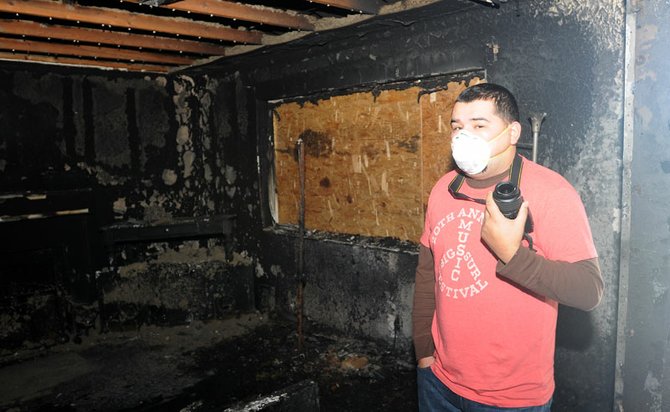
Here are the after-effects of some SWAT-police non-lethal force in California, which burned a man to death earlier this month, and set his family’s house on fire in the process. Turns out he was the wrong man, and they were at the wrong house.
According to the Monterey County Weekly, the same police force that burned down the Serrato house and killed Rogelio Serrato in the fire are probing what went wrong in the operation [sic]. Public-spirited fellow that I am, I’ll do what I can to help them figure it out. Here’s what went wrong:
Cops in America are heavily armed and trained to be bullies. Among the most highly trained, and therefore most domineering and violent, are the members of urban SWAT teams, who go beyond everyday bullying and instead are trained to think of themselves as paramilitary strike forces who are occupying hostile territory, and engaged in a war of classic counter-insurgency.
As such, police in general, and police assault forces especially, are trained to enter every encounter with the goal of taking control of the situation, by means of setting up confrontations in situations (no-knock raids, late-night forced-entry raids, etc.) where their chosen targets are most likely to be disoriented and easily terrorized, and by responding with maximal force in the volatile, disorienting confrontations that they create. For the sake of this maximal-force approach, they are equipped with an arsenal of weapons ranging from tasers and clubs to handguns and assault rifles, up to, and including, military helicopters and tanks.
Worse, with all these weapons, they have institutionalized a culture of fact-free assertion and lies about highly dangerous weapons that they consider to be categorically non-lethal — and thus to be used as a first resort, in virtually any situation, as long as it might give the cops a tactical advantage over people who they intend to bring under their control (whether or not these people have ever committed any crime at all).
These weapons continue to be used with no hesitation and no restraint, and continue to be called non-lethal force, no matter how many people are killed by them. There are, for example, tasers, portable electric torture devices which were originally sold as a less-deadly alternative to using a hand-gun in potentially life-threatening confrontations, but which cops now freely use for as part of pain compliance techniques[1] in everyday confrontations with the public.
This would be bad enough on its own, but part of the reason they are used so freely is because they take no real exertion for cops to use, and are consistently billed as non-lethal by police and media, even though there are hundreds of documented cases of people dying after being subjected to repeated taser shocks.
Another non-lethal device, which is especially heavily used by SWAT assault forces during paramilitary forced entry house raids, are so-called flash-bang grenades. These grenades, frequently referred to as non-lethal diversionary devices are actually incendiary grenades, which police hurl into rooms full of people in order to set off an explosion, which they hope will disorient and terrorize the people in the room — many or most of them completely innocent people who just had the misfortune of being in the same building — right before the assault force storms in with guns drawn. This is exactly what they did when they surrounded Rogelio Serrato’s house.
So why were they at Rogelio Serrato’s house anyway? Well, they had a search warrant to serve. They say were going to serve the search warrant using these hyperviolent, extremely dangerous stormtrooper tactics because they believed that Serrato had been with a man who shot up a music club on New Years’ Day. But by the time they got out to Serrato’s house, they already knew that they had the wrong address and the wrong man: he wasn’t at the club when the shooting went down, and the identification of Serrato as the man who was with the shooter was simply a case of mistaken identity.
Nevertheless, even though they found out that Serrato had nothing to do with the violent crime which had supposedly mobilized the SWAT team and justified the decision to storm the house in a paramilitary raid, it did turn out that he had a couple of warrants out on misdemeanors which had nothing to do with the shooting. So, they decided they were going to go ahead and arrest him.
Now, you might think that, once they had found out they were at the wrong address, and the only reason they had to worry about Rogelio Serrato at all was a couple of misdemeanor beefs having nothing to do anyone getting shot, they might have backed off a bit on the level of force; perhaps even just left a couple cops to wait around and pick him up next time he went to work or to the supermarket. But, no. I mean, look, he’s a Suspect Individual, and what’s the point of having such a fine, well-armed paramilitary assault force, if you’re not going to use it?
So instead they surrounded the house, bellowed into their bullhorns, and then, when he didn’t come out on command, they decided to make a hyperviolent forced-entry raid in order to roust him out. So they hurled a couple of their non-lethal incendiary grenades into the house, which exploded, and set the house on fire. Rogelio Serrato, who was — remember — known not to be the man they were after; who was — remember — never suspected of anything other than having a couple misdemeanor warrants out — was killed in the house fire.
So, Monterey County sheriff’s office, here is what I have found in my probe, which I will helpfully share with you. What went wrong here is that the cops believed they were on an operation that required an extraordinarily violent storm-trooper raid, even though they already knew that their original reason for being there turned out to be a complete mistake, and even though they also already knew that the man whose family they were attacking was wanted only on a pair of misdemeanor warrants.
In the interests of better protecting their own hides during this needlessly violent high-stakes operation, they felt free to make use of dangerous incendiary grenades which are perfectly capable of setting a building on fire. No matter how many people or buildings are set on fire due to the use of these grenades, police consistently blame the victim (e.g., in another case: It’s unfortunate that those guys packed that house with materials that were flammable[2]), and just go right on asserting that these explosives are non-lethal force, and defend them as tools which provide the necessary means to the police’s completely unnecessary operations. They even have the gall to tell the press that these dangerous explosives are a life-saving tool, when explaining how they just killed a man by using them.
Do you feel safer now?
Original report here
(And don't forget your ration of Wicked Thoughts for today. Now hosted on Wordpress. If you cannot access it, go to the MIRROR SITE, where posts appear as well as on the primary site. I have reposted the archives (past posts) for Wicked Thoughts HERE or HERE or here
Here are the after-effects of some SWAT-police non-lethal force in California, which burned a man to death earlier this month, and set his family’s house on fire in the process. Turns out he was the wrong man, and they were at the wrong house.
According to the Monterey County Weekly, the same police force that burned down the Serrato house and killed Rogelio Serrato in the fire are probing what went wrong in the operation [sic]. Public-spirited fellow that I am, I’ll do what I can to help them figure it out. Here’s what went wrong:
Cops in America are heavily armed and trained to be bullies. Among the most highly trained, and therefore most domineering and violent, are the members of urban SWAT teams, who go beyond everyday bullying and instead are trained to think of themselves as paramilitary strike forces who are occupying hostile territory, and engaged in a war of classic counter-insurgency.
As such, police in general, and police assault forces especially, are trained to enter every encounter with the goal of taking control of the situation, by means of setting up confrontations in situations (no-knock raids, late-night forced-entry raids, etc.) where their chosen targets are most likely to be disoriented and easily terrorized, and by responding with maximal force in the volatile, disorienting confrontations that they create. For the sake of this maximal-force approach, they are equipped with an arsenal of weapons ranging from tasers and clubs to handguns and assault rifles, up to, and including, military helicopters and tanks.
Worse, with all these weapons, they have institutionalized a culture of fact-free assertion and lies about highly dangerous weapons that they consider to be categorically non-lethal — and thus to be used as a first resort, in virtually any situation, as long as it might give the cops a tactical advantage over people who they intend to bring under their control (whether or not these people have ever committed any crime at all).
These weapons continue to be used with no hesitation and no restraint, and continue to be called non-lethal force, no matter how many people are killed by them. There are, for example, tasers, portable electric torture devices which were originally sold as a less-deadly alternative to using a hand-gun in potentially life-threatening confrontations, but which cops now freely use for as part of pain compliance techniques[1] in everyday confrontations with the public.
This would be bad enough on its own, but part of the reason they are used so freely is because they take no real exertion for cops to use, and are consistently billed as non-lethal by police and media, even though there are hundreds of documented cases of people dying after being subjected to repeated taser shocks.
Another non-lethal device, which is especially heavily used by SWAT assault forces during paramilitary forced entry house raids, are so-called flash-bang grenades. These grenades, frequently referred to as non-lethal diversionary devices are actually incendiary grenades, which police hurl into rooms full of people in order to set off an explosion, which they hope will disorient and terrorize the people in the room — many or most of them completely innocent people who just had the misfortune of being in the same building — right before the assault force storms in with guns drawn. This is exactly what they did when they surrounded Rogelio Serrato’s house.
So why were they at Rogelio Serrato’s house anyway? Well, they had a search warrant to serve. They say were going to serve the search warrant using these hyperviolent, extremely dangerous stormtrooper tactics because they believed that Serrato had been with a man who shot up a music club on New Years’ Day. But by the time they got out to Serrato’s house, they already knew that they had the wrong address and the wrong man: he wasn’t at the club when the shooting went down, and the identification of Serrato as the man who was with the shooter was simply a case of mistaken identity.
Nevertheless, even though they found out that Serrato had nothing to do with the violent crime which had supposedly mobilized the SWAT team and justified the decision to storm the house in a paramilitary raid, it did turn out that he had a couple of warrants out on misdemeanors which had nothing to do with the shooting. So, they decided they were going to go ahead and arrest him.
Now, you might think that, once they had found out they were at the wrong address, and the only reason they had to worry about Rogelio Serrato at all was a couple of misdemeanor beefs having nothing to do anyone getting shot, they might have backed off a bit on the level of force; perhaps even just left a couple cops to wait around and pick him up next time he went to work or to the supermarket. But, no. I mean, look, he’s a Suspect Individual, and what’s the point of having such a fine, well-armed paramilitary assault force, if you’re not going to use it?
So instead they surrounded the house, bellowed into their bullhorns, and then, when he didn’t come out on command, they decided to make a hyperviolent forced-entry raid in order to roust him out. So they hurled a couple of their non-lethal incendiary grenades into the house, which exploded, and set the house on fire. Rogelio Serrato, who was — remember — known not to be the man they were after; who was — remember — never suspected of anything other than having a couple misdemeanor warrants out — was killed in the house fire.
So, Monterey County sheriff’s office, here is what I have found in my probe, which I will helpfully share with you. What went wrong here is that the cops believed they were on an operation that required an extraordinarily violent storm-trooper raid, even though they already knew that their original reason for being there turned out to be a complete mistake, and even though they also already knew that the man whose family they were attacking was wanted only on a pair of misdemeanor warrants.
In the interests of better protecting their own hides during this needlessly violent high-stakes operation, they felt free to make use of dangerous incendiary grenades which are perfectly capable of setting a building on fire. No matter how many people or buildings are set on fire due to the use of these grenades, police consistently blame the victim (e.g., in another case: It’s unfortunate that those guys packed that house with materials that were flammable[2]), and just go right on asserting that these explosives are non-lethal force, and defend them as tools which provide the necessary means to the police’s completely unnecessary operations. They even have the gall to tell the press that these dangerous explosives are a life-saving tool, when explaining how they just killed a man by using them.
Do you feel safer now?
Original report here
(And don't forget your ration of Wicked Thoughts for today. Now hosted on Wordpress. If you cannot access it, go to the MIRROR SITE, where posts appear as well as on the primary site. I have reposted the archives (past posts) for Wicked Thoughts HERE or HERE or here
Monday, January 31, 2011
Giving Back Lives
On Jan. 11, after a decade of debate and the revelation that 13 prisoners had been wrongly condemned, Illinois voted to end the death penalty. The same day, in response to a powerful investigative series reported in The Raleigh News & Observer, North Carolina fired the State Board of Investigation [S.B.I.] agent and serologist Duane Deaver, who was responsible for the biased and slipshod blood reports that sentenced innocent men to prison and to death.
The catalyst for the newspaper’s investigation was the case of Greg Taylor, released from prison at the end of 2010 after 17 years behind bars for a murder he did not commit. The prosecution said that the victim’s blood had been found on Taylor’s sport utility vehicle; but according to evidence that Deaver withheld, the blood was absent. Attorney General Roy Cooper commissioned an independent audit of the serology unit for the years 1987 to 2003. In August the audit called into question the work on 229 criminal cases, including seven death penalty convictions. The S.B.I. had consistently withheld evidence that might have helped defendants. These recent findings came too late for three men who had been executed during the past 10 years. Even if the condemned men had been guilty, the withheld evidence might have influenced the jury to lessen punishment.
Moved to action by Mr. Taylor’s release, a team of five reporters studied over 15,000 pages of documents concerning the crime lab protocol and practices and interviewed lawyers, ballistics experts, lab experts, state officials and victims of the S.B.I.’s mistakes. Then they published over 60 articles, including four in-depth stories.
In 1991, for example, Floyd Brown, 46, was arrested on the charge of beating a retired schoolteacher to death. According to the prosecution, Mr. Brown dictated a detailed six-page confession. But because Mr. Brown cannot recite the alphabet or tell time and has the mental ability of a 7-year-old and could not understand the charges against him, he was locked away in a mental hospital for 14 years. Then, in 2007, the judge freed Mr. Brown, ruling that the alleged confession failed to convince.
In 2007 Kirk Turner said he killed his wife, Jennifer, with a pocket knife in self-defense after she attacked him with a 7-foot spear. Prosecutors claimed Mr. Turner killed his wife, wiped the blood-stained knife on his shirt, then stabbed himself in the leg with the spear to fake her attack. Outside experts concluded, however, that the blood stains on the shirt were not made by a knife but most likely by throwing the shirt on the floor. DNA tests revealed that the blood was only Kirk Turner’s, from his leg wound.
The News & Observer investigation revealed more than a dozen times in which S.B.I. agents bent the rules to give prosecutors the answers they sought. When a 10-year-old boy was accidentally shot in a street fight between gangs, the accused youth claimed he had returned fire from another boy. The S.B.I. bullet analyst testified that the two bullets found came from the accused’s gun. But a former F.B.I. crime lab analyst said the bullets looked “starkly different.” Today the boy is still in prison serving a 23-year sentence.
We draw three conclusions. First, science analysts in criminal cases must be highly trained and taught to see their roles as serving the truth, not the prosecution. Second, the possibility for error is much too high to allow these tests to determine whether a defendant lives or dies. Third, watchdog newspapers are indispensable for a just society.
In the first judicial response to the audit and the press’s revelations, on Dec. 30, 2010, a Durham County superior court judge tossed out the conviction of Derrick Allen, 32, after he had spent 12 years in prison for the sexual abuse and killing of his girlfriend’s 2-year-old daughter. According to the S.B.I. report, blood had been found on the child’s underwear. Allen had been induced to plead guilty in a deal to escape the death penalty; but, once incarcerated, he fought his conviction, professing innocence. The S.B.I. report of blood had been false.
Upon his release, Mr. Allen pulled his wool cap over his head and walked out into the streets alone. Later he sent a text message to his lawyer: “Thank you for giving me back my life.”
Original report here
(And don't forget your ration of Wicked Thoughts for today. Now hosted on Wordpress. If you cannot access it, go to the MIRROR SITE, where posts appear as well as on the primary site. I have reposted the archives (past posts) for Wicked Thoughts HERE or HERE or here
On Jan. 11, after a decade of debate and the revelation that 13 prisoners had been wrongly condemned, Illinois voted to end the death penalty. The same day, in response to a powerful investigative series reported in The Raleigh News & Observer, North Carolina fired the State Board of Investigation [S.B.I.] agent and serologist Duane Deaver, who was responsible for the biased and slipshod blood reports that sentenced innocent men to prison and to death.
The catalyst for the newspaper’s investigation was the case of Greg Taylor, released from prison at the end of 2010 after 17 years behind bars for a murder he did not commit. The prosecution said that the victim’s blood had been found on Taylor’s sport utility vehicle; but according to evidence that Deaver withheld, the blood was absent. Attorney General Roy Cooper commissioned an independent audit of the serology unit for the years 1987 to 2003. In August the audit called into question the work on 229 criminal cases, including seven death penalty convictions. The S.B.I. had consistently withheld evidence that might have helped defendants. These recent findings came too late for three men who had been executed during the past 10 years. Even if the condemned men had been guilty, the withheld evidence might have influenced the jury to lessen punishment.
Moved to action by Mr. Taylor’s release, a team of five reporters studied over 15,000 pages of documents concerning the crime lab protocol and practices and interviewed lawyers, ballistics experts, lab experts, state officials and victims of the S.B.I.’s mistakes. Then they published over 60 articles, including four in-depth stories.
In 1991, for example, Floyd Brown, 46, was arrested on the charge of beating a retired schoolteacher to death. According to the prosecution, Mr. Brown dictated a detailed six-page confession. But because Mr. Brown cannot recite the alphabet or tell time and has the mental ability of a 7-year-old and could not understand the charges against him, he was locked away in a mental hospital for 14 years. Then, in 2007, the judge freed Mr. Brown, ruling that the alleged confession failed to convince.
In 2007 Kirk Turner said he killed his wife, Jennifer, with a pocket knife in self-defense after she attacked him with a 7-foot spear. Prosecutors claimed Mr. Turner killed his wife, wiped the blood-stained knife on his shirt, then stabbed himself in the leg with the spear to fake her attack. Outside experts concluded, however, that the blood stains on the shirt were not made by a knife but most likely by throwing the shirt on the floor. DNA tests revealed that the blood was only Kirk Turner’s, from his leg wound.
The News & Observer investigation revealed more than a dozen times in which S.B.I. agents bent the rules to give prosecutors the answers they sought. When a 10-year-old boy was accidentally shot in a street fight between gangs, the accused youth claimed he had returned fire from another boy. The S.B.I. bullet analyst testified that the two bullets found came from the accused’s gun. But a former F.B.I. crime lab analyst said the bullets looked “starkly different.” Today the boy is still in prison serving a 23-year sentence.
We draw three conclusions. First, science analysts in criminal cases must be highly trained and taught to see their roles as serving the truth, not the prosecution. Second, the possibility for error is much too high to allow these tests to determine whether a defendant lives or dies. Third, watchdog newspapers are indispensable for a just society.
In the first judicial response to the audit and the press’s revelations, on Dec. 30, 2010, a Durham County superior court judge tossed out the conviction of Derrick Allen, 32, after he had spent 12 years in prison for the sexual abuse and killing of his girlfriend’s 2-year-old daughter. According to the S.B.I. report, blood had been found on the child’s underwear. Allen had been induced to plead guilty in a deal to escape the death penalty; but, once incarcerated, he fought his conviction, professing innocence. The S.B.I. report of blood had been false.
Upon his release, Mr. Allen pulled his wool cap over his head and walked out into the streets alone. Later he sent a text message to his lawyer: “Thank you for giving me back my life.”
Original report here
(And don't forget your ration of Wicked Thoughts for today. Now hosted on Wordpress. If you cannot access it, go to the MIRROR SITE, where posts appear as well as on the primary site. I have reposted the archives (past posts) for Wicked Thoughts HERE or HERE or here
Sunday, January 30, 2011
Leading Pain Patient Organization Silenced by Drug Warriors
Using secrecy and threats, of course
Executive Branch Federal Courts News Brief Under-treatment of Pain
The Pain Relief Network (PRN) is no longer a burr under the saddle of DEA agents eager to second guess doctors or federal prosecutors out to make a name for themselves by prosecuting doctors for their medical decisions. PRN founder and leader Siobhan Reynolds announced December 29 that the group would no longer be an activist organization because "pressure from the US Department of Justice has made it impossible for us to function." The organization's web site continues as an educational and community forum.
Reynolds was referring to an open-ended grand jury investigation directed at PRN by Wichita US Attorney Tanya Treadway, who had been irked by the group's fervent defense of pain medicine Dr. Stephen Schneider and his wife Linda, who were convicted of drug trafficking offenses for prescribing high doses of opioid pain relievers to patients at their Kansas pain clinic.
Treadway first attempted to impose a gag order on Reynolds and PRN to prevent them from publicly discussing the case and the broader issues of pain control and the tensions between it the DEA's effort to prevent the "improper" prescribing of opioid pain medications. That effort was thrown out by the trial judge.
Treadway then came back with a grand jury investigation seeking evidence of obstruction of justice for PRN's advocacy, and issued subpoenas demanding all PRN records having anything to do with the case, including Reynolds' phone and email records. Reynolds refused to comply and sought relief in the courts, but the organization was hit by $200 daily fines for each day it failed to turn over the records.
Reynolds and PRN lost in US district court and at the 10th US Circuit of Appeals, which, most unusually, sealed its opinion. The government-imposed secrecy surrounding the case has been criticized by groups including the Reporters Committee for Freedom of the Press, which questioned why the court would "order the complete sealing of a record in which the facts are already publicly known and the traditional grounds for secrecy carry no force."
In a post on Reason.com (linked above), Jacob Sullum noted that an amicus brief filed by the Reason Foundation (publisher of Reason) and the Institute for Justice, based entirely on publicly-available information, was itself sealed by the court.
Unfortunately, the US Supreme Court last month refused to hear her appeal. (For more detailed coverage on these courthouse antics, see the PRN archive page here.) Broke and unable to obtain redress from the courts, PRN has called it a day.
That is too bad. Reynolds and PRN were tireless activists on behalf of pain patients dating back to her ex-husband's search for relief from a debilitating condition. That search led them to Dr. Billy Hurwitz, a leading high-dose opioid pain reliever prescriber. But Hurwitz was himself prosecuted and convicted by the feds for his prescribing, kicking Reynolds and PRN into high gear.
PRN also worked other cases of doctors persecuted by the DEA and federal prosecutors over their opioid prescribing practices. Reynolds and PRN also played a key role in agitating around Richard Paey, the Florida pain patient sentenced to 25 years as a drug dealer for obtaining pain meds from multiple pharmacies. Paey was later pardoned by Gov. Charlie Crist, thanks in good part to PRN's efforts.
PRN may be done as an activist organization, but the community of patients Reynolds organized is not going away. Reynold's announcement indicated that they are looking at a possible new legal action in the Western District of Washington, but not under PRN's auspices.
Original report here
(And don't forget your ration of Wicked Thoughts for today. Now hosted on Wordpress. If you cannot access it, go to the MIRROR SITE, where posts appear as well as on the primary site. I have reposted the archives (past posts) for Wicked Thoughts HERE or HERE or here
Using secrecy and threats, of course
Executive Branch Federal Courts News Brief Under-treatment of Pain
The Pain Relief Network (PRN) is no longer a burr under the saddle of DEA agents eager to second guess doctors or federal prosecutors out to make a name for themselves by prosecuting doctors for their medical decisions. PRN founder and leader Siobhan Reynolds announced December 29 that the group would no longer be an activist organization because "pressure from the US Department of Justice has made it impossible for us to function." The organization's web site continues as an educational and community forum.
Reynolds was referring to an open-ended grand jury investigation directed at PRN by Wichita US Attorney Tanya Treadway, who had been irked by the group's fervent defense of pain medicine Dr. Stephen Schneider and his wife Linda, who were convicted of drug trafficking offenses for prescribing high doses of opioid pain relievers to patients at their Kansas pain clinic.
Treadway first attempted to impose a gag order on Reynolds and PRN to prevent them from publicly discussing the case and the broader issues of pain control and the tensions between it the DEA's effort to prevent the "improper" prescribing of opioid pain medications. That effort was thrown out by the trial judge.
Treadway then came back with a grand jury investigation seeking evidence of obstruction of justice for PRN's advocacy, and issued subpoenas demanding all PRN records having anything to do with the case, including Reynolds' phone and email records. Reynolds refused to comply and sought relief in the courts, but the organization was hit by $200 daily fines for each day it failed to turn over the records.
Reynolds and PRN lost in US district court and at the 10th US Circuit of Appeals, which, most unusually, sealed its opinion. The government-imposed secrecy surrounding the case has been criticized by groups including the Reporters Committee for Freedom of the Press, which questioned why the court would "order the complete sealing of a record in which the facts are already publicly known and the traditional grounds for secrecy carry no force."
In a post on Reason.com (linked above), Jacob Sullum noted that an amicus brief filed by the Reason Foundation (publisher of Reason) and the Institute for Justice, based entirely on publicly-available information, was itself sealed by the court.
Unfortunately, the US Supreme Court last month refused to hear her appeal. (For more detailed coverage on these courthouse antics, see the PRN archive page here.) Broke and unable to obtain redress from the courts, PRN has called it a day.
That is too bad. Reynolds and PRN were tireless activists on behalf of pain patients dating back to her ex-husband's search for relief from a debilitating condition. That search led them to Dr. Billy Hurwitz, a leading high-dose opioid pain reliever prescriber. But Hurwitz was himself prosecuted and convicted by the feds for his prescribing, kicking Reynolds and PRN into high gear.
PRN also worked other cases of doctors persecuted by the DEA and federal prosecutors over their opioid prescribing practices. Reynolds and PRN also played a key role in agitating around Richard Paey, the Florida pain patient sentenced to 25 years as a drug dealer for obtaining pain meds from multiple pharmacies. Paey was later pardoned by Gov. Charlie Crist, thanks in good part to PRN's efforts.
PRN may be done as an activist organization, but the community of patients Reynolds organized is not going away. Reynold's announcement indicated that they are looking at a possible new legal action in the Western District of Washington, but not under PRN's auspices.
Original report here
(And don't forget your ration of Wicked Thoughts for today. Now hosted on Wordpress. If you cannot access it, go to the MIRROR SITE, where posts appear as well as on the primary site. I have reposted the archives (past posts) for Wicked Thoughts HERE or HERE or here
Saturday, January 29, 2011
MI: Police fear “war on cops”
They've done a lot to provoke such a war. Acting like a gorilla does not win respect
A spate of shooting attacks on law enforcement officers has authorities concerned about a war on cops. In just 24 hours, at least 11 officers were shot. The shootings included Sunday attacks at traffic stops in Indiana and Oregon, a Detroit police station shooting that wounded four officers, and a shootout at a Port Orchard, Wash., Wal-Mart that injured two deputies. On Monday morning, two officers were shot dead and a U.S. Marshal was wounded by a gunman in St. Petersburg, Fla. On Thursday, two Miami-Dade, Fla., detectives were killed by a murder suspect they were trying to arrest.
"It's not a fluke," said Richard Roberts, spokesman for the International Union of Police Associations. "There's a perception among officers in the field that there’s a war on cops going on."
With the Florida deaths, the nation is on track in 2011 to match the 162 police officers killed in the line of duty in 2010, said Steve Groeninger, spokesman for the National Law Enforcement Officers Memorial Fund, the Washington, D.C.-based nonprofit that tracks police casualties. In January this year there have been 14 deaths, the same number as in January 2010, the fund posted on its web site.
The 2010 toll ended a two-year drop in fatalities and spiked 43 percent over the 117 killed in 2009, Groeninger said. Law enforcement advocates worry that cuts in police budgets could exacerbate the danger.
"We don't have any data, but there seems to be a type of criminal out there looking to thwart authority," he said. He cited the example of Jared Loughner, accused of killing six and wounding 13, including Rep. Gabrielle Giffords, on Jan. 8 in Tucson, Ariz. "People with this mentality feel the need to eliminate those in position of authority," he said.
Roberts said the recent shootings are reminders that officers must constantly stay on alert. "The bad guys are not afraid of cops," Roberts said. "They’re rarely rational. You get that combination, when you ID yourself as a cop, it does not scare them away; it makes it more dangerous for you."
Noting the Oregon and Indiana shootings occurred during so-called "routine traffic stops," Roberts said, "The word routine should be eliminated from the job. There's no such thing. There is only 'known risk' and 'unknown risk' " he said.
Roberts, a former North Beach, Md., police officer, and Groeninger both voiced worries over police budget cuts. Reducing police response times and cutting back on in-service training can endanger not just citizens but cops on patrol, they said. "It's not a good situation out there," Groeninger said...
More here
(And don't forget your ration of Wicked Thoughts for today. Now hosted on Wordpress. If you cannot access it, go to the MIRROR SITE, where posts appear as well as on the primary site. I have reposted the archives (past posts) for Wicked Thoughts HERE or HERE or here
They've done a lot to provoke such a war. Acting like a gorilla does not win respect
A spate of shooting attacks on law enforcement officers has authorities concerned about a war on cops. In just 24 hours, at least 11 officers were shot. The shootings included Sunday attacks at traffic stops in Indiana and Oregon, a Detroit police station shooting that wounded four officers, and a shootout at a Port Orchard, Wash., Wal-Mart that injured two deputies. On Monday morning, two officers were shot dead and a U.S. Marshal was wounded by a gunman in St. Petersburg, Fla. On Thursday, two Miami-Dade, Fla., detectives were killed by a murder suspect they were trying to arrest.
"It's not a fluke," said Richard Roberts, spokesman for the International Union of Police Associations. "There's a perception among officers in the field that there’s a war on cops going on."
With the Florida deaths, the nation is on track in 2011 to match the 162 police officers killed in the line of duty in 2010, said Steve Groeninger, spokesman for the National Law Enforcement Officers Memorial Fund, the Washington, D.C.-based nonprofit that tracks police casualties. In January this year there have been 14 deaths, the same number as in January 2010, the fund posted on its web site.
The 2010 toll ended a two-year drop in fatalities and spiked 43 percent over the 117 killed in 2009, Groeninger said. Law enforcement advocates worry that cuts in police budgets could exacerbate the danger.
"We don't have any data, but there seems to be a type of criminal out there looking to thwart authority," he said. He cited the example of Jared Loughner, accused of killing six and wounding 13, including Rep. Gabrielle Giffords, on Jan. 8 in Tucson, Ariz. "People with this mentality feel the need to eliminate those in position of authority," he said.
Roberts said the recent shootings are reminders that officers must constantly stay on alert. "The bad guys are not afraid of cops," Roberts said. "They’re rarely rational. You get that combination, when you ID yourself as a cop, it does not scare them away; it makes it more dangerous for you."
Noting the Oregon and Indiana shootings occurred during so-called "routine traffic stops," Roberts said, "The word routine should be eliminated from the job. There's no such thing. There is only 'known risk' and 'unknown risk' " he said.
Roberts, a former North Beach, Md., police officer, and Groeninger both voiced worries over police budget cuts. Reducing police response times and cutting back on in-service training can endanger not just citizens but cops on patrol, they said. "It's not a good situation out there," Groeninger said...
More here
(And don't forget your ration of Wicked Thoughts for today. Now hosted on Wordpress. If you cannot access it, go to the MIRROR SITE, where posts appear as well as on the primary site. I have reposted the archives (past posts) for Wicked Thoughts HERE or HERE or here
Friday, January 28, 2011
FL: Student arrested for “cop watching”
It's called "Cop Watching," where people tape police officers as they make stops and arrests. Tommy Frane says it's not that people who do the taping are against police officers, but they want to hold them accountable, like they do all public officials.
But when Frane and his friend, William Kilgore, did it Saturday night, Kilgore landed in jail. Frane says it is something you hear about in fascist countries and China, where people can't look at their public servants or hold them accountable.
The trouble began when Kilgore taped Tarpon Springs police officers arresting someone who had a controlled substance in his car. The two say an officer walked up and said the tape was evidence. Kilgore says he was told he two options: either surrender the tape or go to jail.
When Kilgore, who has taped officers making drug busts in Tampa, said he wasn't comfortable turning the tape over without a warrant, he says the officer got agitated. Kilgore says the officer kept saying turn it over and he kept saying he wasn't going to and the officer then put on the cuffs.
Not only did the Tarpon Springs Police Department take the camera without a warrant and arrest Kilgore, but also when his friend, Tommy Frane, started taping the arrest with his cell phone, they confiscated that as well.
Gregg Thomas, who is one of the foremost First Amendment attorneys in the country, says it seems like a clear violation of civil rights. Thomas, who has won a case in front of the U.S. Supreme Court, says there is no real lawful reason for the officer to seize someone's camera or even threaten them with arrest.
Meanwhile, Kilgore wants to know why the Tarpon Springs police are so scared of his filming. He says it raises a lot of other questions.
Among those questions is whether or not taxpayers will have to pay for any penalty if a civil rights suit is filed against the department and city.
Original report here
(And don't forget your ration of Wicked Thoughts for today. Now hosted on Wordpress. If you cannot access it, go to the MIRROR SITE, where posts appear as well as on the primary site. I have reposted the archives (past posts) for Wicked Thoughts HERE or HERE or here
It's called "Cop Watching," where people tape police officers as they make stops and arrests. Tommy Frane says it's not that people who do the taping are against police officers, but they want to hold them accountable, like they do all public officials.
But when Frane and his friend, William Kilgore, did it Saturday night, Kilgore landed in jail. Frane says it is something you hear about in fascist countries and China, where people can't look at their public servants or hold them accountable.
The trouble began when Kilgore taped Tarpon Springs police officers arresting someone who had a controlled substance in his car. The two say an officer walked up and said the tape was evidence. Kilgore says he was told he two options: either surrender the tape or go to jail.
When Kilgore, who has taped officers making drug busts in Tampa, said he wasn't comfortable turning the tape over without a warrant, he says the officer got agitated. Kilgore says the officer kept saying turn it over and he kept saying he wasn't going to and the officer then put on the cuffs.
Not only did the Tarpon Springs Police Department take the camera without a warrant and arrest Kilgore, but also when his friend, Tommy Frane, started taping the arrest with his cell phone, they confiscated that as well.
Gregg Thomas, who is one of the foremost First Amendment attorneys in the country, says it seems like a clear violation of civil rights. Thomas, who has won a case in front of the U.S. Supreme Court, says there is no real lawful reason for the officer to seize someone's camera or even threaten them with arrest.
Meanwhile, Kilgore wants to know why the Tarpon Springs police are so scared of his filming. He says it raises a lot of other questions.
Among those questions is whether or not taxpayers will have to pay for any penalty if a civil rights suit is filed against the department and city.
Original report here
(And don't forget your ration of Wicked Thoughts for today. Now hosted on Wordpress. If you cannot access it, go to the MIRROR SITE, where posts appear as well as on the primary site. I have reposted the archives (past posts) for Wicked Thoughts HERE or HERE or here
Thursday, January 27, 2011
Australia: Abused wife's payout cut because she was used to violence (!)
Shouldn't it have been the other way around?
DOMESTIC violence experts fear a court ruling that slashed a battered woman's compensation payment because she was "conditioned" to domestic violence by her husband will deter other victims from taking legal action.
Diane Mangan, chief executive of the 24-hour helpline DV Connect, said the decision to reduce the payout because of the woman's predisposition to mental stress from previous domestic violence only served to "diminish" her traumatic experience. "It's almost like saying the years that you have suffered at the hands of your husband don't count," she said.
The District Court in Brisbane was told that in 2006, the woman, 30, and her children were confronted by her husband, 36, who was wielding a knife.
A hostage situation developed and when police arrived, the couple's children were handed out of a window. The husband then pushed his wife into a bedroom door, injuring her shoulder.
After later pleading guilty to deprivation of liberty and common assault charges, he was jailed for two years to be suspended after eight months.
His wife applied for criminal compensation and in a recent judgment was awarded $20,250.
Judge Richard Jones said unfortunately for the woman, the incident was one of a long history of domestic violence and that she had been "conditioned" to the violence by her husband. He noted that the offences before him had pushed the woman over the edge.
Judge Jones said because of the woman's predisposition to post traumatic stress disorder, it was contended by lawyers that the percentage of the maximum compensation for mental anguish should be reduced from 34 to 20 per cent. He said 20 per cent was justified.
It was the latest case where judges expressed concern that their hands were tied when awarding criminal compensation payments to long-term domestic violence victims.
Ms Mangan said many victims were so emotionally damaged they could not face court. Such a ruling would only further deter them from relying on the legal system, she said.
UQ law school Associate Professor Heather Douglas said the laws were designed to handle compensation claims for a range of individualised crimes and operated on a case-by-case basis to avoid "double dipping".
But that caused "frustration" in domestic violence cases, she said, because previous acts of violence were largely uncontested in courts and most victims had not already received compensation.
She said a "radical systematic change" was needed to develop separate rules that allowed judges to consider historical domestic violence that had not already come before the courts.
Original report here
(And don't forget your ration of Wicked Thoughts for today. Now hosted on Wordpress. If you cannot access it, go to the MIRROR SITE, where posts appear as well as on the primary site. I have reposted the archives (past posts) for Wicked Thoughts HERE or HERE or here
Shouldn't it have been the other way around?
DOMESTIC violence experts fear a court ruling that slashed a battered woman's compensation payment because she was "conditioned" to domestic violence by her husband will deter other victims from taking legal action.
Diane Mangan, chief executive of the 24-hour helpline DV Connect, said the decision to reduce the payout because of the woman's predisposition to mental stress from previous domestic violence only served to "diminish" her traumatic experience. "It's almost like saying the years that you have suffered at the hands of your husband don't count," she said.
The District Court in Brisbane was told that in 2006, the woman, 30, and her children were confronted by her husband, 36, who was wielding a knife.
A hostage situation developed and when police arrived, the couple's children were handed out of a window. The husband then pushed his wife into a bedroom door, injuring her shoulder.
After later pleading guilty to deprivation of liberty and common assault charges, he was jailed for two years to be suspended after eight months.
His wife applied for criminal compensation and in a recent judgment was awarded $20,250.
Judge Richard Jones said unfortunately for the woman, the incident was one of a long history of domestic violence and that she had been "conditioned" to the violence by her husband. He noted that the offences before him had pushed the woman over the edge.
Judge Jones said because of the woman's predisposition to post traumatic stress disorder, it was contended by lawyers that the percentage of the maximum compensation for mental anguish should be reduced from 34 to 20 per cent. He said 20 per cent was justified.
It was the latest case where judges expressed concern that their hands were tied when awarding criminal compensation payments to long-term domestic violence victims.
Ms Mangan said many victims were so emotionally damaged they could not face court. Such a ruling would only further deter them from relying on the legal system, she said.
UQ law school Associate Professor Heather Douglas said the laws were designed to handle compensation claims for a range of individualised crimes and operated on a case-by-case basis to avoid "double dipping".
But that caused "frustration" in domestic violence cases, she said, because previous acts of violence were largely uncontested in courts and most victims had not already received compensation.
She said a "radical systematic change" was needed to develop separate rules that allowed judges to consider historical domestic violence that had not already come before the courts.
Original report here
(And don't forget your ration of Wicked Thoughts for today. Now hosted on Wordpress. If you cannot access it, go to the MIRROR SITE, where posts appear as well as on the primary site. I have reposted the archives (past posts) for Wicked Thoughts HERE or HERE or here
Wednesday, January 26, 2011
LAPD officer found to have used excessive force in slaying
Federal jury rejects former officer Joseph Cruz's account of the March 2008 shooting that killed Mohammad Usman Chaudhry, a 21-year-old autistic man
A federal jury Monday found that a former Los Angeles police officer used excessive force in a fatal 2008 shooting.
The unanimous verdict in U.S. District Court against Joseph Cruz and the city of Los Angeles was essentially a rejection of Cruz's account of the shooting. Since March 25, 2008, when Mohammad Usman Chaudhry was killed on a Hollywood street in the pre-dawn darkness, Cruz has insisted that Chaudhry tried to attack him with a knife and that he fired his gun in self-defense.
On Tuesday the jury will begin hearing arguments in the damages phase of the trial to decide what monetary award, if any, Chaudhry's family deserves.
The jury announced its decision after several hours of deliberations. It found that Cruz acted in "a reckless, oppressive or malicious manner" during the shooting.
Chaudhry was a 21-year-old autistic man who sometimes wandered away from his parents' home and spent nights on L.A. streets. Cruz and his partner came across Chaudhry early one morning as the man was lying in some bushes beside an apartment building. Cruz told investigators that Chaudhry was acting calmly and gave no indication that he suffered from a mental illness.
According to Cruz, Chaudhry suddenly pulled a knife from his sweatshirt and charged Cruz at a moment when his partner was out of sight. Cruz fired four shots, hitting Chaudhry three times.
Evidence presented at the trial showed that only one person's DNA profile was found on the knife, but the DNA did not belong to Chaudhry. Cruz has refused to submit a DNA sample.
At the time of the shooting, Cruz was under investigation for an incident in which a teenage girl escaped from his custody. Police officials later concluded that Cruz had made false statements to investigators during the inquiry and fired him for dishonesty. When Cruz filed a lawsuit to be reinstated, lawyers from the Los Angeles city attorney's office filed court records stating that Cruz had no credibility.
In the Chaudhry case, however, both the LAPD and the city attorney's office helped defend Cruz and vouched to the jury that his account of the shooting should be believed.
Original report here
(And don't forget your ration of Wicked Thoughts for today. Now hosted on Wordpress. If you cannot access it, go to the MIRROR SITE, where posts appear as well as on the primary site. I have reposted the archives (past posts) for Wicked Thoughts HERE or HERE or here
Federal jury rejects former officer Joseph Cruz's account of the March 2008 shooting that killed Mohammad Usman Chaudhry, a 21-year-old autistic man
A federal jury Monday found that a former Los Angeles police officer used excessive force in a fatal 2008 shooting.
The unanimous verdict in U.S. District Court against Joseph Cruz and the city of Los Angeles was essentially a rejection of Cruz's account of the shooting. Since March 25, 2008, when Mohammad Usman Chaudhry was killed on a Hollywood street in the pre-dawn darkness, Cruz has insisted that Chaudhry tried to attack him with a knife and that he fired his gun in self-defense.
On Tuesday the jury will begin hearing arguments in the damages phase of the trial to decide what monetary award, if any, Chaudhry's family deserves.
The jury announced its decision after several hours of deliberations. It found that Cruz acted in "a reckless, oppressive or malicious manner" during the shooting.
Chaudhry was a 21-year-old autistic man who sometimes wandered away from his parents' home and spent nights on L.A. streets. Cruz and his partner came across Chaudhry early one morning as the man was lying in some bushes beside an apartment building. Cruz told investigators that Chaudhry was acting calmly and gave no indication that he suffered from a mental illness.
According to Cruz, Chaudhry suddenly pulled a knife from his sweatshirt and charged Cruz at a moment when his partner was out of sight. Cruz fired four shots, hitting Chaudhry three times.
Evidence presented at the trial showed that only one person's DNA profile was found on the knife, but the DNA did not belong to Chaudhry. Cruz has refused to submit a DNA sample.
At the time of the shooting, Cruz was under investigation for an incident in which a teenage girl escaped from his custody. Police officials later concluded that Cruz had made false statements to investigators during the inquiry and fired him for dishonesty. When Cruz filed a lawsuit to be reinstated, lawyers from the Los Angeles city attorney's office filed court records stating that Cruz had no credibility.
In the Chaudhry case, however, both the LAPD and the city attorney's office helped defend Cruz and vouched to the jury that his account of the shooting should be believed.
Original report here
(And don't forget your ration of Wicked Thoughts for today. Now hosted on Wordpress. If you cannot access it, go to the MIRROR SITE, where posts appear as well as on the primary site. I have reposted the archives (past posts) for Wicked Thoughts HERE or HERE or here
Tuesday, January 25, 2011
Fewer Snouts in the Trough, Less Crime in the Streets
"What happens when you lay off nearly half of the police in one of the most dangerous cities in America?" begins a recent account of personnel cutbacks by the municipal government of Camden, New Jersey.
My guess would be this: The crime rate -- as experienced by the affected public, rather than measured by the local government -- will go down, and the public appetite will be whetted for further personnel cuts. This is because the Camden Police Department -- which has laid off 167 of its 360 officers -- has long been a major source of crime, rather than a deterrent to the same.
New Jersey is one of the wealthiest states in the soyuz, but it is also afflicted with a large and immensely powerful population of unionized tax feeders.
On January 19, a New Jersey Superior Court Judge refused to grant an injunction sought by the Fraternal Order of Police (FOP) to reinstate the 167 officers who were laid off by Camden. On the same day, the union rejected a proposed compromise that would have reinstated 100 officers to the force. The deal would involve three days a month of unpaid furloughs for patrol officers for six months, followed by one unpaid monthly furlough day for the following year.
This arrangement would amount to a modest pay cut, but it shattered against the FOP's impregnable sense of privilege. As commentator George Berkin pointed out, the union had erroneously assumed that it could "get a court to trump economics" -- or, at least, that it could browbeat Camden City Hall into devising some way to extract wealth from the productive on its behalf. The police unions have become accustomed to getting whatever they want. For example: In New Jersey, it's become standard practice for police to use their tax-funded health plans to pay for illegal steroid treatments.
Camden County is among the state's poorest subdivisions, with an official (which is to say, understated) unemployment rate of 16.3 percent, a per capita income of about $23,300, and a median annual household income of roughly $48,000. Its municipal government confronts a $26.5 million budget shortfall.
The average Camden police officer receives $144,000 in salary and benefits, most of it paid for by taxpayers elsewhere in the state. Since 2003, Camden has been under the fiscal supervision of Trenton, which provides more than 80 percent of the city's operating budget. Over the past seven years the state government has lavished nearly a quarter of a billion dollars on Camden in the name of "economic revitalization" and "transitional" funding.
Five year before Trenton assumed responsibility for Camden's finances, the state took control of the Camden Police Department following the resignation of Police Chief William Hill. This left the department "without a person clearly in charge" in the midst of a wide-ranging corruption probe.
At the time of Chief Hill's resignation, a federal grand jury was investigating allegations that a clique of corrupt Camden police officers had operated a shakedown racket targeting local cocaine dealers, thereby helping the market prosper in exchange for a cut of the proceeds. One of the first results of that inquiry was an increased attrition rate for the Camden PD as about one-ninth of its force of about 460 officers suddenly retired, claimed their pensions, and -- perhaps most importantly -- sealed their personnel files.
Camden County Prosecutor Lee Solomon negotiated an agreement with the president of the local police union, Detective Dan Morris, permitting the investigation to have access to personnel records of officers -- both active and retired -- who served on the force from 1997 on. "The prosecutor has assured the FOP [Fraternal Order of Police] the confidentiality of these files will not be compromised," Morris announced in 2000.
Morris had access to those files as well, and there's reason to believe that he gleaned critical intelligence from them -- which he used to create his own little protection racket, which he operated for several years before retiring on disability last January at the age of 46.
Last September, Morris pleaded guilty to multiple charges outlined in a multi-count federal indictment. As commander of a five-officer Special Operations unit, Morris committed numerous criminal offenses, including illegal searches and seizures of property, theft, extortion, perjury, and various kinds of assault.
The federal indictment against Morris's subordinates describes their Special Operations unit as a criminal conspiracy that planted evidence to justify false arrests, routinely lied about the quantity of narcotics seized in raids in order to "expose the arrestees to greater penalties," regularly bartered drugs for sundry favors, and made a habit of stealing money and drugs. Public exposure of the crimes committed by Morris and his little street gang led to the dismissal of 185 drug cases, and the release of dozens of people who had been wrongfully imprisoned.
In April 2007, Benjamin Daye -- who was 20 at the time --was stopped and assaulted by Morris and his goon squad. An illegal search of Daye's car failed to turn up any contraband and the terrified young man couldn't provide any information on local dealers -- so the police planted drugs in the car and arrested Daye, who served nearly three years in prison before the case was dropped.
Joel Barnes, who spent nearly a year and a half behind bars, had a very similar experience. Two officers with the Special Operations unit, Robert Bayard and Antonio Figueroa, invaded Barnes's home, demanding to know "where the s**t is at." When Barnes truthfully replied that there were no illegal drugs on the premises, one of them pulled a small bag of cocaine from his own pockets and told Barnes, "Tell us where the s**t [is] at and we'll make this disappear." When Barnes repeated that he didn't have any drugs, the officers charged him with unlawful possession of a controlled substance with intent to distribute in a "school zone" -- a charge that could have led to a 20-year prison sentence.
"I felt helpless and didn't know what to do," Barnes recalls. "I knew I hadn't done anything wrong, but I also knew that the officers had all of the power and I had none."
Morris and his Special Operations squad are generally referred to as a "rogue" unit, implying that their criminal conduct was anomalous. Given the pervasive corruption of the Camden PD, the term "rogue" would more properly be applied to Rolan Carter. In 2008, Carter was fired from the force for "insubordination" as a result of an incident in which he attempted to arrest a man wanted on four outstanding warrants.
Carter pulled the man over for using a cell phone while driving. As he ran a background check two plainclothes officers materialized and insisted that the driver was a police informant and should be released immediately. While Carter discussed the matter with the plainclothes cops, a police sergeant arrived and ordered him to let the driver go. Still unconvinced that this was the "proper procedure," Carter called his own command sergeant, who instructed him to do as the other officers demanded.
Six weeks later, Carter -- who had received multiple commendations for valor -- was charged with insubordination and cashiered from the force. But his problems had actually begun more than a year earlier.
As the Philadelphia Inquirer reports, in January 2007, Carter was transferred from a patrol squad "when he raised concerns about one supervisor, Sgt. Dan Morris." After Carter was removed from the squad, he was replaced by Officer Jason Stetser, who is now facing multiple criminal charges for his actions as part of Morris's "rogue" Special Operations squad.
Carter didn't lose his job because of personnel cut-backs; he was fired because he displayed symptoms of personal integrity. And his lawsuit against the Camden PD is one of at least ten filed by former officers describing "a department rife with cronyism" in which "commanders create a hostile and discriminatory atmosphere and seek retaliation against those perceived as defiant," observes the Inquirer.
In addition to the lawsuits filed by former Camden police officers, the city is dealing with up to thirty active or potential lawsuits by victims of the Morris-led criminal syndicate -- with dozens more likely to come. It is possible that Camden's municipal government will soon suffer the same fate that befell the one in charge of Maywood, California.
Buried beneath a deluge of civil rights lawsuits and settlement costs incurred by police misconduct, Maywood lost its liability insurance coverage and had to contract with a neighboring town for basic municipal services. As it happens, that neighboring town was Bell, California -- which, it was discovered, had an even more extravagantly corrupt municipal government. I suspect that entertaining little revelations of this kind -- in California, New Jersey, and all points in between -- will abound as the economic collapse accelerates.
The Camden PD, following the example of law enforcement agencies in cash-strapped California cities such as Oakland and Sacramento, has announced that it will be rationing its services by refusing to deal with "minor" matters, such as non-injury vehicle accidents and petty theft. This announcement is intended to inspire public fear. It may have exactly the opposite effect.
Helene Pierson, executive director of Heart of Camden, a neighborhood development corporation, recalls that when her group was created several years ago it intended to be a "partner" with the police force. She and others "bought into the [idea] that police are stretched really thin, that they try really hard, that they need extra help." Much of what she has seen -- including dozens of cases in which people were falsely imprisoned in the service of a criminal racket run by the cops -- has disabused Pierson of such notions.
In Camden -- and, for that matter, everywhere else -- the government police force has been a catalyst for crime, rather than a deterrent to it. There's every reason to believe that fewer snouts in the trough would mean less crime on the streets.
Original report here
(And don't forget your ration of Wicked Thoughts for today. Now hosted on Wordpress. If you cannot access it, go to the MIRROR SITE, where posts appear as well as on the primary site. I have reposted the archives (past posts) for Wicked Thoughts HERE or HERE or here
"What happens when you lay off nearly half of the police in one of the most dangerous cities in America?" begins a recent account of personnel cutbacks by the municipal government of Camden, New Jersey.
My guess would be this: The crime rate -- as experienced by the affected public, rather than measured by the local government -- will go down, and the public appetite will be whetted for further personnel cuts. This is because the Camden Police Department -- which has laid off 167 of its 360 officers -- has long been a major source of crime, rather than a deterrent to the same.
New Jersey is one of the wealthiest states in the soyuz, but it is also afflicted with a large and immensely powerful population of unionized tax feeders.
On January 19, a New Jersey Superior Court Judge refused to grant an injunction sought by the Fraternal Order of Police (FOP) to reinstate the 167 officers who were laid off by Camden. On the same day, the union rejected a proposed compromise that would have reinstated 100 officers to the force. The deal would involve three days a month of unpaid furloughs for patrol officers for six months, followed by one unpaid monthly furlough day for the following year.
This arrangement would amount to a modest pay cut, but it shattered against the FOP's impregnable sense of privilege. As commentator George Berkin pointed out, the union had erroneously assumed that it could "get a court to trump economics" -- or, at least, that it could browbeat Camden City Hall into devising some way to extract wealth from the productive on its behalf. The police unions have become accustomed to getting whatever they want. For example: In New Jersey, it's become standard practice for police to use their tax-funded health plans to pay for illegal steroid treatments.
Camden County is among the state's poorest subdivisions, with an official (which is to say, understated) unemployment rate of 16.3 percent, a per capita income of about $23,300, and a median annual household income of roughly $48,000. Its municipal government confronts a $26.5 million budget shortfall.
The average Camden police officer receives $144,000 in salary and benefits, most of it paid for by taxpayers elsewhere in the state. Since 2003, Camden has been under the fiscal supervision of Trenton, which provides more than 80 percent of the city's operating budget. Over the past seven years the state government has lavished nearly a quarter of a billion dollars on Camden in the name of "economic revitalization" and "transitional" funding.
Five year before Trenton assumed responsibility for Camden's finances, the state took control of the Camden Police Department following the resignation of Police Chief William Hill. This left the department "without a person clearly in charge" in the midst of a wide-ranging corruption probe.
At the time of Chief Hill's resignation, a federal grand jury was investigating allegations that a clique of corrupt Camden police officers had operated a shakedown racket targeting local cocaine dealers, thereby helping the market prosper in exchange for a cut of the proceeds. One of the first results of that inquiry was an increased attrition rate for the Camden PD as about one-ninth of its force of about 460 officers suddenly retired, claimed their pensions, and -- perhaps most importantly -- sealed their personnel files.
Camden County Prosecutor Lee Solomon negotiated an agreement with the president of the local police union, Detective Dan Morris, permitting the investigation to have access to personnel records of officers -- both active and retired -- who served on the force from 1997 on. "The prosecutor has assured the FOP [Fraternal Order of Police] the confidentiality of these files will not be compromised," Morris announced in 2000.
Morris had access to those files as well, and there's reason to believe that he gleaned critical intelligence from them -- which he used to create his own little protection racket, which he operated for several years before retiring on disability last January at the age of 46.
Last September, Morris pleaded guilty to multiple charges outlined in a multi-count federal indictment. As commander of a five-officer Special Operations unit, Morris committed numerous criminal offenses, including illegal searches and seizures of property, theft, extortion, perjury, and various kinds of assault.
The federal indictment against Morris's subordinates describes their Special Operations unit as a criminal conspiracy that planted evidence to justify false arrests, routinely lied about the quantity of narcotics seized in raids in order to "expose the arrestees to greater penalties," regularly bartered drugs for sundry favors, and made a habit of stealing money and drugs. Public exposure of the crimes committed by Morris and his little street gang led to the dismissal of 185 drug cases, and the release of dozens of people who had been wrongfully imprisoned.
In April 2007, Benjamin Daye -- who was 20 at the time --was stopped and assaulted by Morris and his goon squad. An illegal search of Daye's car failed to turn up any contraband and the terrified young man couldn't provide any information on local dealers -- so the police planted drugs in the car and arrested Daye, who served nearly three years in prison before the case was dropped.
Joel Barnes, who spent nearly a year and a half behind bars, had a very similar experience. Two officers with the Special Operations unit, Robert Bayard and Antonio Figueroa, invaded Barnes's home, demanding to know "where the s**t is at." When Barnes truthfully replied that there were no illegal drugs on the premises, one of them pulled a small bag of cocaine from his own pockets and told Barnes, "Tell us where the s**t [is] at and we'll make this disappear." When Barnes repeated that he didn't have any drugs, the officers charged him with unlawful possession of a controlled substance with intent to distribute in a "school zone" -- a charge that could have led to a 20-year prison sentence.
"I felt helpless and didn't know what to do," Barnes recalls. "I knew I hadn't done anything wrong, but I also knew that the officers had all of the power and I had none."
Morris and his Special Operations squad are generally referred to as a "rogue" unit, implying that their criminal conduct was anomalous. Given the pervasive corruption of the Camden PD, the term "rogue" would more properly be applied to Rolan Carter. In 2008, Carter was fired from the force for "insubordination" as a result of an incident in which he attempted to arrest a man wanted on four outstanding warrants.
Carter pulled the man over for using a cell phone while driving. As he ran a background check two plainclothes officers materialized and insisted that the driver was a police informant and should be released immediately. While Carter discussed the matter with the plainclothes cops, a police sergeant arrived and ordered him to let the driver go. Still unconvinced that this was the "proper procedure," Carter called his own command sergeant, who instructed him to do as the other officers demanded.
Six weeks later, Carter -- who had received multiple commendations for valor -- was charged with insubordination and cashiered from the force. But his problems had actually begun more than a year earlier.
As the Philadelphia Inquirer reports, in January 2007, Carter was transferred from a patrol squad "when he raised concerns about one supervisor, Sgt. Dan Morris." After Carter was removed from the squad, he was replaced by Officer Jason Stetser, who is now facing multiple criminal charges for his actions as part of Morris's "rogue" Special Operations squad.
Carter didn't lose his job because of personnel cut-backs; he was fired because he displayed symptoms of personal integrity. And his lawsuit against the Camden PD is one of at least ten filed by former officers describing "a department rife with cronyism" in which "commanders create a hostile and discriminatory atmosphere and seek retaliation against those perceived as defiant," observes the Inquirer.
In addition to the lawsuits filed by former Camden police officers, the city is dealing with up to thirty active or potential lawsuits by victims of the Morris-led criminal syndicate -- with dozens more likely to come. It is possible that Camden's municipal government will soon suffer the same fate that befell the one in charge of Maywood, California.
Buried beneath a deluge of civil rights lawsuits and settlement costs incurred by police misconduct, Maywood lost its liability insurance coverage and had to contract with a neighboring town for basic municipal services. As it happens, that neighboring town was Bell, California -- which, it was discovered, had an even more extravagantly corrupt municipal government. I suspect that entertaining little revelations of this kind -- in California, New Jersey, and all points in between -- will abound as the economic collapse accelerates.
The Camden PD, following the example of law enforcement agencies in cash-strapped California cities such as Oakland and Sacramento, has announced that it will be rationing its services by refusing to deal with "minor" matters, such as non-injury vehicle accidents and petty theft. This announcement is intended to inspire public fear. It may have exactly the opposite effect.
Helene Pierson, executive director of Heart of Camden, a neighborhood development corporation, recalls that when her group was created several years ago it intended to be a "partner" with the police force. She and others "bought into the [idea] that police are stretched really thin, that they try really hard, that they need extra help." Much of what she has seen -- including dozens of cases in which people were falsely imprisoned in the service of a criminal racket run by the cops -- has disabused Pierson of such notions.
In Camden -- and, for that matter, everywhere else -- the government police force has been a catalyst for crime, rather than a deterrent to it. There's every reason to believe that fewer snouts in the trough would mean less crime on the streets.
Original report here
(And don't forget your ration of Wicked Thoughts for today. Now hosted on Wordpress. If you cannot access it, go to the MIRROR SITE, where posts appear as well as on the primary site. I have reposted the archives (past posts) for Wicked Thoughts HERE or HERE or here
Monday, January 24, 2011
Libertarian rights activist charged with jury tampering
"On January 11, 2011," veteran libertarian rights activist Julian Heicklen announced to his Tyranny Fighters email list, "I was notified by summons that I have been criminally charged with jury tampering."
Many might be distressed by such news, but not Heicklen. "The moment of truth has arrived," Heicklen said. "The dance begins."
Heicklen explained his position in an exclusive email interview with the Libertarian News Examiner on Saturday.
"In essence, I want to discuss the jury's right to nullify the law IN FRONT OF A JURY." (The emphasis is Heicklen's). "My position is that neither jury nullification is or that I am on trial. My position is that the judiciary is on trial. Jury nullification needs no defense. It is the law of the land."
The summons, while short on particulars, appears to be charging him with telling potential jurors the truth about jury nullification whenever he distributes Fully Informed Jury Association literature in front of courthouses, as he has done for the past 18 months at 27 federal and county courthouses in 20 different states.
However, Heicklen told the Libertarian News Examiner that the summons gave no reason for the charges. "The offense is briefly described as 'Jury Tampering,'" Heicklen said. "There is no mention of FIJA materials, a US Courthouse, or prospective jurors. The indictment papers are not included."
Heicklen's announcement that he plans to represent himself as counsel pro se elicited a barrage of email responses from his supporters at Tyranny Fighters, which is not a formal organization but a loose association of independent freedom activists.
A person with "experience challenging grand jury procedures" has offered his services. Another has offered help as a legal researcher. Still another volunteered to assist with "briefs or memorandums in support of your position."
Iloilo Jones, Executive Director of the Fully Informed Jury Association told the Libertarian News Examiner on Friday, "FIJA hopes to be participating in this case to the extent Julian would like help from our organization."
Other supporters, however, have adamantly disagreed with Heicklen's intention to represent himself, insisting, "You cannot beat a rigged deck. That's why you hire attorneys" and calling it "a losing proposition."
That discussion continues to rage as Heicklen prepares for his day in court "on January 24, 2011 at 10:00 am in courtroom #15B."
Original report here
(And don't forget your ration of Wicked Thoughts for today. Now hosted on Wordpress. If you cannot access it, go to the MIRROR SITE, where posts appear as well as on the primary site. I have reposted the archives (past posts) for Wicked Thoughts HERE or HERE or here
"On January 11, 2011," veteran libertarian rights activist Julian Heicklen announced to his Tyranny Fighters email list, "I was notified by summons that I have been criminally charged with jury tampering."
Many might be distressed by such news, but not Heicklen. "The moment of truth has arrived," Heicklen said. "The dance begins."
Heicklen explained his position in an exclusive email interview with the Libertarian News Examiner on Saturday.
"In essence, I want to discuss the jury's right to nullify the law IN FRONT OF A JURY." (The emphasis is Heicklen's). "My position is that neither jury nullification is or that I am on trial. My position is that the judiciary is on trial. Jury nullification needs no defense. It is the law of the land."
The summons, while short on particulars, appears to be charging him with telling potential jurors the truth about jury nullification whenever he distributes Fully Informed Jury Association literature in front of courthouses, as he has done for the past 18 months at 27 federal and county courthouses in 20 different states.
However, Heicklen told the Libertarian News Examiner that the summons gave no reason for the charges. "The offense is briefly described as 'Jury Tampering,'" Heicklen said. "There is no mention of FIJA materials, a US Courthouse, or prospective jurors. The indictment papers are not included."
Heicklen's announcement that he plans to represent himself as counsel pro se elicited a barrage of email responses from his supporters at Tyranny Fighters, which is not a formal organization but a loose association of independent freedom activists.
A person with "experience challenging grand jury procedures" has offered his services. Another has offered help as a legal researcher. Still another volunteered to assist with "briefs or memorandums in support of your position."
Iloilo Jones, Executive Director of the Fully Informed Jury Association told the Libertarian News Examiner on Friday, "FIJA hopes to be participating in this case to the extent Julian would like help from our organization."
Other supporters, however, have adamantly disagreed with Heicklen's intention to represent himself, insisting, "You cannot beat a rigged deck. That's why you hire attorneys" and calling it "a losing proposition."
That discussion continues to rage as Heicklen prepares for his day in court "on January 24, 2011 at 10:00 am in courtroom #15B."
Original report here
(And don't forget your ration of Wicked Thoughts for today. Now hosted on Wordpress. If you cannot access it, go to the MIRROR SITE, where posts appear as well as on the primary site. I have reposted the archives (past posts) for Wicked Thoughts HERE or HERE or here
Subscribe to:
Posts (Atom)
