Sunday, November 16, 2014


Arrested for arson. Flung into stinking cells. Stung for £40k. How a Greek holiday became a Stygian nightmare for blameless British couple

A British teacher was jailed in France and Greece, handcuffed and forced to pay for his drinking water when he was held under a controversial European Arrest Warrant after wrongly being accused of starting a forest fire.

Keith Hainsworth, 64, an Ancient Greek tutor, was seized at Calais as he and his wife Pippa returned from a weekend in Paris last month.

He was thrown in a French police cell, banned from speaking to his wife or a lawyer, accused of ‘malicious arson’ in Greece with his wife as an accomplice – and branded an ‘environmental terrorist’ by a French judge.

It led to a five-week nightmare which culminated in Mr Hainsworth being flown to Greece from France under armed guard, thrown in a notorious Athens jail and then transported on a nine-hour journey in a ‘cattle truck’ prison transfer wagon with menacing Greek criminals before he was finally freed and returned home on Tuesday.

The Greek judge who ordered Mr Hainsworth’s arrest admitted a mistake had been made – but the couple still face the threat of legal action in the country, where arson carries a ten-year jail sentence.

There are an estimated 3,000 fires in Greece’s tinder box forests each year. No one was hurt and no property was damaged in the one that led to Mr Hainsworth’s detention.

But the couple now face a bill of up to £40,000 for legal fees and other costs. Last night, they backed calls for Britain to stay out of the European Arrest Warrant (EWA), which left them – and the British Government – unable to stop Mr Hainsworth’s ordeal.

In fact – to illustrate how powerless the British authorities are in the face of EAW – Mr Hainsworth was first detained after being handed over to French police by British Customs officials, who admitted there was nothing they could do because they were on French soil.

Mr Hainsworth studied Classics at Oxford, and had a successful career in advertising, working on a Lemsip TV advert, before reverting to his first love – Latin and Ancient Greek – a decade ago. He now gives private tuition in the subjects.

Speaking to The Mail on Sunday in the kitchen of their Victorian terraced home in Hampton, South-West London, Mr Hainsworth said of his ordeal: ‘It was disgraceful. I couldn’t see how I was going to get out of it. Far better people than me have been locked up in Athens, like Socrates, and many never came out.’

He kept his spirits up with poetry, spotting familiar Greek ruins through the window grille of his prison lorry, and making self-mocking quips about his resemblance to actor Jack Nicholson.

Mrs Hainsworth, a school governor, added: ‘I was horrified. In Britain you are innocent until proved guilty – in Greece it seems you are treated as guilty from the start.’

Dressed in burgundy trousers and with an Oxford blue scarf draped round his neck, urbane Mr Hainsworth is an unlikely pyromaniac.

His ordeal started in July when the couple toured the Peloponnese region – they holiday in Greece most years – in a hire car.

‘A few miles down the road Pippa said, "Do you smell smoke?" ’ recalled Mr Hainsworth. ‘Her nostrils are notoriously more sensitive than mine.’

‘She said, "Shall we call the fire brigade?" Then we heard a siren, so assuming they were on their way, we drove on and stopped to take some photographs of goats a few miles down the road – hardly the actions of criminals trying to scarper.’

They went home as planned a week later. It was not until three months later – on October 7 – that the long-extinguished forest fire came back to haunt them.

They had been to Paris to celebrate Mrs Hainsworth’s birthday – and so ‘horseracing nut’ Mr Hainsworth could attend the Prix de L’Arc de Triomphe at Longchamps in Paris. After handing their passports to the British Customs officer on their way back via the Eurotunnel, the official summoned French police.

‘The French said, "You’re under arrest. The Greek authorities have accused you of arson,’ said Mr Hainsworth. ‘It was Kafkaesque, amazing.’ The impotent British officials squirmed: ‘I’m sorry, we have to do this because we are on French territory. It’s an EAW.’

Mr Hainsworth was arrested for ‘deliberate and malicious arson with others’ – the ‘others’ being refined Mrs Hainsworth, although she was never detained.

He was put in a police cell with a hole-in-the-ground lavatory, five ‘disgusting smelly blankets,’ and no pillow nor mattress. ‘The French said, "Don’t bother with a lawyer, they can’t do anything for you." ’

His ‘wonderful’ wife booked into a local hotel, drummed up a lawyer and alerted their family, but was banned from seeing Mr Hainsworth or even giving him his pyjamas and toothbrush.

Meanwhile, in the time-honoured fashion of an Englishman abroad in a spot of bother, her husband used his native sang froid to ease the tension. When one sceptical policemen briefly asked if it could be mistaken identity, droll Mr Hainsworth replied: ‘I’m afraid not – there aren’t many Keith Hainsworths.’

He also latched on to the French word ‘ressembler’ (resemble), telling them that his friends used to say he bore a passing ‘ressemblance’ to Jack Nicholson – ‘when I was younger, mind.’

‘One of the policemen charged off shouting, "We’ve got Jack Nicholson down the corridor!"’ he said.

Seventeen hours later, Mr Hainsworth was led out of his grim cell and taken to a court hearing in Douai, 90 miles away.

He had been warned the French could not overturn the EAW. But he was outraged when the French prosecutor demanded he be kept in prison until he was extradited to Greece, accusing him of ‘environmental terrorism’.

The French authorities later relented and released him from custody on the condition he stayed at the Paris home of his brother-in-law and did not return to the UK.

Mrs Hainsworth enlisted the support of their local MP, Business Secretary Vince Cable, Tory anti-EAW campaigner Dominic Raab, and the British Embassy in Greece. But they could not stop the EAW juggernaut.

On November 7, Mr Hainsworth was frogmarched across the tarmac at Charles de Gaulle airport in Paris by two Greek policeman who flanked him on the back row of the plane to Athens. ‘Even when I went to the loo, they stood guard outside,’ he recalls. On arrival in Athens he was dumped in the city’s notorious Petrou Ralli detention centre, where the ‘inhumane overcrowding and lice infestation’ has been condemned by the European Court of Human Rights.

Mr Hainsworth said: ‘It was like a dungeon, a Stygian gloom.’ He had a cell with bars, a tomb-like slab for a bed and no light. But he had held on to his book of W.H. Auden poems.

He said: ‘The other prisoners must have thought I was loony, sitting there in the half light in my brogues, a ghostly figure reading my Auden.’ One of the poems, Shock, is about an incident at Vienna’s Schwechat Flughafen airport which includes the lines: ‘I’m stumped by what happened to upper-middle-class me…when I, I, I, if you please, at Schwechat Flughafen was frisked by a cop for weapons.’ Mr Hainsworth recalled saying to himself: ‘I never thought I could be treated like this either, Mr Auden.’

He was given no food and forced to pay for water. ‘The lavatories were disgusting. The stench of the blankets was overpowering.’

After 15 hours in the cell, he was taken out the next morning and put in a ‘cattle truck’ with dozens of other prisoners. ‘There was a corridor down the middle of the truck with steel cages. The other men were shouting and banging on the walls. It was Bedlam. The man next to me was like a suckling pig, constantly rolling cigarettes and smoking. Not good for my asthma.

‘When we pulled out of the dungeon, I thought this is my Fidelio moment,’ he mused. (In Beethoven’s Fidelio opera, Leonore, posing as prison guard Fidelio, rescues her husband from death in prison.)

Mr Hainsworth was subjected to a nine-hour journey through Greece, bounced off his metal bench as the truck lurched en route to the town of Gythion, near where the forest fire raged, and where, he hoped, his case would be heard and he would be freed.

En route the truck came to a halt at a police station in Napflio, an historic port the Hainsworths have often visited to see the famous Ancient Greek ruins Tiryns. ‘We’d seen the barbed wired prison next door but I never expected to get an inside view,’ he joked.

He was joined by three intimidating youths who cracked their knuckles at him and demanded money. Eventually, he arrived at Gythion, hands cuffed behind his back, hungry, parched and bedraggled. But his sense of humour was intact as he ribbed his Greek lawyer, Georgios Pyromallis, about his name – ‘pyro’ being Greek for fire.

In court Mr Hainsworth was confronted by two women judges, including one who had issued the initial arrest warrant. He observed drily: ‘I said, "I’m ashamed to say I don’t speak modern Greek. You could say it’s a blot on my character".’

The judges were so alarmed by his condition they insisted he had a meal before the hearing – and admitted the EAW should not have been issued. ‘I had been treated like an animal, now the judge was mothering me. It was like Alice In Wonderland. I half expected the Mad Hatter to bring in the tea,’ said Mr Hainsworth.

It was then that he discovered that he had been reported to police by a local truck driver who passed his car near the forest fire. When the man was named in court, there were knowing giggles: he was a well-known mischief maker.

The air of farce continued as the embarrassed judge suggested Mr Hainsworth’s ‘adventure’ would make a good film. Talk turned to who should play him. By now, fed and watered and confident he was about to be freed, he suggested – naturally – Jack Nicholson.

The judges cancelled the EAW but are yet to formally close the case, and could still recall the Hainsworths to Greece.

Mr Pyromallis told The Mail on Sunday the Greek judges had blundered – ‘Unfortunately some use the EAW as a first resort instead of last’ – and revealed the whole sorry saga could have been avoided.

It transpired that Greek police obtained the Hainsworths’ names and number from the car hire firm on the day of the fire. They could have phoned him then and cleared the whole thing up,’ said Mr Pyromallis. ‘Some Greek judges overreact.’

Greek police denied Mr Hainsworth had been mistreated.

Original report here


(And don't forget your ration of Wicked Thoughts for today. Now hosted on Wordpress. If you cannot access it, go to the MIRROR SITE, where posts appear as well as on the primary site. I have reposted the archives (past posts) for Wicked Thoughts HERE or HERE or here

Saturday, November 15, 2014


Headteacher who was arrested at his desk on child sex abuse charges and endured year-long court ordeal is cleared by jury in just 15 minutes

The accuser should be prosecuted for perjury

A respected headmaster was cleared by a jury in just 15 minutes of molesting an unruly pupil in his study. James Bird, 53, was arrested at his desk and subjected to a year long court ordeal after he was accused of assaulting a boy more than decade ago when he was head of a Church of England primary school.

The boy, now 20, described as 'aggressive, confrontational and challenging' by staff had been sent to Mr Bird's study for being rude to a teacher in class.

Ten years later he went to police after a drinking session with a friend to claim he was forced to perform sex acts upon Mr Bird as 'punishment' for being naughty at St Peter's C or E Primary School, in Accrington, Lancashire.

During the inquiry Mr Bird was suspended and computer and phones were seized from his home in Leyland - but no inappropriate material was found.

This week following a trial at Preston Crown Court, Mr Bird who is currently headmaster at Newton Bluecoat C of E Primary near Kirkham was cleared of four counts of gross indecency after jurors dismissed the claims almost as soon as they had retired to consider their verdicts. They retired at 12.41pm on Thursday and came back at 12.56pm.

After the case Mr Bird, a Christian father of four said in a statement he was looking forward to getting back to work. He said: 'I'm very happy that the truth has come out. It was made crystal clear in court these incident did not occur and it has been very difficult since these allegations came to light.

'I'd like to thank my many friends colleagues, parents of pupils and other well wishers for all their support prayers and kindness and also particularly the support of our church. We have taken enormous strength from them all.

'Their strong faith and prayers, along with ours have made these 11 months bearable. After 338 very difficult days my family and I need to get our lives back to normal. I am now looking forward to spending some quality time with my 13-year-old daughter who I have not been allowed to be alone with since before Christmas last year. 'Secondly I'm looking forward to returning to my fantastic job as a headteacher and thanking my deputy and all the staff for the wonderful work they have done in my absence.'

Rev David Lyon of St Annes Parish Church who was chairman of governors at St Peter's and who gave a character reference as part of Mr Bird's defence case, said: 'I wonder why this case was brought. 'His approach to children was one that he wanted them to excel and be the best they could possible be. It's unbelievable.'

The court heard Mr Bird was accused of molesting the young boy on 'seven or eight occasions' between September 1 2002 and April 30 2004 when he was ten after he had been sent out of lessons for bad behaviour.

The complainant told a jury when he was taken into Bird's office for the first time, he thought he would be given lines to do as a punishment. He said: 'He used to say "you're bad aren't you?" and "you have to do this, this is your punishment". I just cannot get it out of my head what he has done now that I am older. It has just messed up my life.'

He added: 'I did not know what he was going to do. Normally you get lines that you have to write. We went to his office. He sat down and we did talk a bit about why I was misbehaving, but we did not really talk for that long.

'That is when he said, "it is more serious than you think and you are going to have to take a punishment for it". That is when he started making me do stuff.'

It was claimed on one occasion he was disciplined by Bird, who took him out of class to his office, where he shut the door and blinds and forced the boy to perform sex acts on him before calling his mother in to school to discuss his behaviour.

In December last year, while he was drunk, the man told a close friend about his claims and he was encouraged to report Mr Bird to police.

In an interview, hours after his arrest Bird blasted the man's claims as being 'absolutely ridiculous' and told officers he had always had an open door policy when disciplining pupils. He said he remembered the pupil, telling officers: 'He wasn't always a good boy, I remember that.'

But he said he could not remember any specific incidents where he had been involved in disciplining the schoolboy or spoken to him in his office.

Joan Smith, a former colleage of Mr Bird recalled the boy's behaviour being 'confrontational and challenging' at times and added: 'I often wondered what his aggression was about. He was quite an aggressive boy and I couldn't understand the reason. We got on well and had a good relationship.'

Today Det Con Karen Parker of Lancashire Police said: 'Whilst we are disappointed with the outcome of this trial, we of course respect the decision of the jury and I would like to thank them for their consideration of this case.

'Lancashire Constabulary remains committed to investigating allegations of sexual offences, no matter how historic, and no matter what the role, position and status of the alleged offender, and we would encourage anyone who has been a victim to come forward safe in the knowledge that they will be treated sensitively and professionally.'

A spokeswoman for the CPS said: 'The jury have had an opportunity over the course of the trial to hear and fully consider both the prosecution and the defence cases and we of course respect the verdicts.'

Original report here


(And don't forget your ration of Wicked Thoughts for today. Now hosted on Wordpress. If you cannot access it, go to the MIRROR SITE, where posts appear as well as on the primary site. I have reposted the archives (past posts) for Wicked Thoughts HERE or HERE or here

Friday, November 14, 2014


Young farmer who shot at escaping burglars to stop them running over his mother sues crime tsar who accused him of endangering the public

A young farmer who fired a shotgun to protect his mother from being run over by intruders is suing a controversial crime tsar who claimed he endangered the public.

Bill Edwards, 23, has accused North Yorkshire Police and Crime Commissioner Julia Mulligan and North Yorkshire Police of smearing him – then squandering tens of thousands of pounds of taxpayers’ money to fight the £50,000 libel case at court.

He claims remarks Mrs Mulligan made in a radio interview – based on police advice – were libellous and have led to him being shunned by potential employers.

Former public schoolboy Mr Edwards was arrested on suspicion of attempted murder in August 2012 after catching two burglars red-handed as they tried to steal tools, furniture and scrap metal from his family's property.

As his mother, Louisa Smith, frantically dialled the police for help, one thief fled on foot while the other jumped into a Ford Transit van and accelerated towards her.

Fearing for their lives, Mr Edwards fired his legally-held shotgun at the vehicle as Mrs Smith screamed: Shoot out the tyres.’

Mr Edwards hit the windscreen and bodywork — but nobody was hurt. They then gave chase, with the farmer driving while his mother gave a running commentary to police on her mobile phone. Police eventually caught culprit David Taylor a few miles away.

Despite the terrifying ordeal at the isolated woodland property near Scarborough, North Yorkshire, Mr Edwards was arrested, locked up overnight and had his guns confiscated.

In December 2012 – after languishing on bail for four months– police dropped the charges after prosecutors concluded he used ‘reasonable force in self-defence’.

Meanwhile, Taylor, who claimed he had been ‘traumatised’ during the break-in, was charged with theft and escaped with a paltry £100 fine – prompting Mr Edwards to tell his story to the Daily Mail.

But in January 2013, Mrs Mulligan gave an interview to BBC Radio York claiming there were ‘exceptional circumstances’ which had led to his arrest.

Despite being completely exonerated, the Tory crime tsar – under fire for spending £10,000 on ‘branding’ including a new logo at a time of crippling police cuts – suggested Mr Edwards had not told the truth, according to court papers.

She told listeners there were ‘aspects of this case that are quite serious and I think that those details are not in the public domain… We cannot let people get the impression that they can take the law into their own hands.’

Court documents claim the PCC was wrongly briefed by senior North Yorkshire Police officers that Mr Edwards tried to shoot out the thief’s tyres during the high-speed chase – rather than while he was standing in the farm’s yard.

In its defence to the lawsuit, North Yorkshire Police admitted Acting Assistant Chief Constable Ken McIntosh had ‘apologised’ for passing ‘inaccurate information’ to the crime tsar. It ‘extended’ the apology to Mr Edwards, but insisted this was ‘without any admission of liability for defamation’.

Mr Edwards said Mrs Mulligan’s remarks were defamatory and that it is hard for him to find work because farmers in the community now think he is a liar.

He is also challenging the police over a decision to confiscate his shotgun and other firearms which he used to control pests on farmland and revoke his license.

He said: ‘After the thief was fined they had me on the news and radio and then they had the police on. That should have been the conclusion of everything.

‘But [Julia Mulligan] went and made these statements that destroyed everything. My boss came out and told me to leave work because he heard that on the radio and sent me home.

‘I went from being a hero who saved my mum’s life while standing up to a thief, to people thinking there was something I was hiding. Their assumption was, "What is he not telling us? What is he hiding?"

‘It is a huge burden because people who I used to work with think I’m a liar who has not been telling the truth.

‘Farmers have tens of thousands pounds of equipment and machinery and why would they trust me on their machinery? You're finished if something happens and they don't trust you.

‘I was hoping for an on-air apology to rectify what she had said because it has had a huge effect on me, but she has refused.’

A court hearing is pencilled in for Leeds High Court in January, where the commissioner – elected to hold the force into account – will be represented by the same legal team as the police, prompting concerns about a conflict of interest.

Solicitor Andrew Gray, who represents Mr Edwards, said: ‘My client's life has become a living hell, due to the actions and failures of North Yorkshire Police and its Police and Crime Commissioner. Bill is a hero, not a villain, and he should be have been treated accordingly.’

The case is understood to have cost North Yorkshire Police around £40,000 of taxpayers’ money.

The force claim it would be ‘inappropriate’ to comment on the case.

Mrs Mulligan said: ‘Mr Edwards has instigated legal proceedings and it isn’t appropriate that either of us should comment on the details of a live legal case. We need to let this case follow due process and I have every confidence that it will come to an appropriate outcome.’

Original report here


(And don't forget your ration of Wicked Thoughts for today. Now hosted on Wordpress. If you cannot access it, go to the MIRROR SITE, where posts appear as well as on the primary site. I have reposted the archives (past posts) for Wicked Thoughts HERE or HERE or here

Thursday, November 13, 2014


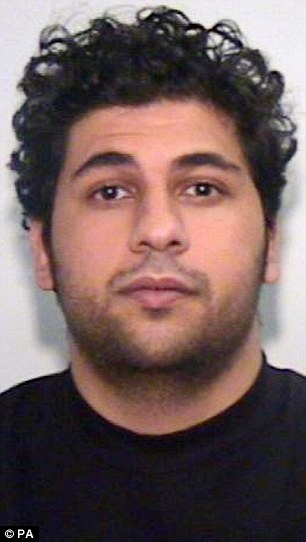
Politically correct British police protected a violent Muslim -- until he killed a woman


A nurse was murdered and mutilated by her ex-boyfriend after police failed to warn her that he had a history of attacks on women, a damning official report has found.

Katie Cullen, 34, a highly respected hospital sister, was ‘badly let down’ by police who failed to protect her from Iman Ghaefelipour, 28.

The Iranian, who had successfully claimed asylum in the UK, threatened to kill two previous girlfriends and burn down one of their houses.

When Miss Cullen reported him to police for harassment and death threats, they investigated – but did not pass on the information.

This was because she said he had spoken ‘in the heat of the moment’ and had never been violent, and there were no ‘warning markers’ for violence on his record, they claimed.

Miss Cullen later agreed to meet him at her home, where he stabbed her more than 130 times in the face and neck, cut out her right eyeball and tried to sever her right hand. He was jailed for at least 23 years in 2010 after pleading guilty to the murder in October 2009.

Yesterday a deeply critical report by the Independent Police Complaints Commission (IPCC) found that had she been told of his past, Miss Cullen might be alive today.

It said claims he set fires on an earlier partner’s property were not handled properly.

Rachel Cerfontyne, IPCC deputy chairman, said police put her in danger by giving her ‘false reassurance’.

She went on: ‘In my view, Katie was badly let down by Greater Manchester Police. Our investigation exposed a catalogue of inaction and missed opportunities.

‘Had arson offences against [his ex] been adequately investigated, it is possible Mr Ghaefelipour would have been convicted and not at liberty . . . [Miss Cullen] was passed from pillar to post.’

Her mother Diane, also a nurse, said: ‘We are distraught at what happened to Katie and utterly appalled at the lack of care she received at the hands of GMP.

‘It is inconceivable to us that the two police officers concerned should protect her assailant . . . rather than a vulnerable girl who lived on her own and who turned to them for help. By withholding such information from Katie they denied her the opportunity to protect herself.

‘She returned to her own home alone and vulnerable, ignorant of the dangerous situation she was in.’

She added: ‘Since Katie’s murder we have been plunged into unimaginable torture. ‘There isn’t a day goes by I don’t think about her.’

Original report here


(And don't forget your ration of Wicked Thoughts for today. Now hosted on Wordpress. If you cannot access it, go to the MIRROR SITE, where posts appear as well as on the primary site. I have reposted the archives (past posts) for Wicked Thoughts HERE or HERE or here

Wednesday, November 12, 2014


Duped by Medill Innocence Project, Milwaukee man now free

The first time I wrote about Alstory Simon, then a Milwaukee north sider, was in 1999, right after he confessed to a double murder in Chicago.

Simon's shocking admission — not to police but to an investigator working for Northwestern University's Medill Innocence Project — led to the release and pardon of a man on death row for the crime, and ultimately to the death penalty being abolished in Illinois.

Two years later, I wrote about Simon again. This time he had reached out to me from prison to say the confession and subsequent guilty plea were involuntary. He insisted he was innocent, as do most inmates who send letters to reporters from prison.

My column was not sympathetic. His confession was right there on videotape for everyone to see, including the detail that he had "busted off about six rounds."

Last week, Simon walked out of prison a free man after Cook County State's Attorney Anita Alvarez announced that her office, after a yearlong investigation, was vacating the charges against him and ending his 37-year sentence.

The investigation by the Medill Innocence Project, she said, "involved a series of alarming tactics that were not only coercive and absolutely unacceptable by law enforcement standards, they were potentially in violation of Mr. Simon's constitutionally protected rights."

The truth took 15 years to come out. That's 15 years that Simon, now 64, spent behind bars.

"Believe me, it is mentally painful to walk around every day, locked up for something that you know you didn't do," Simon told Shawn Rech, whose film about the case, "A Murder in the Park," now has an ending. It premieres at a film festival in New York on Nov. 17.

Simon, who moved to Milwaukee from Chicago in the 1980s to find work, is not granting interviews, his attorney, Terry Ekl, told me. But Ekl echoed Alvarez's criticism of former Northwestern journalism professor David Protess, who led the Medill Innocence Project, and the investigator on the team, Paul Ciolino.

"In my opinion, Northwestern, Protess and Ciolino framed Simon so that they could secure the release of (Anthony) Porter and make him into the poster boy for the anti-death penalty movement," he said.

Identified by several eye witnesses, Porter was sentenced to death for the fatal shooting of Jerry Hillard and Marilyn Green at a south side Chicago park in 1982. He was just two days from a lethal chemical injection when he was freed in February 1999 following Simon's confession.

Then-Gov. George Ryan imposed a moratorium on the death penalty in 2000, and Illinois abolished capital punishment in 2011.

But that neat and clean narrative unraveled with the discovery of how the confession by Simon was obtained. Protess discovered that Green's mother had mentioned Simon was with Green and Hillard at the park the day of the murders, so Protess went after Simon in an effort to clear Porter.

Protess and two of his journalism students came to Simon's home in the 200 block of E. Wright St. in Milwaukee and told him they were working on a book about unsolved murders. According to Simon, Protess told him, "We know you did it."

Then Simon received a visit from Ciolino and another man. They had guns and badges and claimed to be Chicago police officers. They said they knew he had killed Green and Hillard, so he better confess if he hoped to avoid the death penalty.

They showed him a video of his ex-wife, Inez Jackson, implicating him for the crime — a claim she recanted on her death bed in 2005 — and another video of a supposed witness to the crime who turned out to be an actor.

They coached Simon through a videotaped confession, promising him a light sentence and money from book and movie deals on the case. Simon, admittedly on a three-day crack cocaine bender, struggled to understand what was going on.

Perhaps worst of all, they hooked up Simon with a free lawyer to represent him, Jack Rimland, without telling him that Rimland was a friend of Ciolino and Protess and in on their plan to free Porter.

At Rimland's urging, Simon pleaded guilty to the crime and even offered what sounded like a sincere apology to Green's family in court. As added leverage to make him cooperate, Rimland had told Simon he was suspected in a Milwaukee murder, though nothing ever came of it.

"Bob told me to get rid of this attorney. ... I should have listened to him," Simon says in the film, referring to Bob Braun, a West Allis man best known around here for protesting against abortion, same-sex marriage, pornography and other issues. The two men are friends.

Braun said he never doubted Simon's innocence. The two men wrote back and forth regularly during Simon's incarceration, and Braun visited him there twice. After 15 years in prison, Simon told Braun, the most noticeable change is that everyone carries a phone, and there are no more pay phones.

When his abuses came to light, Protess was suspended by Northwestern and has since retired from there. The Medill Innocence Project has been renamed The Medill Justice Project. Protess isn't talking, but he is now president of the Chicago Innocence Project, which investigates wrongful convictions. Ciolino put out a statement saying Simon also had confessed to a Milwaukee TV reporter, his lawyer and others.

"You explain that," he said.

We know now that the explanation was that Simon was snared in a trap set by people who wanted to end the death penalty, no matter what the cost. Once they convinced Simon it was for his own good, he was all in.

And now, finally, he's out and back in Chicago. Simon enjoyed a lobster dinner on his first day of freedom. Ekl said he doesn't think Simon has family still in Milwaukee and is not planning to return here. Too many painful memories.

Simon's mother died while he was in prison. He told the filmmaker he's eager to reconnect with his daughter and see his grandchild for the first time.

"I thank God," he said, "that he shined down on me."

Original report here


(And don't forget your ration of Wicked Thoughts for today. Now hosted on Wordpress. If you cannot access it, go to the MIRROR SITE, where posts appear as well as on the primary site. I have reposted the archives (past posts) for Wicked Thoughts HERE or HERE or here

Tuesday, November 11, 2014


Three Ways Courts Screw the Innocent Into Pleading Guilty

You should go read Jed A. Rakoff’s essay in The New York Review of Books, in which the senior federal district judge tries to explain why innocent people so often plead guilty.

But even if you have better things to do this weekend than digest Rakoff’s thorough, convincing, 4,400-word essay, it’s still worth considering why at least 20,000 people have pled guilty to and gone to jail for felonies they did not commit — if you very conservatively take criminologists’ lowest estimates, and cut them in half.

Rakoff identifies three ways the criminal justice system obstructs its own "truth seeking mechanism," a trial by jury, which Rakoff calls a "shield against tyranny" and which Thomas Jefferson famously called "the only anchor ever yet imagined by man, by which a government can be held to the principles of its constitution."

1. By embracing the increasingly-popular plea bargain. Some 97 percent of federal trials were resolved last year through plea bargain, the offer of a lesser charge and a reduced sentence if the defendant forgoes a trial. But the practice, which has never really taken hold in other countries, is, to Rakoff, "the devil’s pact." Plea bargains happen behind closed doors, without judicial oversight, and are weighted largely in favor of the prosecutor, who has access to police reports, witness interviews, and forensic test reports. Prosecutors also have the discretion to shape the charges brought at trial, and until last year federal attorneys routinely used that power to bully people into plea bargains; any defendant who sought a trial would face the most severe charges with the lengthiest prison sentences as a matter of policy.

In contrast, defense attorneys typically only meet with defendants after they have been arrested and can only interview them through "arduous restrictions imposed by most jails," as Rakoff puts it. The notion that a plea bargain is a contractual mediation between two relatively equal parties, Rakoff argues, "is a total myth".

2. Through mandatory minimum sentences. These rules effectively took sentencing power away from judges and transferred it to prosecutors, who can ensure uncooperative defendants spend a long time in prison by bringing charges with the longest minimum sentences. In 2012, the average sentence for defendants brought up on drugs charges who took a plea deal equaled five years and four months, while the average sentence for those who went to trial was sixteen years. The combination of mandatory sentences and prosecutorial discretion forces the defendant into a grim cost-benefit analysis: run the risk of losing the case and serve the maximum sentence or take a reduced charge, at a reduced sentence, even when innocent.

3. Via the unfettered rise of prosecutorial power. Prosecutors have far more power to exert their will than any other party involved in the criminal justice system. The one mechanism that could check their power is the jury trial, which is becoming "virtually extinct" in federal court, Rakoff writes.

One possible solution to all these problems — aside from repealing mandatory minimum sentences and generally reducing the severity of sentences — is greater judicial oversight after indictment. Rakoff’s proposal is for a magistrate to meet with a prosecutor and defendant independently, ask them to provide evidence, and make their own propositions on whether the case is strong enough to go to trial. The magistrate could also interview witnesses and even the defendant.

"I am under no illusions that this suggested involvement of judges in the plea-bargaining process is a panacea," Rakoff concludes. "But would not any program that helps to reduce the shame of sending innocent people to prison be worth trying?

Original report here


(And don't forget your ration of Wicked Thoughts for today. Now hosted on Wordpress. If you cannot access it, go to the MIRROR SITE, where posts appear as well as on the primary site. I have reposted the archives (past posts) for Wicked Thoughts HERE or HERE or here

Monday, November 10, 2014


Australian cop convicted on drink-driving, drug charges

An off-duty Victorian policeman who fled the scene of a multi-car crash was found to have a blood alcohol concentration of .196 and the drug ecstasy in his system.

Nathan Harkness had been to a 40th birthday party in June when he drove through a red light outside Geelong and braked heavily before crashing into a parked car, which struck a second vehicle.

Melbourne Magistrates Court was told on Tuesday that Harkness, 38, a senior constable, drove from the scene about 9am as the other drivers readied to exchange names and addresses.

Prosecutor Julian Ayres told the court that soon after, and "coincidentally", his car was noticed with damage by other police members.

Mr Ayres said Harkness tested positive to alcohol and at 11.52am a blood test was taken that later revealed the high reading and also the presence of ecstasy.

Harkness, who is suspended, pleaded guilty to charges of exceeding the prescribed concentration of alcohol, careless driving, failing to stop after an accident and failing a drug blood test.

His barrister, Sean Hardy, told the court his client, a policeman since 2008, was married with three children, had no prior convictions and his chance of retaining his job "doesn't look good".

Mr Hardy said Harkness did not take drugs and believed his drink may have been spiked, but admitted he tended to binge-drink alcohol.

He would suffer hardship as a result of his poor judgment, he submitted, as the circumstances were "not going to assist him" in future applications for work.

Deputy Chief Magistrate Felicity Broughton told Harkness he was lucky his wife was not greeted at their front door with the news he had been killed or he had killed someone else.

Ms Broughton said he was "well aware of the carnage on the roads" and that he was "incredibly lucky" his type of drink-driving was not worse.

She told him he ought to have clearly known it was his duty to uphold the law and advised him that he needed to urgently and consistently address his issue with alcohol, but was confident "we will not see you back here again".

Harkness was convicted on all charges, fined a total of $2000 and had his licence cancelled for 19 months.

Original report here. (Via Australian police news)


(And don't forget your ration of Wicked Thoughts for today. Now hosted on Wordpress. If you cannot access it, go to the MIRROR SITE, where posts appear as well as on the primary site. I have reposted the archives (past posts) for Wicked Thoughts HERE or HERE or here

Sunday, November 09, 2014


Australia: Serving S.A. Police officer Amanda Boughen pleads guilty to fabricating, altering or concealing evidence in ongoing case


A SERVING SA Police officer has admitted she fabricated, altered or concealed evidence in an ongoing investigation while working patrols in the northern suburbs.

For the first time, The Advertiser can today report details of the prosecution of Senior Constable Amanda Boughen following a plea bargain deal and the lifting of a suppression order.

Boughen, 40, of Mawson Lakes, had previously pleaded not guilty to one count of abuse of public office and one count of attempting to obstruct or pervert the course of justice.

It was alleged those offences, at Ingle Farm in May 2010, involved Boughen tipping off her then-lover, Storm Strang, to an investigation into his Bridge Rd, Para Hills drug crop.

Strang, 41, is facing sentencing for his role as ringleader of a three-state, four-year, $40 million cannabis trafficking syndicate that involved TV personality Clayton Lush.

However, Boughen also faced a separate set of allegations concerning her actions at the now-defunct Para Hills Police Station between May and September 2006.

That charge — one count of fabricate, alter or conceal evidence — has been the subject of an Adelaide Magistrates Court suppression order since it was filed earlier this year.

Today, Boughen pleaded guilty to that offence and the court heard the abuse of public office and obstruction counts had been withdrawn by prosecutors as part of a plea bargain.

Upon application by The Advertiser, Judge Paul Rice revoked the suppression order — permitting publication of all matters concerning Boughen for the first time.

Boughen was today remanded on continuing bail to face sentencing submissions next month.

Original report here. (Via Australian police news)


(And don't forget your ration of Wicked Thoughts for today. Now hosted on Wordpress. If you cannot access it, go to the MIRROR SITE, where posts appear as well as on the primary site. I have reposted the archives (past posts) for Wicked Thoughts HERE or HERE or here

Saturday, November 08, 2014


Former BBC director sues Marks & Spencer after wrongful arrest for meat theft

Timothy Robinson, a writer, serves a writ at the High Court after security guards accuse him of stealing peppered steak and call police

A former BBC director and producer who was wrongly arrested while shopping and banned from all Marks & Spencer stores is suing the chain for damages of £100,000.

Timothy Robinson, 51, was handcuffed, taken to a police station and accused of stealing £60 of peppered steak and a barrel of pork in May.

He was released without charge, however, when police saw footage of a different person, about 15 years younger, stealing meat from the store, according to a High Court writ.

Mr Robinson, who has produced and directed history and arts programmes such as Digging for Britain and Timewatch, says he was falsely imprisoned for six hours and is seeking damages for this, as well as for defamation, emotional distress and mental suffering.

He is also asking for £5,000 as compensation for his partner’s mental suffering and wasted time as he tried to secure his release, plus reimbursement of all the money the couple have spent in their local Camden High Street store since 2001.

The company’s security guards have breached the store’s duties of trust, respect and good faith, he argues.

On the day in question, Mr Robinson was approached by guards at the North London store he shopped in daily and shown CCTV stills of himself, before police arrived to detain him.

Mr Robinson, who recently took voluntary redundancy from the BBC and now works as a writer, alleges that the guards refused to show him the footage of the actual thief.

The retailer is contesting Mr Robinson’s claim, but has joined Securitas Security Services, the firm that provided the guards, to the action. If M&S is found liable to Mr Robinson, Securitas should pay any damages awarded, the company argues.

It says security guards should have followed the ASCONE procedure when apprehending a suspect, which involves watching the person approach the display, select the merchandise and conceal it, then observing them and witnessing their non-payment and exit from the store.

The retailer admits that Mr Robinson was banned from its stores but says the notice was withdrawn on May 27 and has asked him to prove his allegation that its staff made harmful claims about him to other customers.

It denies liability for his alleged false imprisonment or the actions of the security guards and the Metropolitan Police.

The store says it is not liable to pay damages for defamation, or emotional distress, or to Mr Robinson’s partner either.

Mr Robinson, an Oxford University graduate whose partner is a lawyer, said he had found the whole experience "bewildering" and "intimidating." He said: "I thought that maybe I was going mad. I couldn’t understand how this situation could happen. It’s just so bizarre.

"Since it happened I have received no apology from Marks & Spencer and they haven’t admitted guilt. "If they had initially said sorry and offered me some form of compensation and said they were looking into their security measures, I probably would have left it. But they haven’t done anything and those security guards are still working there."

An M&S spokesman said: "As this matter is part of ongoing legal proceedings, it would be inappropriate for us to comment."

Original report here


(And don't forget your ration of Wicked Thoughts for today. Now hosted on Wordpress. If you cannot access it, go to the MIRROR SITE, where posts appear as well as on the primary site. I have reposted the archives (past posts) for Wicked Thoughts HERE or HERE or here

Friday, November 07, 2014


Police chief forced to apologise to family of father-of-two who died in a cell while officers watched porn when they should have been checking on him

And a known liar and fabricator of evidence keeps his job!

A police chief has been forced to issue a shameful apology to the family of a father-of-two who died in a cell while officers who should have been monitoring him watched porn.

Lloyd Butler, 39, was arrested on suspicion of being drunk and incapable on August 4 2010 - and died in custody three hours later after suffering a cardiac arrest.

An inquest held in June heard officers should have taken him to hospital for monitoring but instead brought him to Stechford Police Station in Birmingham and dumped him in a cell.

And rather than keeping a watch every 15 minutes on Mr Butler, officers from West Midlands Police viewed sex websites, and watched Sky Sports on police computers.

Shocking footage taken at the time showed a group of police officers laughing and swearing while Mr Butler died just feet away in a custody cell.

CCTV also showed officers earlier dragging him out of a police van by his legs causing his trousers to fall down.

The three members of staff involved were all allowed to keep their jobs despite being found guilty of misconduct.

Today Chris Sims, Chief Constable of West Midlands Police, issued a an apology to Mr Butler's mother Janet and said lessons had been learnt from the tragedy. At a Strategic Police and Crime Board meeting attended by Mrs Butler, he said: 'There is nothing more important than looking after people in our custody. 'I would like to extend my personal condolences to Lloyd Butler's mother.'

A damning Independent Police Complaints Commission (IPCC) report found staff had 'disregarded human decency' in their treatment of Mr Butler.

The chief constable told the meeting the force had since adopted 'six areas of learning' recommended in the IPCC report. These included constant observation of detainees, the availability of internet access in custody suites as well the inclusion of CPR masks.

Assistant Chief Constable Gareth Cann told the meeting that the last time a drunk and incapable person had been taken into custody was in August 2012. He added that there were now 'gateway checks' in place to ensure that drunk and incapable suspects are now taken to hospital instead.

He said 'a lot had changed' in custody since Mr Butler died, including structures of command, training of staff and both the numbers and quality of facilities.

In a narrative verdict at Birmingham Coroner's Court in June, a jury decided that Mr Butler, from Tile Cross, Birmingham, died from a cardiac arrest related to underlying alcohol problems.

They found that he should not have been in a cell after watching CCTV footage of officers failing to watch over their prisoner.

Birmingham coroner Louise Hunt said a 'change of culture' was needed in West Midlands Police and she submitted her report to the force to prevent future deaths.

Speaking after the inquest Mr Butler's distraught mother Janet, 64, blasted the officers - branding them 'an absolute disgrace.' She said 'They failed Lloyd, they failed him miserably.

'They failed Lloyd in their duty of care to him and I feel they assisted in his death. 'It's very clear from the evidence we've seen over the last week-and-a-half that police officers were not carrying out procedures. 'If those procedures had been carried out, my son would have been alive today. 'Their behaviour was an absolute disgrace.'

A misconduct hearing in January 2013 found two officers who dealt with Mr Butler guilty of misconduct, PC Dean Woodcock, who arrested Mr Butler, surfed the Internet and made personal calls rather than monitoring CCTV footage of Mr Butler's cell. He and a civilian employee, Detention Escort Officer Darren Wall, joked about Mr Butler's condition and made insulting remarks about him.

The officer was found guilty of misconduct and had to undergo further training and development. Mr Wall was also found guilty of misconduct and received a written warning and management advice.

Custody sergeant Mark Albutt faked records to make it appear officers were checking Mr Butler more often and more thoroughly than was the case. He was found guilty of gross misconduct and handed a final written warning. So a known liar can continue as a cop???


Original report here


(And don't forget your ration of Wicked Thoughts for today. Now hosted on Wordpress. If you cannot access it, go to the MIRROR SITE, where posts appear as well as on the primary site. I have reposted the archives (past posts) for Wicked Thoughts HERE or HERE or here

Thursday, November 06, 2014


Australia: Action recommended on murders of 3 young Aborigines

On an incredible day of bipartisanship and emotion, the NSW Parliament vowed to deliver justice to the families of three Aboriginal children murdered in the early 1990s. Amy McQuire reports.

Members of all sides of the NSW upper house shed tears today as they put politics behind them to table the findings of a long-awaited inquiry into the murders of three Aboriginal children on the NSW mid-north coast.

Colleen Craig Walker, 16, Evelyn Greenup, 4, and Clinton Speedy-Duroux, 16, were murdered on Bowraville mission within months of each other during 1990 and 1991.

Despite two trials and a coronial inquest, the only man accused of the crimes – a non-Indigenous man who hung around the mission at the time – has never been convicted due to a bungled original police investigation which was severely undermined by the racism that clung to the mission.

Today, the Legislative Council Standing Committee on Law and Justice handed down its report into the family response to the murders. The inquiry was announced last year following the NSW Attorney General Greg Smith’s decision not to refer "fresh and compelling" evidence in the case to the Court of Criminal Appeal.

The evidence, which could have been admitted under changes to the double jeopardy laws, a potential world-first, was refused by Mr Smith on the grounds that if it was referred to the Court of Criminal Appeal it would be unlikely to secure a conviction.

There were doubts that the evidence, whilst "compelling", might not have been "fresh".

The parliamentary inquiry was seen as the last avenue to get the man accused of these crimes before court.

Today, the NSW Parliament opened its doors to nearly 50 members of the families, which stretch from Bowraville to Sawtell to Tenterfield, who packed the public gallery of the Legislative Council.

The committee handed down 15 recommendations which were all unanimously supported, with two recommendations designed to remove the roadblocks that have prevented the accused man from being re-charged with the murders of the three children.

The inquiry called on the NSW government to review section 102 of the Crimes (Appeal and Review) Act 2001 to define the term ‘adduced’ or ‘admitted’ with "the merit of expressly broadening the scope of the provision to enable a retrial where a change in law renders evidence admissible at a later date".

The other recommendation was that the NSW government ensure an independent assessor consider any new application for a retrial submitted to the NSW Director of Public Prosecutions or Attorney General.

Chair of the inquiry, Liberal MLC David Clark was at times teary as his colleagues addressed the Legislative Council.

"A killer whose crimes represent evil at its very darkest is still free. Justice demands the killer of these three children, whose lives were brutally cut short before they ever really begun should be brought to account," he told the chamber.

"… we have found that the impact of the families and their community… arising from the last 23 years of dashed hopes and expectations has been one of absolute devastation.

"In simple terms, the key to this elusive justice being obtained is that the hearing of the evidence in all three murders be considered at the same time and in the same court.

"This will… lead directly to the one who is the perpetrator of these terrible crimes… this is the issue that goes to the heart and soul of what this inquiry is really about."

Greens MLC David Shoebridge’s voice broke as he addressed the chamber about Evelyn’s disappearance, and the police who didn’t take the family’s concerns seriously. Her family were questioned by police on whether she had gone walkabout.

"Can you imagine if a four-year-old girl from any other community had gone missing, there would be that dismissive response?"

Labor MLC Sarah Mitchell told the chamber she had been personally affected by the families’ testimony, and that it had been "life-changing".

Liberal MLC Catherine Cusack said every inquiry member had cried when hearing the families’ response to these murders.

All sides of parliament were unanimous in putting forward the recommendations, and there was a rare bipartisanship shown in the chamber, with several Liberal MLCs and Labor MLCs paying tribute to the role of Greens MLC David Shoebridge for pushing the inquiry.

They also paid tribute to the work of Detective inspector Gary Jubelin, who led the second investigation into the murders, Bowraville social worker Barry Toohey, Aboriginal academic Larissa Behrendt, and Clinton’s sister-in-law Leonie Duroux.

Many spoke of putting politics aside to pursue justice for these three children.

The government will now have to provide a response to the recommendations, which the families are hoping will be delivered at the next sitting of Parliament.

Original report here


(And don't forget your ration of Wicked Thoughts for today. Now hosted on Wordpress. If you cannot access it, go to the MIRROR SITE, where posts appear as well as on the primary site. I have reposted the archives (past posts) for Wicked Thoughts HERE or HERE or here

Wednesday, November 05, 2014


Mississippi Supreme Court: Compensation fund also covers time served on house arrest

The Mississippi Supreme Court has ruled the state's program that provides compensation to inmates wrongfully convicted of crimes covers not only time behind bars but also house arrest.

The 5-4 ruling Thursday reversed a decision entered by the Supreme Court in March that denied extra compensation to Frank Sanders Tipton for the two years he served under house arrest. The justices ruled then that Tipton was due $41,097 for the 300 days he was locked up.

The new ruling means Tipton would eligible for an additional $100,000. The attorney general's office had opposed the extra compensation.

"Imprisonment may occur in an actual prison, but it also can include a state of confinement, which can occur anywhere and vary widely in degree," Justice Jim Kitchens wrote Thursday for the court's majority. "Throughout our state history, if a person was confined within boundaries fixed by another party, that person has been considered to have been imprisoned."

Justice Josiah Dennis Coleman, in a dissent joined by three other justices, said state law does not provide compensation for any lesser form of confinement. Coleman said while house arrest is form of confinement, it not compensable under the law.

"Mississippi legislation and case law have made it clear that there are different levels of confinement, and compensation was meant for offenders, as the plain language of the statute states, who were incarcerated or, alternatively, imprisoned. With respect to the majority, I cannot read the statute to provide compensation for any lesser form of confinement," Coleman said.

Tipton was convicted in 2007 in Jackson County on extortion charges related to his offer to pay a woman's fines and court costs if she modeled nude for him. He was sentenced to one year in prison and two years' house arrest.

In 2010, the Mississippi Supreme Court threw out Tipton's conviction. The court's majority said prosecutors had to prove under the law that Tipton was an "employee of any contractor providing incarceration services," which Tipton was not. Tipton worked for a company that had contracted with the city of Gulfport to monitor misdemeanor offenders.

Tipton applied for and was found qualified for money from the state's wrongly convicted compensation fund. The attorney general's office oversees the fund. The fund pays out $50,000 a year to a maximum of $500,000.

Tipton sued in Jackson County Circuit Court when the state refused to pay him both the 300 days he was behind bars and the two years he was under house arrest.

Original report here


(And don't forget your ration of Wicked Thoughts for today. Now hosted on Wordpress. If you cannot access it, go to the MIRROR SITE, where posts appear as well as on the primary site. I have reposted the archives (past posts) for Wicked Thoughts HERE or HERE or here

Tuesday, November 04, 2014


Texas releases death row inmate Manuel Velez after wrongful conviction

Innocent man cleared of 2005 murder of one-year-old after review of evidence determines he could not have killed child. Multiple improprieties in the prosecution

A building worker from Texas, who was sentenced to death for a murder he did not commit, was released on Wednesday after spending nine years in prison, four of them on death row.

Manuel Velez, 49, emerged from Huntsville prison a free man at 11.32pm CT. He was arrested in 2005, and sentenced to death three years later, for killing a one-year-old who was partially in his care.

But over the years the conviction unravelled. Tests on the victim’s brain showed that Velez could not have caused the child’s head injuries. Further evidence revealed that the defendant, who is intellectually disabled, had suffered from woeful legal representation at trial, and that the prosecutor had acted improperly to sway the jury against him.

Brian Stull, a senior staff attorney with the American Civil Liberties Union who has represented Velez since 2009, said that "an innocent man went to death row because the entire system failed him. The defence counsel who are meant to defend him let him down, the prosecutor who is meant to secure justice committed misconduct, and even the judge made errors that were recognised on appeal."

The event that would put Velez on death row occurred on 31 October 2005. Two weeks earlier the construction worker had moved into the Brownsville home of his new girlfriend, Acela Moreno, then aged 25.

She had a boy, 11 months old, called Angel Moreno, and that Halloween the two adults were between them caring for the child. At a point in the afternoon Velez noticed that Angel was having breathing difficulties, and they called 911; the infant was rushed to hospital where he died two days later.

Initially, both Velez and the victim’s mother, Acela Moreno, were charged with capital murder. But before the trial began, the mother accepted a plea bargain with the state of Texas in which she pleaded guilty to a lesser charge of having injured her child by hitting him or slamming his head against a wall.

For that she was sentenced to 10 years in prison. She was released in 2010, and immediately deported to her home country, Mexico.

As part of the plea deal, Moreno agreed to testify against her boyfriend. Despite the fact that she had told police in a recorded interview at the time of her arrest that Velez had never struck Angel or mistreated him in any way, she did not say that to the jury. Instead, she told the court that her son’s physical problems had only started when Velez moved in to her home two week’s before the child’s death.

The state’s case against Velez was that Angel had died of a head trauma that had been inflicted on the child within the final two weeks of his life. The final fatal blow, caused by swinging or slamming the infant into a hard surface, occurred no more than a few hours before he was found unconscious, prosecutors told the jury.

But when lawyers with the private firms Carrington, Coleman, Sloman & Blumenthal, and Lewis, Roca, Rothgerber took up Velez’s case after he was put on death row, they were astonished by what they found. They discovered that expert opinion had been given in 2006 – fully two years before the trial – that destroyed the state’s case against him.

A neuropathologist had examined Angel’s body and recorded blood on the brain caused by a haematoma that was "well developed". Crucially, the brain injury was at least two weeks old and was almost certainly inflicted between 18 and 36 days before Angel died.

The timing was critical, as Velez was not in contact with Angel until he moved into the Moreno home on 14 October, 17 days before the boy died. In fact, within the 18- and 36-day period specified by the neuropathologist, Angel was some 1,000 miles away in Memphis, Tennessee, where he was on a building job.

This key detail went unnoticed by Velez’s original defence lawyers who made nothing of it at trial, even though it had been prominently incorporated into the official autopsy report on Angel Moreno. The neuropathologist who made the finding was similarly never called as a witness.

As the lawyers, working alongside the ACLU, delved further into the case they began to find other evidence relating to Angel’s mother, Acela. Members of her family testified that they had seen Moreno neglect and abuse her young son; her sister revealed that Moreno had admitted to her that she had bitten Angel on the face.

In her own videotaped interrogation by police – again fully available to defence lawyers at the time of the trial – Moreno had admitted that she had burned Angel with a cigarette. She also told detectives: "I may have burned Angel’s foot when I carried him, but only once." Another witness recalled seeing Acela fling her baby son five feet on to a couch when she grew incensed by his crying.

The Texas criminal court of appeals, that set aside Velez’s murder conviction last October and ordered a retrial, observed that "family members and neighbours testified that they witnessed the victim’s mother neglecting and abusing [Angel] and his siblings in the months and weeks before his death."

The team of defence lawyers also discovered other disturbing aspects about the case. When police officers interrogated Velez after his arrest in 2005 they did not record the interview on videotape, even though equipment was available in the police station. Instead, he was made to sign two separate statements that were written out in English, an odd requirement as Velez was a Spanish speaker with rudimentary English and was functionally illiterate.

Velez leaves prison with a criminal record. Despite the conclusive evidence that he was not in Brownsville at the time Angel received his head injuries, and despite the fact that the state of Texas has not disputed any of the facts in his appeal, the state continued to demand a retrial.

The ACLU advised him that he could not be guaranteed an acquittal, and that a further injustice was always possible. So Velez agreed to plead guilty to reckless injury to a child, leading to his release on time served.

"He wanted to fight for his innocence. But even more he wanted to see his children who are almost grown up, and his parents who are getting old," Stull said.

Velez will travel on Wednesday more than 400 miles from Huntsville back to Brownsville, where he will be reunited with his two sons, Jose Manuel, now 15, and Ismael, 11.

Original report here


(And don't forget your ration of Wicked Thoughts for today. Now hosted on Wordpress. If you cannot access it, go to the MIRROR SITE, where posts appear as well as on the primary site. I have reposted the archives (past posts) for Wicked Thoughts HERE or HERE or here

Monday, November 03, 2014


A Wrongful Conviction Robbed William Lopez of His Freedom, and Then His Life

On a snowy evening in late March, just over a year after walking out of prison, where he had spent 23 years for a crime he didn’t commit, William Lopez entered a CVS in the Bronx and did something inexplicable. After paying for a prescription at the pharmacy counter, he paused to grab some other things—two sticks of Old Spice deodorant and some allergy medicine. Then, without paying, and in full view of a security guard, he walked out. Police were called and Lopez was arrested.

Lopez told his lawyer he had been preoccupied and took the items by accident. This actually made sense; navigating his new-found freedom posed a daily challenge for the 55-year-old Lopez, and he was often distracted. "His mind was not all there," his lawyer recalls. "He was anxious about a lot of things." But Jeff Deskovic, Lopez’s closest friend, heard a different explanation, one that disturbed him. To him, Lopez confessed, "he committed a petty theft to get reincarcerated."

Deskovic was stunned. Just a few weeks earlier, The New York Times had published a long profile featuring both of them, showing Lopez moving on with his life—singing karaoke and bonding with other former New York inmates who had been released after wrongful convictions. "It’s kind of like we get together for treatment or something," he told the Times, "like we have the same disease." If casting himself as sick might have been a signal that Lopez was struggling more, not less, as time passed, no one read it that way. No one could have guessed he would sabotage his freedom by shoplifting thirty dollars’ worth of stuff.

Lopez was "in a dark place," Deskovic says. And to a certain degree, he understood. Himself exonerated in 2006 after spending 16 years in prison for a rape and murder he did not commit, Deskovic had fought his own demons after being released. But not only did he survive, in 2012 he founded the Jeffrey Deskovic Foundation for Justice, with the mission of finding and freeing others like himself. Lopez was the organization’s first success story—Deskovic proudly walked him out of Brooklyn Supreme Court in January 2013. Then, he refused to leave his side. Deskovic knew too well how hard it is to emerge from prison to, as he puts it, "a world that you don’t belong to." He wanted his foundation to ensure that new exonerees did not struggle as much as he had. So Deskovic tried to provide Lopez with all the things the state had not: a temporary apartment, some money to get by, and guidance on everything from cell phones to the subway. In the process, the two became fast friends. "I saw a lot of myself in him," Deskovic says, "even though he was a lot older than me."

Lopez had no desire to go back to prison—quite the opposite. But he had become convinced that it was inevitable.

On the day he walked into that CVS, Deskovic says, Lopez had no desire to go back to prison — quite the opposite. But he had become convinced that it was inevitable and wanted to control how it happened. Lopez was convicted in 1990 of shooting and killing a drug dealer in Brighton Beach, Brooklyn, despite a complete lack of credible evidence. The federal judge who released him called his case "rotten from day one," lambasting prosecutors as "overzealous and deceitful," and urged the state to apologize. Yet Lopez’s ordeal was far from over. Veteran Brooklyn District Attorney Charles Hynes refused to drop the charges against Lopez, instead filing an appeal to reinstate his conviction. Never mind that "the prosecution’s evidence was flimsy to begin with," as U.S. District Judge Nicholas Garaufis wrote, "and has since been reduced to rubble by facts arising after trial." Hynes wanted to send Lopez back to prison anyway.

So, even as Lopez celebrated his first year of freedom over lasagna and wine this past January, the fear of prison haunted him. As court dates in the appeal approached, "it started to play a larger and larger role in his mind," Deskovic says, "to the point where he was mentally preparing himself to be reincarcerated." Lopez’s arrest at CVS came just over a week before oral arguments were scheduled to start.

"There was an element of me that was angry at him," Deskovic recalls. But he knew Lopez was driven by fear. Both men had seen people sent back to prison because prosecutors did not want to admit to a wrongful conviction. For Lopez, the dread was too much to handle. "He said, look, Jeff, If I’m gonna go back, why wait? Let me get used to it." His original sentence had been 25-years-to life; he thought he would have a shot at getting out on parole. However irrational it seemed, for Lopez, it felt like a way to control his own destiny.

Lopez never went back to prison. His misdemeanor charge was reduced to a violation. Days later, just one week before oral arguments were set to begin, Brooklyn’s new district attorney, Kenneth Thompson, who had defeated Charles Hynes in a major electoral upset the previous fall, finally dropped the murder charges against Lopez. Pursuing his predecessor’s appeal, Thompson said, would be "contrary to the interest of justice."

Lopez could finally exhale. He spent the spring and summer enjoying life, much of the time with Deskovic. They traveled to Portland, Oregon for the annual Innocence Network conference. They went to a Mets game. They goofed around at Rye Playland, an amusement park in Westchester County. ("Sharing another first with him!" Deskovic wrote on Facebook, under a photo of the pair at a mini golf course.) His relationship with his wife of nineteen years, Alice, whom he married in prison, seemed to improve, too. Lopez had symptoms of post-traumatic stress disorder and Alice had struggled to cope. But, after the charges were dropped, "they kind of hit their stride," Deskovic recalls. In July, Lopez posted a selfie, along with a photo of himself going kayaking. "Hello everyone," he wrote. "These photos were taken less than a week ago under the wonderful blue skies."

So it came as a shock when, less than two months later, Deskovic got a call from Alice at 3 o’clock in the morning. Lopez had suffered a massive, deadly asthma attack in the middle of the night. By the time Deskovic rushed to the hospital, his friend was already gone.

Jeff Deskovic and William Lopez sing at Karaoke Cave in downtown Manhattan in January.

In March 2013, two months after William Lopez first walked out of Brooklyn Supreme Court, 58-year-old David Ranta left the same courthouse in a daze. He, too, had spent 23 years in prison, after being convicted on false evidence presented by a dirty NYPD detective for a crime he did not commit. "I’m overwhelmed," he told reporters. "Right now, I feel like I’m under water, swimming."

Less than two days later, he had a heart attack.

Unlike Lopez, Ranta recovered after surgery. Although he had no history of heart problems, his lawyer told reporters, "The accumulated trauma of being falsely convicted and incarcerated for 23 years, coupled with the intense emotions experienced surrounding his release, has had a profound impact on his health."

Subsequent reports described Ranta "in good spirits." But his hospitalization threw cold water on the feel-good media moment—it was a sudden, sobering glimpse at the real toll of a wrongful conviction. In an unusually rapid settlement, last February the City of New York agreed to pay Ranta $6.4 million in compensation. But there is no sum of money that will recover the health he sacrificed during the many years Hynes’ office kept him in prison despite evidence of his innocence. For him—and for the eleven New Yorkers exonerated since Kenneth Thompson took office—the mental and physical cost is impossible to measure.

Lopez suffered from asthma from the time he was a boy; perhaps it would have taken his life even if he had never gone to prison. But it’s not likely. Even without the trauma of a wrongful conviction, prison is like a debilitating illness; it literally speeds up the aging process. Both Lopez and Ranta were released in their 50s—hardly geriatric in the outside world, yet considered "elderly" by the New York State Department of Correction. A report funded by the Edgar and Margaret Sandman Fellowship in Aging and Health Law & Policy estimated that, physiologically, a 55-year-old person behind bars is equivalent to someone more than ten years older on the outside. Fifteen states classify prisoners aged 50 and older as elderly.

Prison is like a debilitating illness; it literally speeds up the aging process.

Those who go in with existing medical problems are especially worse off. Asthma, which is common, is aggravated by poor ventilation, toxic chemicals, and other environmental factors that make "prison air" harder to breathe. So it came as a surprise to hear from Alice Lopez that her husband’s asthma never posed a big problem in prison. "In all the years I went to visit him, he didn’t have an attack," she says. While his medical care was always inadequate—"his teeth were rotten, because they didn’t take care of his teeth"—it was only when he got out that he started having problems breathing. "He couldn’t walk a block without losing his breath," she recalled. Everywhere he went, he took a portable nebulizer. "If he left home without it, he was frantic."

"The impact of being wrongly incarcerated does not show up when you’re in prison," Deskovic explains. Much of the trauma manifests itself later, making it harder to find a home, get a job, or sustain relationships. "Psychological research of the wrongfully convicted shows that their years of imprisonment are profoundly scarring," the Innocence Project reported in a 2009 study examining inadequate compensation for exonerees nationwide. At least 20 states provide no compensation for people who are wrongfully convicted. New York does, but on a case by case basis, and according to an amount determined in civil court. But as the Innocence Project notes, "After years of fighting to prove their innocence, exonerees need a safety net, not another long legal battle." Counseling and medical care are among the most immediate services exonerees desperately need.

In the wake of his death, newspapers reported that Lopez died just days before his $124 million federal civil suit against the city was supposed to go to trial. That would have been cruel irony if it were accurate. "That Monday we were having our first conference with the judge for some preliminary matters," his lawyer said. Like most exoneree lawsuits, Lopez’s would have taken a couple of years at least. What’s more, his lawyer added, the lawsuit is partly based on "a practice and pattern in the DA’s office to suppress evidence," which meant the city was likely to put up a fight.

To Deskovic, this reality is far more cruel than what the headlines claimed. Had Lopez become financially stable more quickly, maybe he would have been less burdened. Maybe he would still be alive. "Why does it need to be this long drawn out process? It doesn’t seem fair or just to me," he says. "It typically takes less than a year to wrongfully convict people. Why does it take so much longer to compensate them? Is it because the defendant in one case is a regular person and in the other defendant is the state?"

Lopez’s lawsuit will move forward, with any money going to his wife and daughter, Crystal, who was just a baby when her father was arrested. The sum will almost certainly be a tiny fraction of the $124 million.

Alice Lopez was distraught when I spoke to her on the phone, grief-stricken one moment and furious the next. "I bet you it was the stress," she said about her husband’s sudden death. "I lived with it every day." For almost her entire marriage, Alice had watched as Charles Hynes blocked attempts to revisit her husband’s case. Then he was finally freed, only to live every day in fear. Sometimes Lopez would wake up with nightmares. "He was worried that he was gonna go back to prison," she said. "And the asthma was getting worse."

"Once they dropped the charges, he relaxed a bit," she added. "But at that point, his asthma was really bad."

Alice Lopez holds Hynes "tremendously responsible" for what happened to her husband. "The state did this," she said, through angry sobs. "The state did this to him. And they’re gonna pay."

The wake for William Lopez was held on September 24, at the Ortiz Funeral Home in the Bronx. Among the guests were Nicholas Garaufis, the judge who released him, and his wife. Friends who knew Lopez in prison as "Willie" also came, as well as fellow exonerees from New York. "They talked about how short his freedom had been and how unfair it was," says Deskovic. "And how despite it all, Bill persevered."

Deskovic, too, plans to persevere, continuing to focus on his work. "It’s what Bill would have wanted," he says. In a particular sense, Lopez’s death is especially cruel for him.

I met Deskovic in 2006, soon after he was first released from prison, and got to know him through activist work, and some journalism projects. He could be awkward, sometimes difficult, and at times his loneliness and vulnerability were palpable. An in-depth 2007 profile in the New York Times described him as "a lost man." This made his accomplishments over the years all the more impressive—from speaking engagements to a master’s degree from John Jay College of Criminal Justice, to, eventually, his own foundation. Yet, in a sense, it was his friendship with Lopez that was the most heartening to see.

I caught a glimpse of it up close in March of last year, seven weeks after Lopez was released. We met at Deskovic’s office on Manhattan’s Upper West Side. Lopez wore a suit and tie and was soft-spoken, with a raspy Bronx accent and the slight intensity of a man who has recently left prison after a long time. He and Deskovic took turns telling his story.

Lopez and Deskovic went to prison the same year. While they never crossed paths, Lopez eventually worked in the law library, which gave him access to law journals and newspapers, so he was able to keep up with the exonerations throughout the state. Deskovic stood out to him. He was impressed with his activism and his columns about criminal justice reform in the Westchester Guardian. When Deskovic used a portion of his $8.3 million false imprisonment settlement to start his foundation, "that’s when I knew he was in it for the long haul," Lopez said. He called the office.

Soon they were talking every week. Deskovic immediately recognized Lopez’s case as having the classic hallmarks of a wrongful conviction: a dearth of physical evidence, a prosecutor who withheld exculpatory evidence, hapless defense attorneys, a hostile judge. Especially alarming was the fact that the trial had turned on the testimony of two eyewitnesses, one of whom had described the killer to police as a dark, black man taller than 6’3. (Lopez was short, with a lighter complexion). The other had been on a two-day crack binge at the time of the crime. Later she would tell a cellmate at Rikers Island that Lopez was not really the killer, according to the cellmate, who sent a letter describing the recantation to Lopez’s lawyers. The letter arrived after trial but before sentencing, yet his lawyers did nothing with it at the time.

Deskovic’s team eventually uncovered more evidence of Lopez’s innocence. Most significantly, they tracked down another witness to the crime, who had been since deported to the Dominican Republic. Via video feed, he testified at a hearing that he was "certain" Lopez was not the man he saw, describing the real killer as having dark black skin.

"I knew what it was not to have anything. I knew what it was to be lonely."

Lopez’s exoneration was a major victory for the fledgling foundation. But in a sense, the real work started afterwards. "I knew what it was not to have anything," Deskovic says. "I knew what it was to be lonely." He took him out, introduced him to people, brought him over for meals at his house. When he went to prison, Lopez explained, he lost touch with a lot of old people, especially those who seemed to believe he might be guilty. "So your circle becomes extremely small."

"But now I have Jeff," he added. "And Jeff’s become my best friend."

Deskovic came to rely on Lopez, too. He had never made friends easily. "I don’t always relate to everyone," he says. "I enjoyed talking to him. I enjoyed spending time with him." Even before losing his formative years to prison, he was always a bit socially challenged. It was one of the reasons he had become a suspect in his own case. After his high school classmate was raped and murdered in 1989, Deskovic "cried copiously" at her funeral, The New York Times reported, "though they were not close friends." This aroused suspicion—even though his DNA did not match semen taken from her body, police became so convinced he was guilty, they coerced him into a false confession. Later, Deskovic would explain that his classmate’s death had upset him so much because she was one of the few kids in school who had not treated him unkindly.

On the day Lopez was released from prison, Deskovic took him shopping at Macy’s to buy clothes for the outside. It’s one of Deskovic’s favorite stories. That day in the office, they told the story together.

"He bought me my first set of clothes," Lopez said.

"What was that like, by the way?" Jeff interjected.

"That was—to this moment I’m still trying to figure it out," Lopez said. "That feeling, it was so huge." Lopez walked out of Macy’s in a brand new outfit: "I wound up leaving my old duds in a trash can," he confessed.

"Did you feel like a new man?" Deskovic asked, eagerly. "Did it feel different?"

"I was able to walk out a new man, with dungarees," Lopez said, as Deskovic laughed. "And colors! Colors, of course. Colors that I could never have, clothing I could never have."

In prison, certain colored clothing is contraband. "It can have the most small amount," he explained. But that day, he said, gesturing proudly, "I had blue jeans on, I had sneakers that had colors—all that. And it was great. To this moment, you know, I’m still excited about that."

Deskovic recently brought up the visit to Macy’s again. He remembered how Lopez seemed to transform with every piece of drab prison clothing he replaced with something new. "You could see his face was changing," he said.

"He ended up with a really, really big smile."

Original report here


(And don't forget your ration of Wicked Thoughts for today. Now hosted on Wordpress. If you cannot access it, go to the MIRROR SITE, where posts appear as well as on the primary site. I have reposted the archives (past posts) for Wicked Thoughts HERE or HERE or here

Sunday, November 02, 2014


British mother jailed for child cruelty after rejecting NHS care to seek treatment at foreign clinic for teenager's hormone therapy

When British mother Mary Kidson took her seriously ill daughter to a world-renowned doctor in Belgium in the hope of finding a cure, she could never have imagined the extraordinary events that were to follow.

When she returned to the UK, Ms Kidson, an expert in the field of special educational needs, was astounded to find herself imprisoned and prosecuted – accused of trying to poison her daughter.

Then, to her horror, the child was taken from her and was subsequently placed in psychiatric care.

Now Ms Kidson is free again, following the collapse of the case against her at Worcester Crown Court last week, and is relieved to have her name cleared.

But, speaking for the first time about her ordeal, the 55-year-old says she is furious that charges were brought in the first place, and devastated she has yet to be reunited with her 16-year-old daughter.

In particular she blames the NHS for operating rigid rules about treatment that allowed the prosecution to take place – but also her former husband, Michael Guilding, who she believes needlessly reported her to the police.

‘It’s unbelievable what I’ve been through,’ she says of a case that has echoes of Ashya King, whose parents fled abroad to seek proton treatment for his cancer and ended up in prison in Spain.

‘I am very angry and fed up as I was completely misrepresented prior to my acquittal. ‘I am just so relieved. This case came about because I am a caring mother and was only acting in my daughter’s interest. I’m now looking forward to being reunited with her.

‘All of the allegations against me were wrong. I know my ex-husband was behind it all. I’m in no doubt. He was very upset about our divorce, which he didn’t want, and unhappy that the children went with me. The prosecuting team were very careful to keep him out of it during the court hearing.

‘I have been through a huge ordeal. As things become clear I will make decisions about whether I am going to sue anyone. ‘I tried to make the best of it in prison, and I was treated well, but my life will never be the same again. ‘I hope I will become a stronger person as a result of what I’ve been put through.

‘When I was told I was free this week, well, it’s indescribable what I felt. I was elated, relieved, and very, very thankful that justice has at last been done.’

Ms Kidson’s barrister, Ken Hind, says that her complaints against her husband were part of her evidence, but were never heard in court as the case against her collapsed.

During the court case Ms Kidson, from Ledbury in Herefordshire, was accused of dosing her daughter with unnecessary medicines and of ‘doctor shopping’.

This, it was alleged, involved touring hospitals and clinics in Britain and then abroad, until she received a diagnosis for her daughter – hormone deficiency – that she found acceptable, but which the NHS did not recognise.

In 2012, desperate for help, she travelled with her daughter, who cannot be named for legal reasons, to the Brussels clinic of Dr Thierry Hertoghe, a Belgian physician and expert in hormone therapy.

She believes that, as a result of the deficiency, the girl was suffering from chronic fatigue syndrome that had left her virtually bed-ridden.

The prosecution claimed that once under Dr Hertoghe’s supervision, Ms Kidson administered toxic levels of three hormones in a five-month period. But according to the Belgian doctor, the girl’s ailments improved.

Taking up the story, Ms Kidson’s sister, Ruth Stobbs, says: ‘Mary thought that Dr Hertoghe was absolutely fantastic. ‘He measured my niece’s thyroid, oestrogen, growth hormone and cortisol and found her to be deficient in all of these, so he prescribed medication to correct the deficiencies.’

But, it seems, when Ms Kidson’s ex-husband found out about the treatment, he contacted police, two months later. In March 2013, police arrived at Ms Kidson’s home with social services and arrested her.

Ms Stobbs continues: ‘I took a phone call at work from Mary who said simply, "I’ve been arrested." ‘At first I thought it was some sort of joke. There was silence down the line. "Seriously. I’ve been arrested. For child cruelty", Mary said.’ After 24 hours in custody, Ms Kidson was released on bail.

Ms Stobbs adds: ‘The judge also ordered that my niece go back to school. She had been home-educated from age ten. Suddenly facing a return to school, without her mother around to support her, was too much for her. She hated it.’ The judge also ordered her to live with her father, and she ran away twice.

One afternoon early this year, she locked herself in her father’s bathroom and in a highly emotional state she sent a text to her mother. Mary, who was worried her daughter was going to harm herself, texted back, which breached her bail. Michael phoned the police and Mary was arrested again and taken into custody, and then to Eastwood Park prison near Bristol.

‘Her ex-husband told police and social services that Mary would try to take their daughter out of the country, and we think this is why they have acted as they have,’ says Ms Stobbs. ‘Mary is a responsible person and she would never, ever have done that.’

Ms Kidson has been apart from her daughter since March 2013. In January this year she was charged under the 1861 Offences Against The Person Act with poisoning her daughter with thyroid extract, oestrogen and hydrocortisone. She was then allowed only two hours supervised contact each fortnight.

Her daughter became so distressed that she suffered a breakdown after the pair were separated, and was detained in hospital under the Mental Health Act. ‘My daughter is on other medicine now but she does appear to be fit and well, which is great,’ Ms Kidson says. ‘She is on the verge of discharge but I still don’t know when I can see her.

‘I’m very angry with the way the Crown Prosecution Service, social services and the police all dealt with this. They formed an opinion of me without even meeting me.

‘The whole case raises the question of a parent’s right to find treatment outside the NHS for their child. Adults have total freedom to go wherever we want in the world for our health care but if you’re a child it seems only the NHS can treat you.’

Supporting Ms Kidson, Dr Hertoghe says that her trial ‘should never have taken place’ and called for widespread NHS reform to allow parents greater choice over their child’s care.

‘Two lives have been broken,’ he says. ‘The whole system needs reform. We have to give people the right to choose their doctor without fear of prosecution.’

Original report here


(And don't forget your ration of Wicked Thoughts for today. Now hosted on Wordpress. If you cannot access it, go to the MIRROR SITE, where posts appear as well as on the primary site. I have reposted the archives (past posts) for Wicked Thoughts HERE or HERE or here

Saturday, November 01, 2014


Illinois releases prisoner, bringing wrongful conviction full circle

A celebrated Illinois wrongful conviction case went full circle on Thursday when authorities freed a man sentenced for a 1982 double murder and said they believe another man exonerated 15 years ago is probably the murderer after all.

Prisoner Alstory Simon, who in 1999 confessed to shooting and killing teenagers Marilyn Green and Jerry Hillard on Chicago's South Side, was released from the Jacksonville Correctional Center in Central Illinois.

Simon's confession 15 years ago led to the release and pardon of former death row inmate Anthony Porter, who was originally convicted as the murderer. Porter's freedom was an important victory for innocence projects that work to overturn wrongful convictions. The Porter case and others eventually spurred Illinois to abolish the death penalty.

After he confessed, Simon, now 64, pleaded guilty in 1999 and was sentenced to 37 years, of which he served 15.

But prosecutors reversed course again and said on Thursday a former journalism professor at Northwestern University, students at the university's Medill Justice Project and a private investigator coerced Simon into making a video taped confession, threatened him with the death penalty, pretended to have a witness to him committing the crime and promised him lucrative book deals.

"We're talking about the antics of a rogue investigator and a professor who went to all lengths," Cook County State's Attorney Anita Alvarez told a news conference.

Alvarez said Porter cannot be retried because of double jeopardy, but she said: "There are compelling facts, eyewitnesses there at the scene who maintain to today that it was Anthony Porter who did the shooting."

Alvarez said the reinvestigation was the toughest her office has done, because some witnesses have changed their testimony multiple times over three decades.

She said that in the years that have passed since Simon made his videotaped confession, prosecutors have learned to be much more skeptical of that sort of evidence.

Alvarez said the Conviction Integrity Unit she created two years ago would continue to re-investigate cases of alleged wrongful conviction. The unit has so far vacated 10 convictions.

Alvarez strongly criticized former Northwestern University Professor David Protess and private investigator Paul Ciolino.

In a statement, Ciolino said he believes Porter was innocent and noted that Simon confessed to lawyers and reporters as well as to him. "But for the work we did together with Nothwestern and the students, Porter's life would have been taken," he said.

The Medill Justice Project and Protess, who now works for the Chicago Innocence Project, did not immediately respond to telephone messages seeking comment.

Original report here


(And don't forget your ration of Wicked Thoughts for today. Now hosted on Wordpress. If you cannot access it, go to the MIRROR SITE, where posts appear as well as on the primary site. I have reposted the archives (past posts) for Wicked Thoughts HERE or HERE or here